Published in Issue 14 of Paper Chained in June 2024.
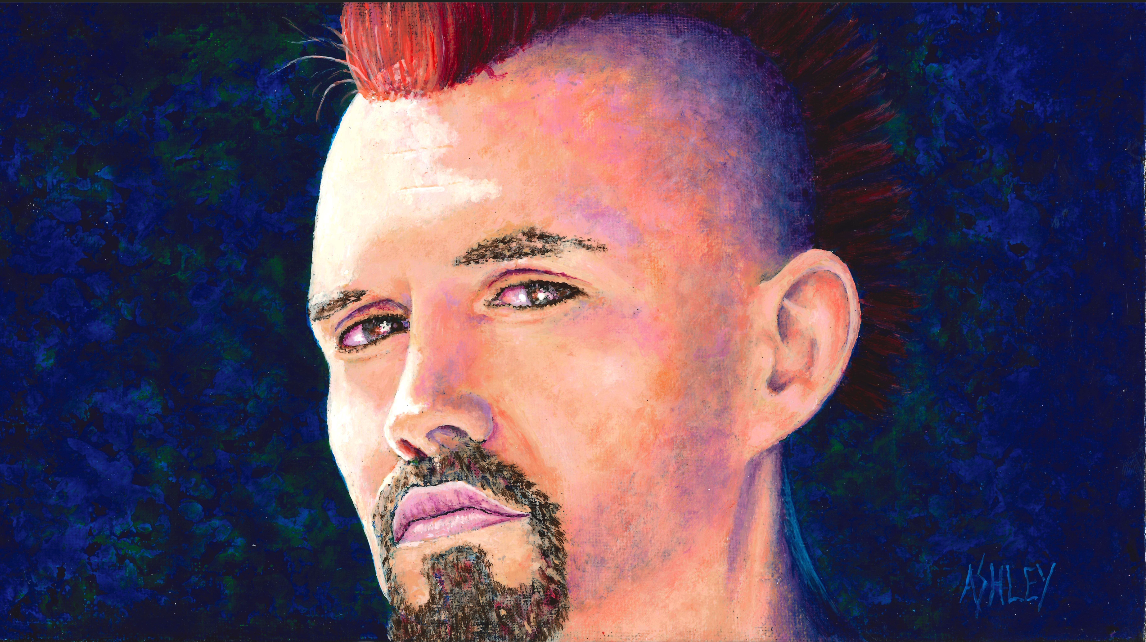
Paper Chained Editor Damien Linnane interviews Queensland prisoner Ashley McGoldrick, a regular contributor and also our cover artist for the previous issue, about his experiences making art in custody. This interview was done via mail after approval was granted from Queensland Corrective Services.
How long have you been an artist for? Is it something you’ve discovered in prison? Or have you done it for a lot longer?
I’m 48 years old now and I’ve been interested in art for most of my life. I studied art through the TAFE system for about three years, but it wasn’t until I was imprisoned that I became serious about my practice.
You’ve sent us some awesome paintings and the great sculpture we featured in issue 12. Have you tried any other mediums?
On the outside I tried everything I could get my hands on: oils, pastels, water colours, mixed media, clay and even wood. I thoroughly believe that an artist shouldn’t limit themselves to only one or two mediums. These days, even though my choice of materials is restricted to pens, pencils and acrylic paints, I still try to push the mediums and myself as much as possible.
Why is art important to you? How do you feel when you’re creating something in your cell?
I don’t want to sound overly dramatic, but I’m convinced art practice saved my life. When I was first locked-up I was diagnosed with chronic depression. Don’t be concerned: I committed a terrible crime, so I deserved everything I got. But it soon became apparent that my choices were either suicide or life. Eventually I chose to live and I did so with the help of my art practice. At first, I started drawing for five minutes here and there, then one hour here and there. That was about 13 years ago. I’m now at the stage where I average about eight hours a day. Every six months or so I force myself to have a day off.
What are the challenges of being an artist in prison? What’s the one art supply you wish you had the most that you can’t get in prison?
The positives of being an artist in prison far outweigh the challenges. For example, I don’t have to worry about rent or studio space, and all my clothes and meals are provided for free. Of course, I sometimes daydream about supplies I don’t have. For some unknown reason I’m not allowed to have a kiln or my own personal wood-fired forge, but mostly I’m grateful for what I do have.
We’re featuring your art in the Paper Chained international exhibition. Have you been part of an exhibition before, and how does it feel to be able to share your art with the world while you’re in custody?
I was involved in about five or six exhibitions when I was at Southern Queensland Correctional Centre. The prison’s educational department put them on in a local hall for a couple of weeks every year. They’d showcase paintings, drawings, leatherwork, and pottery. Nothing like that happens at Woodford Correctional Centre, where I’ve been for the last six years, except for an art competition the Prison Fellowship put on once a year. So, the Paper Chained exhibition is definitely something I looked forward to.
I’m sure most artists want their work to be displayed and hopefully appreciated. Nobody wants their artwork sitting in a dark shed gathering dust. I have about 200 paintings in my mother’s shed.
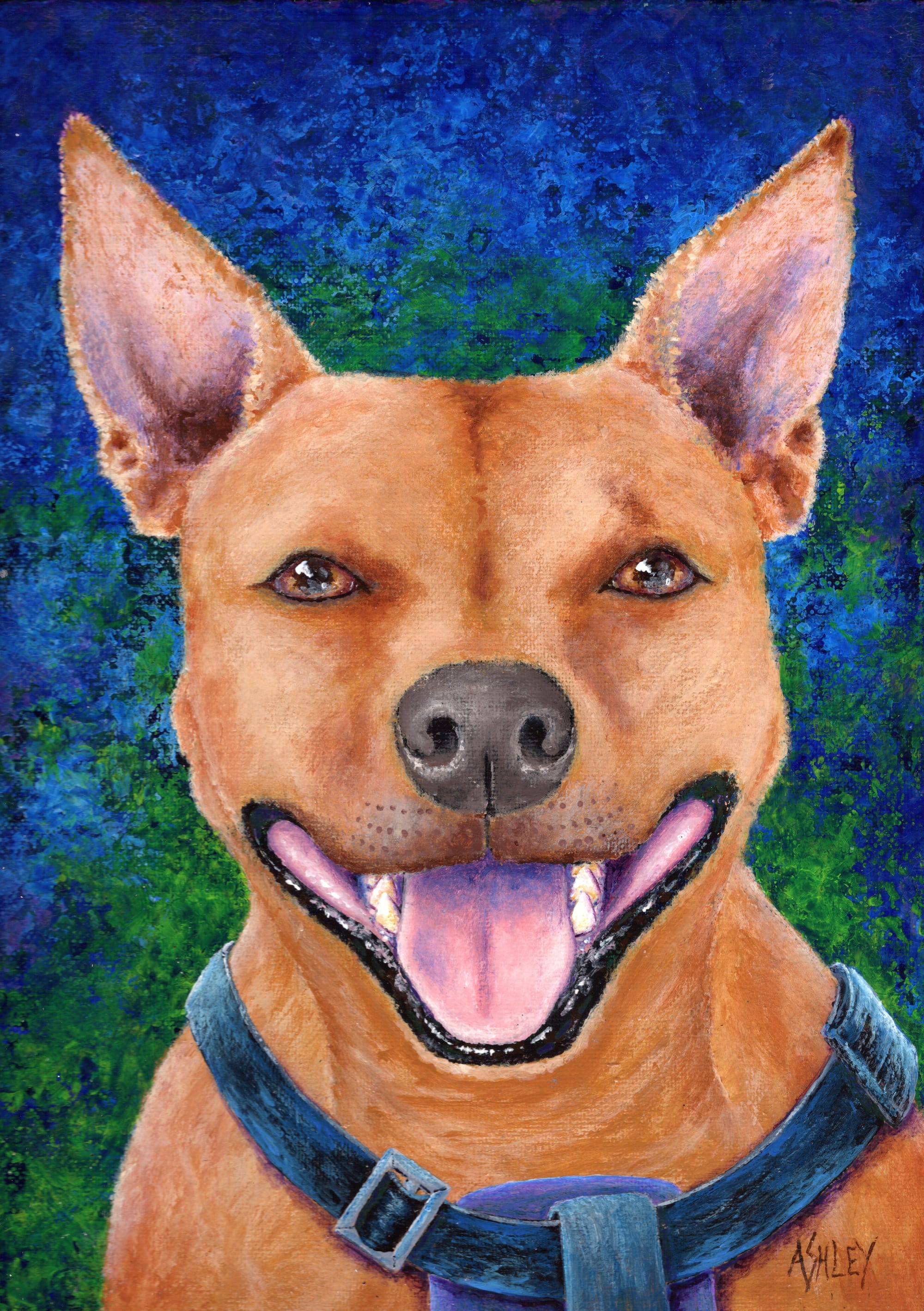
Where do you see your art heading from here? Do you have any different plans for what’s next? Or are you keen to focus on just developing your paintings and sculptures?
Ultimately, I want to keep learning and pushing myself in new directions. One of the biggest dangers, with regard to creating art in such an isolated environment as prison, is repeating yourself. It’s more beneficial to fail at a new endeavour than to produce the same masterpiece over and over again.
I create all kinds of artworks: socially minded pieces, portraits, landscapes, abstracts, anything and everything really. But if there is one overarching theme, it’s a sense of positivity that I try to bring into most of my creations. So, it’s this concept I wish to explore and push into new directions, both for myself and others.
Depression is still a constant in my life, yet, my art practice is by far the most effective anti-depressant I’ve ever experienced.
Most prisons don’t have art teachers or classes. What’s your advice for other people who want to create art in prison but don’t know where to start?
For me this is the most important questions you’ve asked. I’ll be honest, teaching yourself art is not easy, very few persevere, but it is definitely possible. You will need patience, will-power, and a strong work ethic. Here’s my advice.
• Start drawing – try for about 30 minutes a day, every day. Use graphite pencils, coloured pencils or pens. Drawing is a skill that can be learned by anyone.
• Draw anything. Your hand, your shoe, anything. The best things to draw are often things you’re interested in.
• Don’t throw away any of your drawings. Keep them to look back on when you become professional.
• When you’re first starting out, feel free to copy other artist’s work; it’s a great way to learn. Comic books and graphic novels are a great resource.
• When you first start painting, try to think of the paint as drawing with a wet medium.
• Get your Education Department or family and friends to send you printed art demonstrations from the Internet.
• Read about art history and contemporary art. Contemporary art can be difficult to understand at times, but try to find out what the artist is trying to communicate and I’m sure you’ll come to appreciate most of it.
• Your greatest asset will be self-confidence. A strong mindset is more important than natural talent.
I hope you’ll all forgive my arrogance, but I know that I’ve reached a competent professional level. However, what you don’t see is the 1000 artworks I’ve done to reach this level. There’s no doubt in my mind that you could reach the same level if you so chose.