Published in Issue 14 of Paper Chained in June 2024.
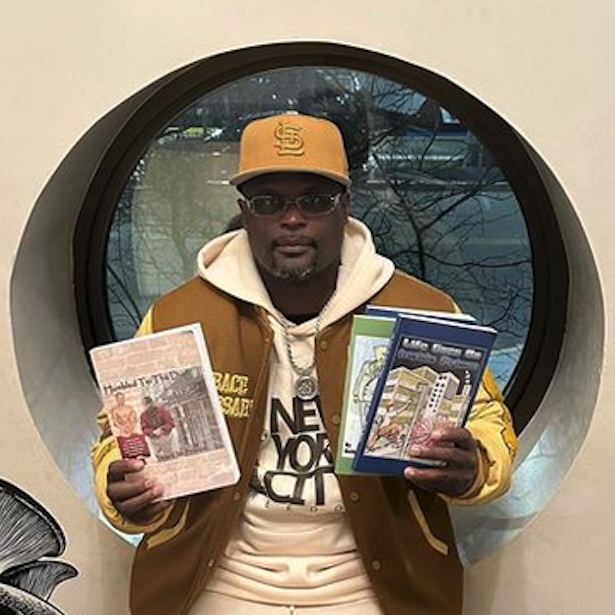
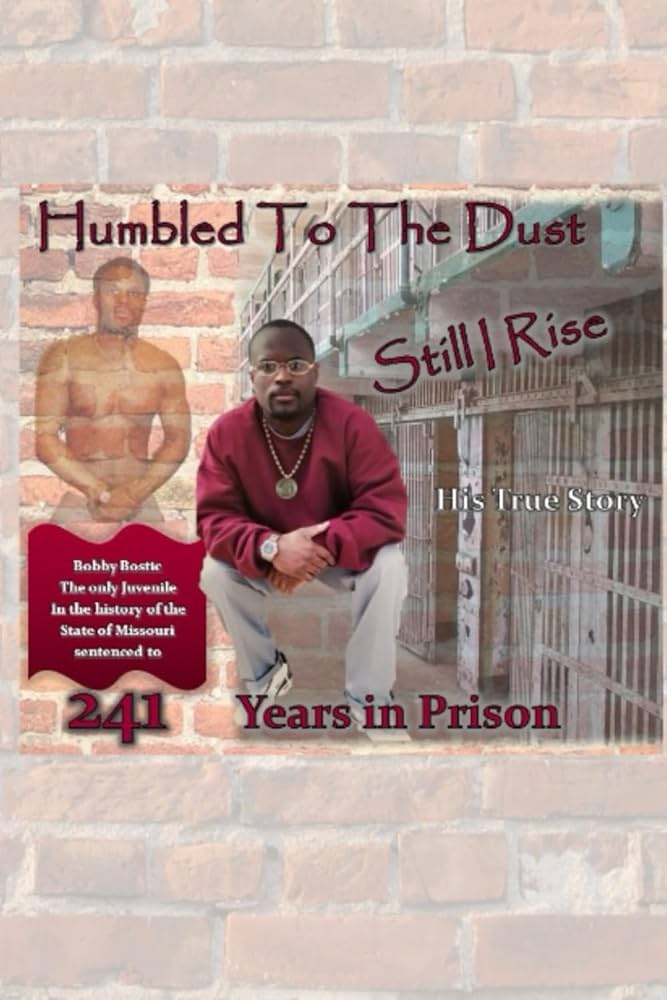
In 1995 when Bobby Bostic was 16-years-old, he was sentenced to 241 years in prison in Missouri for an armed robbery and carjacking in which nobody was seriously injured. In 2021, a law inspired by the severity of Bobby’s sentence was passed, which gave any child sentenced for crimes other than murder the possibility of parole after 15 years. As Bobby had already served 27 years, he was able to apply for parole and was released the following year. Paper Chained Editor Damien Linnane talks to him about his writing both in prison and after his release.
Like me, you turned to writing in prison. I only wrote one book inside. You were in for a bit longer than me though so you were about to write eight. Tell me about your writing process.
My process of writing poetry books in prison was just write all the titles of poems down and when I get like over 100 titles then I’ll start the process of writing them. With my non-fiction books I would just write the headings of the chapters. Then I will go back and write each chapter.
But I write each book long-hand. I write it by hand first, then I’ll turn around and type it up right. So the eight books I wrote in prison I wrote by hand. We could get typewriters in my prison, so that’s how I typed it up. These days I’m using a computer. Since my release I’ve also published an autobiography, and now I’m in the process of publishing a book of essays and prose.
How did you manage to get books published while you were inside?
I would send them to my family who helped me. It was challenging at times. In fact it took two decades because when I was writing my first books in the 1990s self-publishing was non-existent, and not available to the average person. The self-publishing scene really took off in probably 2009 or so. I didn’t get the first ones published until 2020 though as my family and friends were busy and it was a slow process. My first book came out in January that year, then I published six more that year. So it was a whirlwind of publishing.
I find it hard enough to promote my two books on the outside. How did you go about trying to promote yours from in prison?
Mostly writing letters. I would write to various magazines, newspapers, anybody I could try and promote my books, because marketing never stops, even when you’re in prison. I was constantly working on that inside. Because of that, I was able to sell enough to have a nice little cushion of finance for when I was released.
Was writing what kept you busy for most of your sentence?
The majority of my time actually went to reading, because it was when I was reading that ideas and creativity sparked in my mind. Reading gives you ideas. It makes all the organic thoughts you have come to life, then you can write it down. Reading gives you a source of inspiration you can’t get from anywhere else. For me, reading was the key in prison. It was the catalyst that pushed me to want to accomplish more things. Reading showed me what was possible, and that my goal would be wider than the horizon that I had limited it to. If you ain’t reading, you don’t get to see beyond your own world. It helped me visualise opportunities even though I had been sentenced to 241 years.
What was your favourite book you read in prison?
My favourite was Think and Grow Rich by Napoleon Hill. I still keep it with me now. It’s a powerful, potent and inspirational book about a man letting people know you can think goals into existence no matter what circumstances or adversities are against you. He uses his mind to visualise goals and then does everything in his power to make them happen. I used it to grow and think my way to freedom. Once I broke out of prison mentally, then the physical freedom was right behind it. Me talking to you now is living proof that those types of dreams do come true.
I know you did a lot of education in prison. Can you tell me about that?
Nelson Mandela said education is the letter of freedom. Education was everything to me. A lot of my life in prison was based around education. I did every course I could. My high-school equivalency, an associate degree, dozens of short courses. Remember, prison is temporary, this is a phase you’re going through. Find a meaning of purpose in prison to prepare you for when you get out.
Have you been writing much since you got out?
Every book I’ve written was written in prison. My autobiography, which was published after I got out, was written in prison. People are reading my poetry in particular now, and they’ll be like ‘Oh I see what he’s saying, because now he’s out of prison.’ But I wrote everything before I even had a chance to get out, I was just free in my mind. But when I was in prison, I exhausted all the subject matter I could write about. I write non-fiction, so everything I wrote had to be based on something I knew, experienced, or researched
Now that I’m out and have new experiences, I feel like I’ve got new subject matter. I’ve started a writing residency this year which has given me a stipend and an office space to write in, so I’ll be writing my first book out of prison there.
How long did it take you to write a book in prison?
All of them took me about two or three months. The one I’m about to start may be the same.
What have you been doing with most of your time since you got out?
I’m self-employed. I do a lot of public speaking and also promoting and selling my books. My mission has been working on my books, reaching out to try and get public speaking arrangements. It’s a constant quest. It takes a lot of work to put yourself out there.
What’s the advice you’d give to people still in prison about using their time well?
My advice to y’all in prison is that despite the negativity around you, you need to stay positive. We all have a gift, something we can offer and give to the world. We may have used our power for the wrong purposes before prison, but now we’ve got to use it for something positive.
You may not have any appeals left in prison, you may be dealing with health issues. It’s hard to see sometimes, especially when it seems that there’s no end in sight. But if you stay faithful and patient, you will see a reward from that. Even if you’re stuck there, teach others, give something back no matter what, because your life is not defined by the prison you are in today, tomorrow or next week. Prisons come and go, but the things that you can create won’t leave. Create something that’s meaningful and contribute something to the world. Be a contributor instead of a taker. Respect and see all your fellow humans, see the other prisoners as human beings, see the guards as human beings. Just be patient, and come home. They can lock up your body, but they can’t lock up your mind.
Bobby's books can be purchased from Amazon.