Published in Issue 23 of Paper Chained in September 2026.
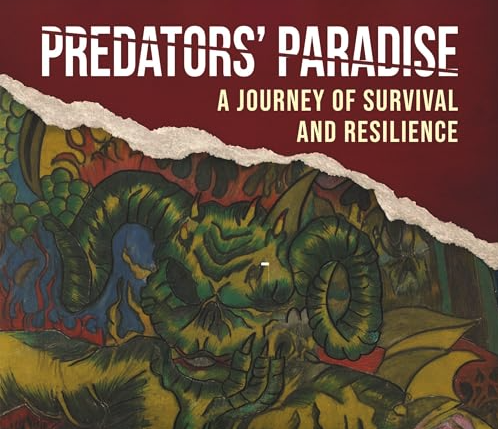
Glen Fisher’s memoir, Predator’s Paradise, is a gripping story about a childhood of neglect and violence, the incompetence and horrors of state ‘care’, and life on the streets of Kings Cross. Glen’s difficult life inevitably took him to prison, where he was also the creator and editor of the prison magazine Wazza Happening. Paper Chained editor Damien Linnane talks to him about his past, and the incredible work he is doing today.
It’s always exciting to meet someone else who edited a prison magazine. Can you tell me about yours?
I started Wazza Happening in Oberon [Correctional Centre] in February 1990. I ran it until my release on 26th October 1992. I’m pretty sure it didn’t continue after I left. There was a teacher at Oberon named Jane, who ran the education. It was my idea to run a paper and she agreed. It wasn’t well received at the start, but after about six weeks, everybody wanted it.
What gave you the idea to start it?
I wrote a lot of poetry and I drew a lot. And people were always asking me to read my poems. I was working in education mainly and we had lots of events. I used to run all the sporting events in jail. I was always running chess comps, table tennis, touch football, cricket, that kind of thing. And so I thought it was a good way to get information out, and we were also trying to get people to come and do education. So I said to Jane, if we put out a paper, we could let people know what things we’re doing. We had things like art classes and computer courses.
Was there any push back from the prison system?
The Superintendent didn’t like the idea at first, but I would submit it to Jane who would take it to him and it got approved. There wasn’t really any push back, but they needed to approve what we were handing out. It all had to be checked. They never completely refused to print anything but I had to change some wording in a couple poems, and a crossword. I had a question along the lines of ‘what you use to rob a bank’ and the answer was gun or something like that. They wouldn’t let me run along that kind of talk. Unfortunately I don’t have any copies of Wazza Happening anymore. I did have copies but my addiction took over and I lost a lot of stuff I had from prison. I did another paper also called Wazza Happening for the methadone clinic in Lithgow when I got out.
Hopefully someone reading this might have a copy of Wazza Happening, or know where to find one, and will let Paper Chained know about it. So you were in custody when Michael Yabsley was Minister for Corrections?
Yeah. He got rid of the remissions. I actually wrote a song about it. We had a talent quest at Oberon jail. And I did a song about remissions to the tune of the song Mr. Sandman. So four of us would stand in line and two of us would bob up and down. And then I go like, ‘Mr. Yabsley, we’re sick of you, you took remissions ...’ something like that. I can’t remember how it goes now. I wrote about all the screws in the jail as well and we actually won the competition, but I handed the prize over to an Aboriginal guy who sang a song called ‘I’ve Been Here 16 Years and Still Got Life to Go’. He was fucking incredible. We only won because all of our friends were there and the winner was judged by the highest clapping, and obviously there was four of us and we were all friends. Everyone sort of clapped for us and I didn’t think it was fair. So I gave the prize to the guy that actually deserved it.
Can you tell me a bit about Predator’s Paradise? When did you start writing it?
I got really serious about writing the book in 2015, and it got published in 2019. Its become a lot more popular recently. I think that’s got a lot to do with my social media getting more popular and that we made an audio book version. I was on A Current Affair and I’ve done a few podcasts on YouTube that got 250-300,000 views. A lot of people bought the book after that.
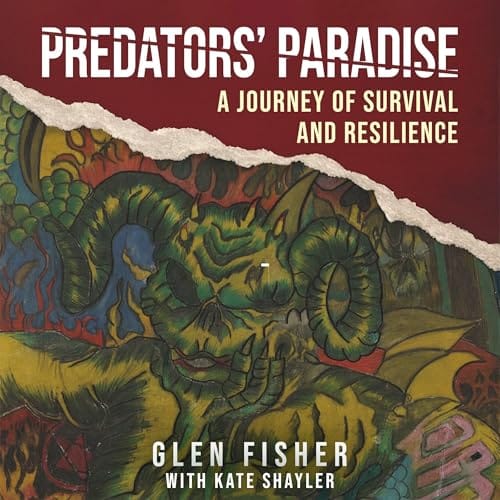
The book focuses on heavy subjects like predators who abused kids on the street. Did you find it challenging to revisit all the abuse you suffered when you wrote it?
I did. So at the time I wrote my book, I was going through court cases and trials. I had to go through four separate trials and two different Royal Commissions against what had happened to me as a kid. So it was really difficult at that point. But what I did was I used my DOCS files in my book. And so I wrote what happened and then I’d put the docs version down. So it’s like my story and then the actual system’s response to what happened. And so, I just started off by writing a timeline, and I got all my files and records to go along with my recollection of things and got it all in order. And then when I finished writing it, I gave it to a woman to make it more succinct and get my spelling right. But I wrote the book myself. I’m actually writing a second book called Escaping the Cross. It’s a memoir as well but more about the later parts of my life. I want to tell people what’s happened. You know, I’ve turned my life around because when I wrote that book, I was still going through a lot. I’d only managed to get three of the predators I wrote about convicted. I had another guy convicted after that, and then I stopped using and I got my life together. I got off the methadone program. I run a successful program now called the Legup Project. Now I speak in universities, I speak at youth off the streets. I speak all over Australia. If you go through my videos on social media, you’ll see I speak everywhere.
Was there one thing that helped turn your life around?
Yeah, I think there was. Firstly, I started sharing my book on TikTok. That was the start of it, but I met a friend of mine who also is an influencer named Gary. And we had a conversation. He said, mate, you’ve got a hell of a story. He said, you need to be more vocal with it and kind of be more brave and tell it. And so I did, and I was coming back from Melbourne one time from seeing him. And what actually happened was I saw all these people homeless on the street and I thought, fuck, mate, nothing’s changed. It’s how it was when I was a kid. So I thought, I’m going to start going out and helping people. And I think having a purpose is what gave me the ability to change my life.
And this is what started your charity, the Legup Project?
Yeah. Originally I just went down on my own with a backpack and gift cards and some toiletries. Then A Current Affair picked up my story. If you have a look at that video, I look really unwell. I had no confidence. I was 108 kilos. I was on methadone. And then I did another interview three years later when I’m running the Legup Project and you can see I’m fit, I’m healthy, I’m talking clear. It’s like watching two different people.
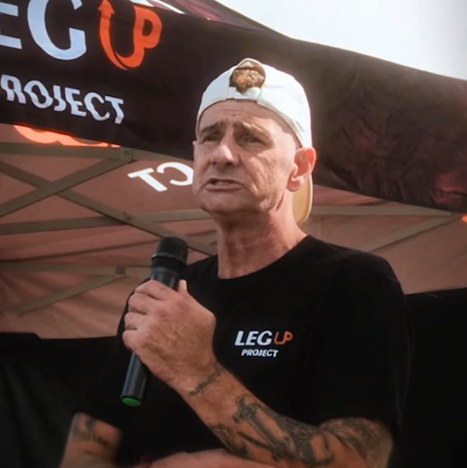
The Legup Project opened a branch in Cessnock this year. What’s your dream for the overall program?
Well, there’s a few. One is that we want to be Australia wide. But more importantly, the main goal that I have is that we want to open up emergency crisis houses in the city and start being able to get temporary accommodation for people. I’ve got a whole lot of volunteers with me now.
Where does the funding come from?
I’ve been paying for it all from my own book. Occasionally I get a donation. I had a guy give me $5,000. His wife was struggling with addiction, and after watching my videos, she got her shit together and he wanted to repay that. So he rang me up and said, I want to you know, do something for you because you did something for us. The amount of people that messaged me saying that I’ve changed their lives is incredible. It’s almost impossible to believe.
What do we need to do to keep people out of prison?
One of the problems with prison is that we work towards punishment as opposed to rehabilitation. The problem with the system is that most of the people in prison aren’t bad people that need to be made good. They’re sick people that need to be made well. You’ve got a lot of mental health issues in there. So I think if we address the homelessness and the mental health and the recidivism, I think we could make a big difference into the amount of people going in. And it starts with education; stop looking at punitive and start looking at rehabilitation.
What’s your advice for people in prison right now?
Use your time well. You can either spend your time in there and be angry and be a part of the culture, or you can actually invest in an education. I did a school certificate when I was in jail. It’s one of the smartest things I ever did, I put my head down, I stayed away from the politics, didn’t give a shit about all that stuff. I used my time to learn to read and write properly and get an education.