Published in Issue 12 of Paper Chained in December 2023.
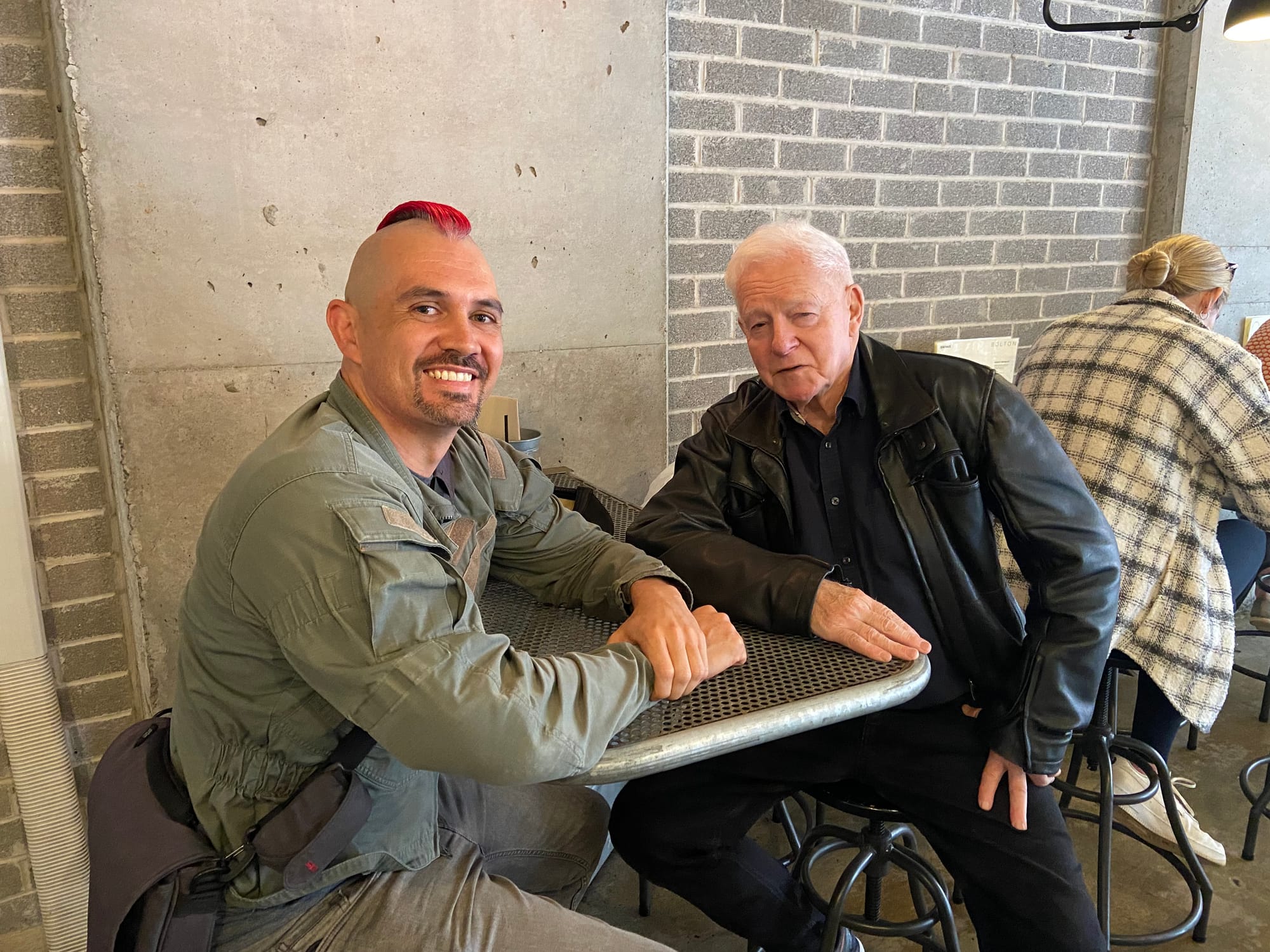
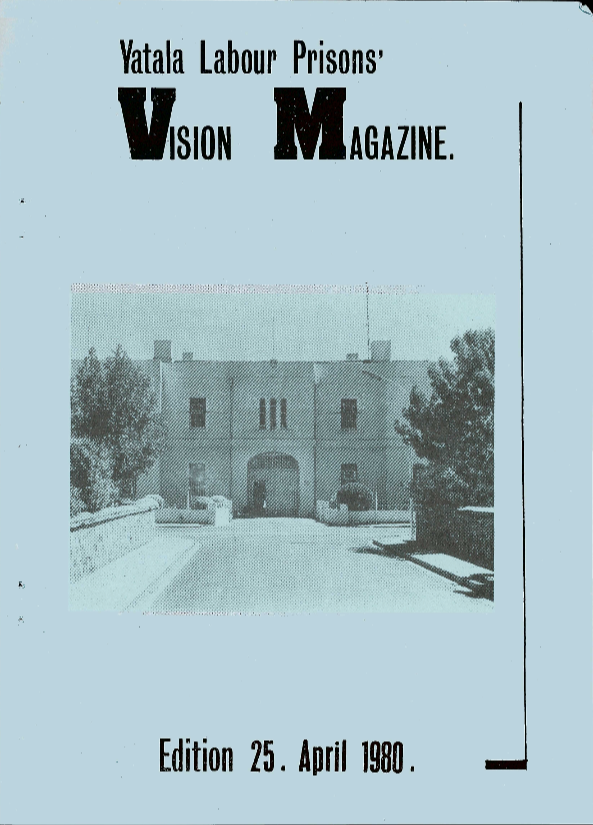
In 1999, John Killick made nationwide news for six weeks after his infamous helicopter escape from Silverwater Correction Complex. Long before that, however, he was one of the editors of Vision, a magazine produced at Yatala Labour Prison in South Australia. Paper Chained Editor Damien Linnane speaks to him about Vision, prison, and what he is doing now.
So why don’t we start with Vision : when did you become the Editor?
I took over in late ‘79. It was pretty stuffed when I got it. It had been a good magazine then it fell down and deteriorated. They just weren’t doing much work on it and nobody was contributing. One of the screws has strict control over it. He would look at what you wanted to print, and guys wrote some pretty heavy poetry and articles. It was hard to explain to them that we had to modify their work, because the screws wouldn’t let us print it otherwise. You had to compromise to get stuff printed. If you didn’t, you’d get shut down. But a lot of guys inside couldn’t understand that, so they just got the shits and stopped contributing anything. But I knew that if we compromised, we’d get through and gradually we’d build it up, and the bigger we got it, the more power we’d have to be able to publish things. And that’s what happened. We built it up to about 96 pages an issue. By the time we finished up, we had judges and lawyers and people interstate on our mailing list. It started to gather momentum and then it just went from strength to strength.
The Deputy Governor and others were against the magazine though, and they did try and shut us down around 1980, so I reached out to the Ombudsman’s office. The Assistant Ombudsman came to Yatala to see me and one of our regular contributors, Len Lehman. He was on our side and he went in to bat for us, and he got the ban overturned. My last issue as editor was in late 1981. After I won my appeal and was released, my sub-editor, Marcel Spiero, took over. He was a good editor and he had the brains to put it all together, but he got badly into drugs. I’d gotten him off drugs in the first place, but he got back on them after I left.
Do you have any memorable moments as editor?
So my trial leading to my imprisonment at Yatala had been an absolute farce. It was later overturned at the High Court, who said I should never have been found guilty in the first case. I thought the judge who originally sentenced me was very biased. So when I became editor I wrote this story called “The Trial of Billy Goat”, and I was Billy Goat. She was Justice Unicorn. The cops were pigs, the lawyers were weasels and the jury were sheep. I had an artist draw up the whole thing and I sent her a copy of the magazine. She wrote back and said, ‘It’s a wonderful magazine : keep me on the mailing list’, but she didn’t mention the story. She was too smart for that.
Tell me more about your trial, and why it was called the ‘Perfect Alibi’ case?
I was framed by Roger Rogerson, who was a decorated police officer at the time. He said I robbed a bank in Adelaide, but I’d actually been in Sydney the day of the robbery. Seven people, regular people with no criminal convictions, had seen me in Sydney. But the judge said to the jury, ‘Who are you going to believe? Police officer Roger Rogerson, or bank robber John Killick?’ So they believed Rogerson. Look, I think that the average cop is actually pretty decent. But it was the old school ones like Rogerson that used to run the city. They had total control so they could do whatever they wanted. When the conviction was quashed, it was the first time anyone had beaten Rogerson. He was so used to just verballing everyone and getting away with it. Anyway, I wrote an article about it called The Perfect Alibi, which was published in Norway, and also over here.
Rogerson is now in prison himself for murder. How do you feel knowing he is locked up for the rest of his life?
The last time I saw Rogerson he was a crippled old man. And I know this sounds ridiculous since he set me up, but I feel a bit sorry for him, because he’s never getting out, and I never want to see anybody locked away for life, not even a cold-blooded murderer.
So people always want to ask you about your then partner Lucy helping you escape in the helicopter, and the escape itself has been covered to death, but I do have one question. I was always surprised you got away with it for as long as you did. What was your long-term plan for staying out of prison?
We wanted to get overseas. I had someone get false passports for us. If I didn’t have them I wouldn’t have tried escaping. But I just didn’t expect the extent of the manhunt the police carried out. They knew everyone I’d ever contacted in the last seven years. The guy that supplied the false passports, he was in jail but his wife had the contact for us to get overseas. I called her and she just said ‘John, we’re bugged,’ so Lucy and I were completely on our own. I really have to give the cops credit for the extent of their manhunt.
To be honest with you, I’ve always said it was a mistake. If you escape from prison and you can’t get out of the country, they’re going to get you eventually. And they were getting 300 reported sightings of us a day. Someone even reported a sighting of us over in Hawaii in a church, which was just ridiculous, right? It was just idiots, you know, people who wanted to get their 15 minutes of fame. But with 300 sightings a day, eventually somebody’s got to be right. And that’s what happened. Somebody recognised Lucy.
Hip-hop artist Urthboy wrote the song ‘Long Loud Hours’ in 2015 about the escape. How do you feel about it?
I didn’t know about it when it first came out. My niece eventually told me about it. At first I didn’t like it, I’m not into rap and that stuff, but after a while it sort of grew on me. I think it’s quite clever — that guy’s a good artist. I think it’s more a tribute to Lucy than me. But everybody seems to like it. I’d like to meet Urthboy one day.
You’ve recently published a new book. Is writing what keeps you busy these days?
I’m currently writing my sixth book. I’m a bit behind on it because I keep travelling for talks and conferences. The first book I did was just my life story up until the 70s and I deliberately left the helicopter escape out of it because I didn’t want to capitalise on that.
We’re always having mini-launches for books and stuff like that, so I meet a lot of people. There’s a minority who will always sort of hate you because of what you did, and I never argue about it. I say ‘You’re entitled to your opinion’, but overall, I’ve made a lot of good friends. It’s easy to be wise in retrospect. We always say ‘If I had my time to live over again I wouldn’t have done it’, but you would, because you’d be the same person.
Sometimes I think the greatest thing you could ever do would be go back to just one day in your life, knowing what you know now, and change it. But we can’t do that. So you just gotta live with what the past is. I wouldn’t change anything now anyway because its made me the way I am today. Prison has made a lot of people.
I normally end interviews with former prisoners by asking what their advice is for people getting through a current sentence, so what’s yours?
I did 30 years, but I’m not even sure I’d survive prison now with the gangs that are running in New South Wales. In the old days, if you got into a fight, everyone stepped back. You just had your fight and later on you’d shake hands and go and play cards. These days, if I have a fight with somebody and beat him, I’m going to get stabbed later on in the shower. It’s pretty heavy. People don’t realise how heavy it is, but at the same time half the guys are on protection and it’s mainly over drugs. They get drugs and then they can’t pay for it.
But jails are totally different now, because of drugs and gangs. I never had any trouble when I was inside, because I’m not into drugs, and I think that I earned respect because I was always against the system, I was one of the few guys that won a High Court appeal, and I never gave anybody up.
But I nearly got in a fight in Goulburn once. We were talking about paedophiles. And I said in front of a lot of heavy crims, ‘If I knew the guy next door was molesting his daughter, I’d give him up to the police’. And one guy said ‘You don’t give anybody up!’ I said I’d be giving paedophiles up because he’s ruining that kids’ life and I still say that today. If I knew about any paedophiles I’d go to the cops about it.
Some parts of prison culture disgusted me. I never saw or heard of a rape happening when I was inside, but I was always sickened by the fact that if someone was raped and made a complaint, some prisoners would crack down on the person complaining more than the rapist.
Oh, absolutely. When I first went into jail, I had a friend who was a really good-looking kid. And they put him with a couple of heavy guys and he was getting raped every night. I heard about it and I approached him. I said, ‘You’ve got to say what’s happening to you so you can get out of here’. And he said, ‘No, I can’t because then I’ll be a dog’. So he just suffered in silence. And it’s just a sick concept that rapists anywhere would be protected by silence, because rape is one of the worst crimes there is. It ruins lives.