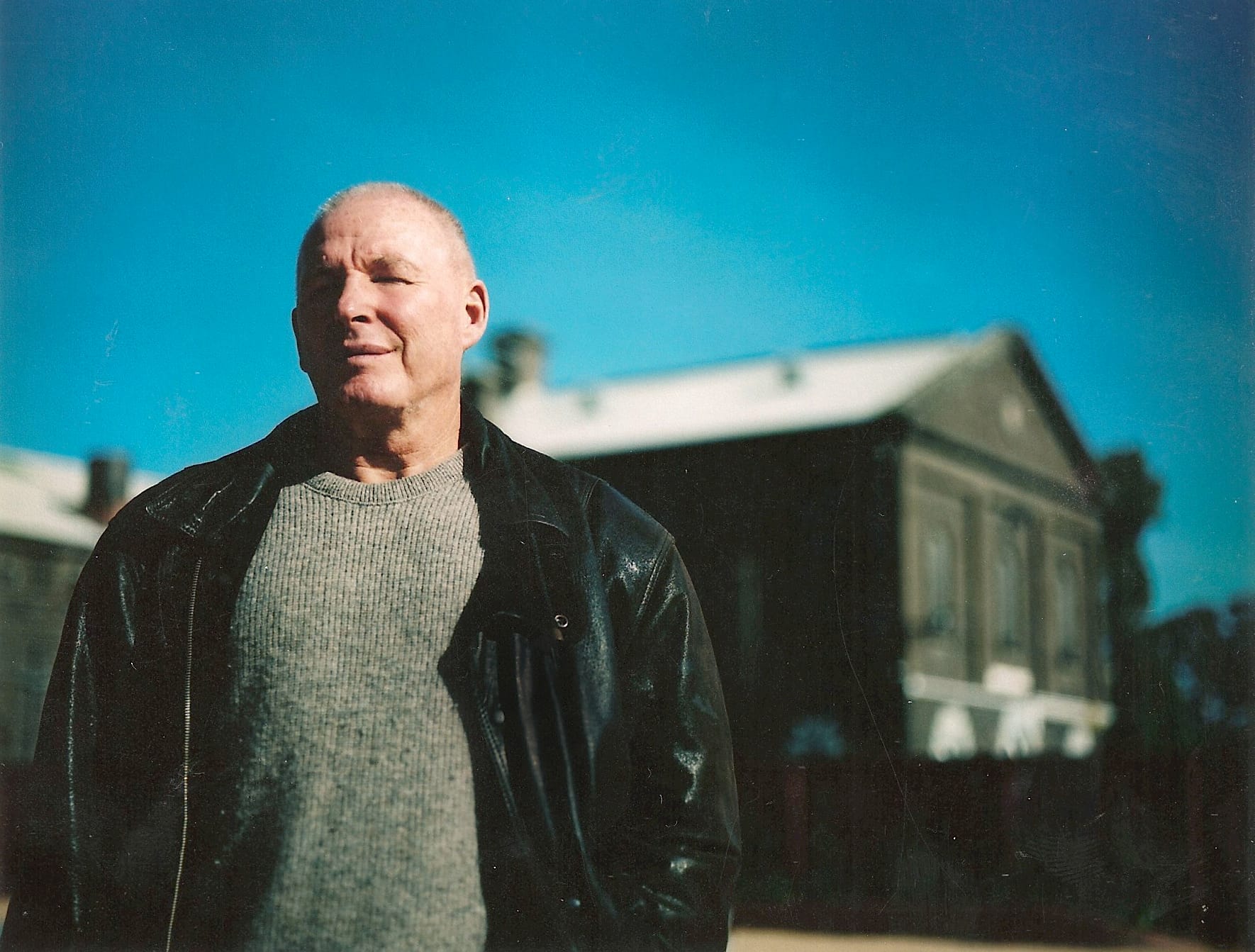
By Damien Linnane. Published in Issue 11 of Paper Chained in September 2023.
From 1968 till 1975, Ray Mooney was incarcerated at Pentridge Prison in Victoria. Damien Linnane talks to him about his experience as the editor of the prison’s short-lived magazine, The Graduate.
I’ve been told you were the first prisoner in Australia to complete a university degree while incarcerated, can we start there?
I think that’s actually what led to me eventually creating The Graduate. So I was the first person to both start and complete university. There was a guy about four years before me who started a degree with Melbourne University, but he only did one subject; the prison didn’t want to get lumbered with helping him do the course by correspondence. When I went inside in 1968, there was no courses that allowed prisoners to study university by correspondence.
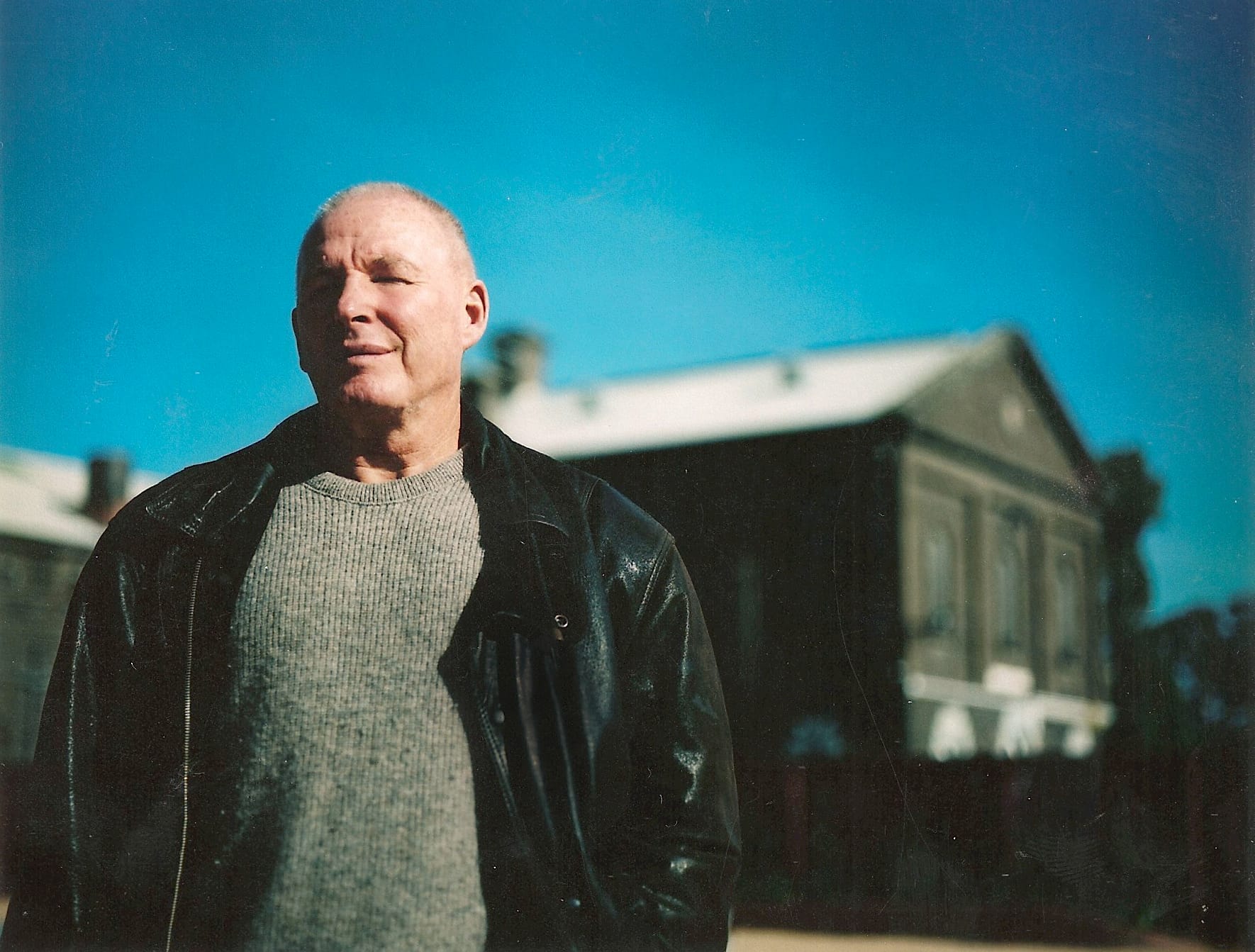
But my attitude was that I should do as much study as possible because when you’re assessed for parole, that was one of the key factors they measured, so I set out to find a degree by correspondence. There was nothing in Australia in 1968. The only places I could find doing degrees by correspondence were the University of London and the University of South Africa. I applied for London first, but it was clear they didn’t really want crims studying with them, but they also couldn’t officially tell me that. So first they said my qualifications weren’t good enough and I’d have to complete the British O Level, which was their equivalent of the HSC. So I did, I studied for a year, completed the O Level with a top pass, and then I applied again.
And then they said the only degree I was eligible to apply for was law, which was fine with me. But then they told me I would need to be approved by one of the Inns of Court to study, and one thing they judged approval on was your moral character, so they’d never approve me as a prisoner. By that stage I’d already started applying through the University of South Africa. They weren’t very keen on letting me study either. They said I could study, but only on the condition I completed the exams in Afrikaans, the version of Dutch that the white South Africans spoke. I said that was fine, but then three months later they told me the only place I could complete the exams was in Canberra, and obviously I couldn’t attend exams there. So in the end I couldn’t do anything through either of them. Eventually, I found a social science diploma I could do in Western Australia, then I was able to upgrade that to do an Associateship, and finally a bachelor’s degree through La Trobe University. It took me five years in total to get the degree.
That’s really fascinating for me to hear, because I wanted to start a degree in prison too, but I couldn’t as there was no internet and next to no computer time available, and courses are only run online these days. I assumed correspondence courses would have been much easier in the 60s and 70s.
No I was fighting a real battle to study, nobody wanted to open the door to help prisoners back then either.
So how did The Graduate come about?
I used to work in a section in prison called Amenities. We arranged all the hobby materials for the prison, and all the entertainment and activities. My job was to organise, arrange activities, and to make certain anyone coming into the prison could get what they needed without any hassles. But no matter what you arranged, there were screws in the prison who always wanted to make things as hard as possible. It was really difficult to get things happening on an organised level because back in my day, we were always fighting what we called ‘ball and chain’ energy. Pentridge in those days was split up into different divisions, and it was individual divisions that determined what would be available to inmates. I was first put into A division, which had access to all the educational facilities. It was comprised of mostly first-time prisoners or long-timers who never rocked the boat. Opposite us was B division, where the recidivists and heavies were. They were the people who probably needed help and rehabilitation the most, and they were denied access to it, whereas in A division, which was full of people who were most likely never to return to prison, we had access to everything available. I always thought that was madness, a complete paradox.
But that’s how it works, and as a result of being involved in activities and organising prisoners entertainment and all the hobby materials, I got a really good overview of how the prison worked because I had access to everything, and I could see that prison was set up in a way that almost reinforced the status that if you were sent to prison you were more likely than not to return after your release. That ongoing state was reinforced by the way the actual prison system itself operated, and no one was prepared to get in the way of that. And during my time there was that ‘ball and chain’ attitude displayed by a large group of screws who set out to try and prevent anything that interrupted how things operated. So it was really hard to get anything happening that would be accessible to everyone in the prison.
There used to be a prison magazine at Pentridge called Stockade, which had been run by the education department. It was full of religious people talking about how you were only going to become a good person if you started believing in what they were preaching. It was just a mouthpiece for the prison system and religious fanatics. The prison had complete control of it and the crims absolutely hated it. It shut down not long before I went in, partially because it was so unpopular with the crims, but the educational teachers also found it a burden to make, and the screws had always been against us having any voice whatsoever, so there was no encouragement to have it continued. But the governor at the time, Ian Grindlay, was always disappointed that it shut down, because its existence had been such great PR for the prison.
So in 1968–69, there were disputes within the prison about conditions like food, medical facilities, and the parole system. And of course, the one thing we were never allowed to talk about, which was brutality in H division, which was the punishment division. Everyone who went through H division was brutality beaten by the screws. H division was probably one of the worst places on the planet in terms of how you were treated. Now, in 1969, I was voted by A division to be one of two prison representatives on the Prisoners Representative Committee (PRC), which met once a month with Grindlay, the governor. Prisoners could only make complaints through a PRC representative. Among my job roles was recording the minutes for each session. The minutes had to be sent to Grindlay for approval before they could be send around to all the division noticeboards.
Grindlay got to know me. He knew I was the only person studying at university, and he asked if I’d be prepared to resurrect the magazine. Because I was then into the degree in social science, that was my third or fourth year, I liked the idea of working on a magazine so that I could transfer what I’d learned studying into something constructive. But I was hesitant because I knew why the old one had been so hated. So I told Grindlay I’d only do it on the condition I had editorial control, which he agreed to.
The biggest concern among prisoners at the time was the parole system, so that’s what I decided to focus the first issue on. It was a terrible system. For example, if you were paroled and had three years to serve, and you successfully serve two years, 11 months without committing any breach, if your parole was then cancelled you’d have to serve the whole three years again in prison. You weren’t given any consideration whatsoever for the two years 11 months parole you’d successfully completed. So there was a lot of hatred for the parole system, but I knew if I wanted to criticise it, I’d have to be very careful about how I went about it. You had to know how to write about it in a way where it didn’t look as if you were complaining against parole, but rather you were discussing it in a way where your concerns would be relevant and taken into consideration.
Simultaneously there was an issue at Pentridge that just offended me as a person, and that had to do with the way our psychiatric prisoners were treated. Psychiatric prisoners were housed indefinitely in G Division, and needed approval from the prison psychologist to be released. That psychologist was Allen Bartholomew. He died back in 2004, but he started the Australian and New Zealand Society of Criminologists, which is still active today. He was also known for the now-discredited theory that violence was related to males who had an extra Y chromosome. He believed people convicted of violence should be tested to see if they had XYY chromosomes. So he was running tests in G division of all the people who had been found not guilty on the grounds of insanity. Technically prisoners in G division could refuse to partake in his tests, but since he was the only person who was able to sign off on their release, they did whatever he wanted. Bartholomew had unbelievable power over prisoners. He was also brought into H division to deal with any prisoners who were not being compliant. The prison used him to certify anyone they wanted to get rid of as ‘insane’, at which point they would be transferred to J Ward, the institute for the criminally insane. Time served in J Ward didn’t count towards your prison sentence.
Bartholomew was one of the worst people on the planet. He kept so many people in prison unnecessarily if they didn’t do what he wanted. So I thought, what can I do about this? So I found a guy in prison, Malcolm, who said Bartholomew openly told him he cancelled his parole because he didn’t approve of the way Malcolm was treating a medical condition, which was not a legitimate reason for cancelling parole. The official reason Malcolm was given for parole violation was failing to update his address.
Malcolm wrote an article, ‘Past Shock’, which I put in the magazine. I went down to the printing shop and told them to print 200 copies as I had the governor’s permission to do so, which I did. I then sent the magazine to all the prison’s divisions. The next thing I hear is that Bartholomew is tearing his hair out after reading the magazine. He gets in touch with Grindlay and threatens to resign unless all the copies are destroyed. Simultaneously, the parole board aren’t happy with the fact I dedicated the first issue of the magazine to criticising them, and the screws all threatened to go on strike on the grounds we shouldn’t have the right to a magazine. The crims loved it though, I told them the next issue was going to be about police brutality, which really got them all excited.
Anyway, I get called into Grindlay’s office, and it’s all very confrontational because everything I printed was very well researched. Nothing was made up, all the research on parole was done from the social welfare department files. There was nothing in the magazine that you could really contest, except for the Bartholomew story by Malcolm. But I did that though having a prisoner outline what happened to him as a personal story, and it didn’t mention Bartholomew by name. Essentially, the article was just a case study, so it was very hard to actually get our magazine in trouble because all we had done was report exactly what had happened to Malcolm. But they ended up sending screws around to all the divisions to confiscate and destroy every magazine, and obviously I wasn’t allowed to make another issue. I secretly kept my original copy, which is the only one that still exists today. Unfortunately my remaining copy didn’t have a cover though. The original cover was just white with The Graduate and the date written on it in blue.
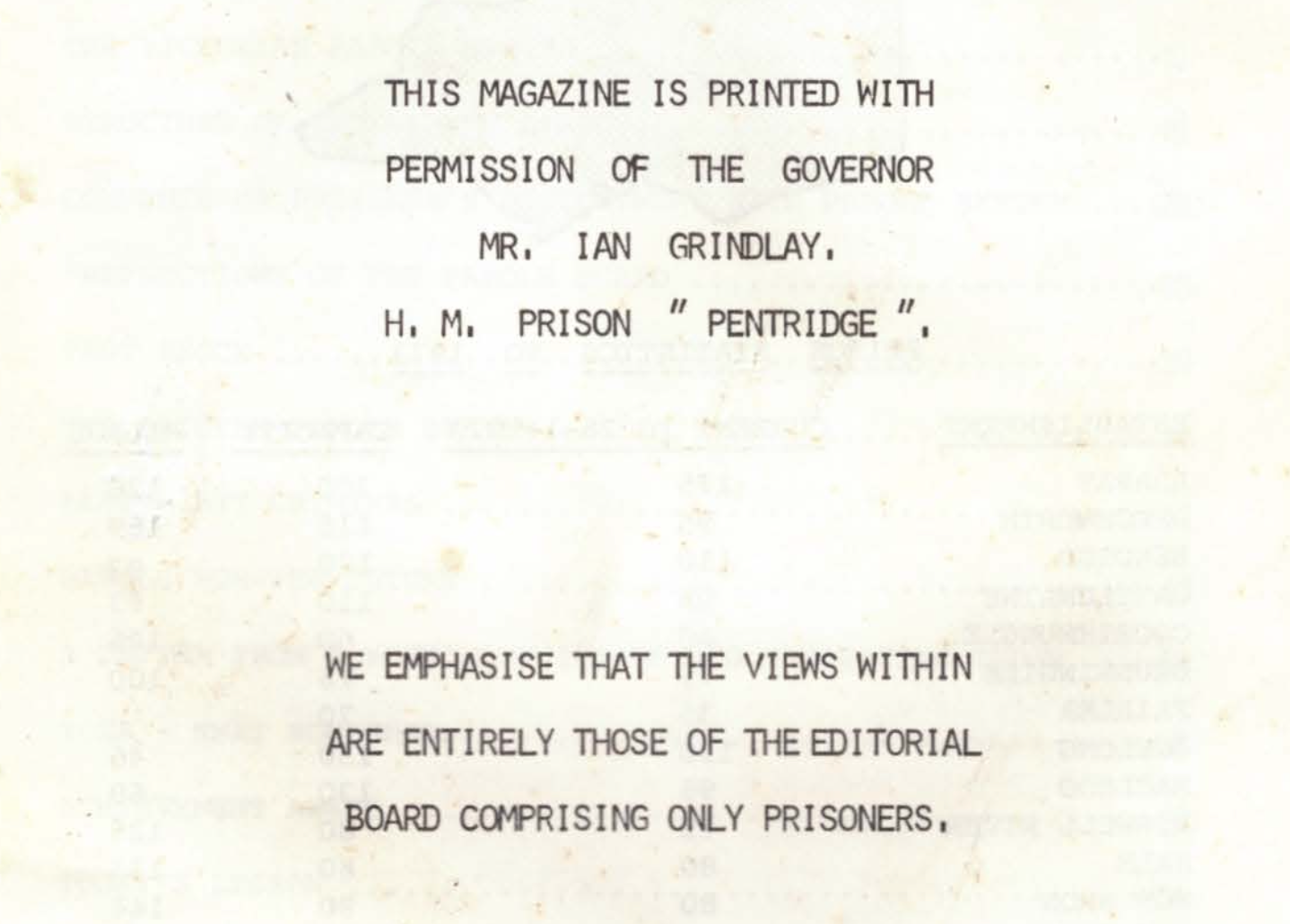
Even though he backed down to pressure and confiscated the copies, I’ve always had respect for Grindlay. I think he was a genuinely good governor. But he was hamstrung by the screws union, which prevented a lot of the changes he wanted to make. But he was a genuine reformist, and was able to bring about some really good changes, like introducing a lot of night education classes. Ironically, they ended up starting up a prison magazine at Pentridge again years after I got out. This time they just called it Stockade again. Pentridge Stockade was actually the original name of the prison itself.
That’s an incredible story, unfortunately a lot of prison magazines don’t last very long, but most do get more than one issue. Can you tell our readers what you do now?
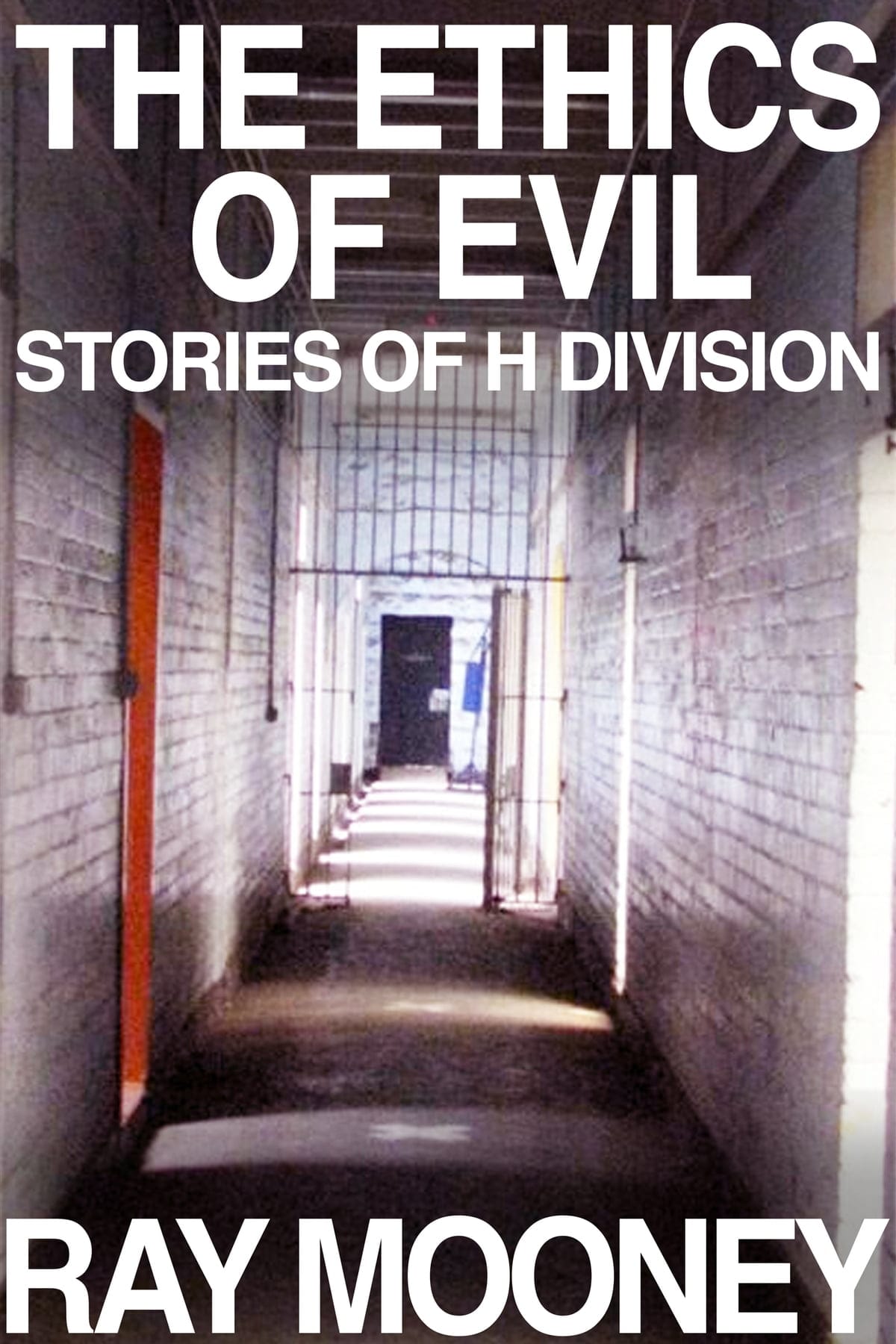
I’m a writer. I write every day. My book A Green Light is based on my experience in prison, everything from the activities such as the debating club to how security worked. And one of my other books, The Ethics of Evil, covers the total history of H Division, including the findings of the 1972 Jenkinson Inquiry, which uncovered a lot of the abuse that prisoners had been subjected to.