By Damien Linnane. Published in Issue 11 of Paper Chained in September 2023.
I rarely say no to new opportunities these days, because you just never know where the next one will take you. In March this year, I was asked to speak about mental health in custody at the Reintegration Puzzle conference in Perth. After my talk, I was approached by Peter Olwal, the leader of Pan Africa CURE, asking if I would be interested in speaking at the international CURE conference he was holding in Kenya. Not wanting to pass up attending my first international conference, not to mention visiting the African continent for the first time, it wasn’t a tough decision.
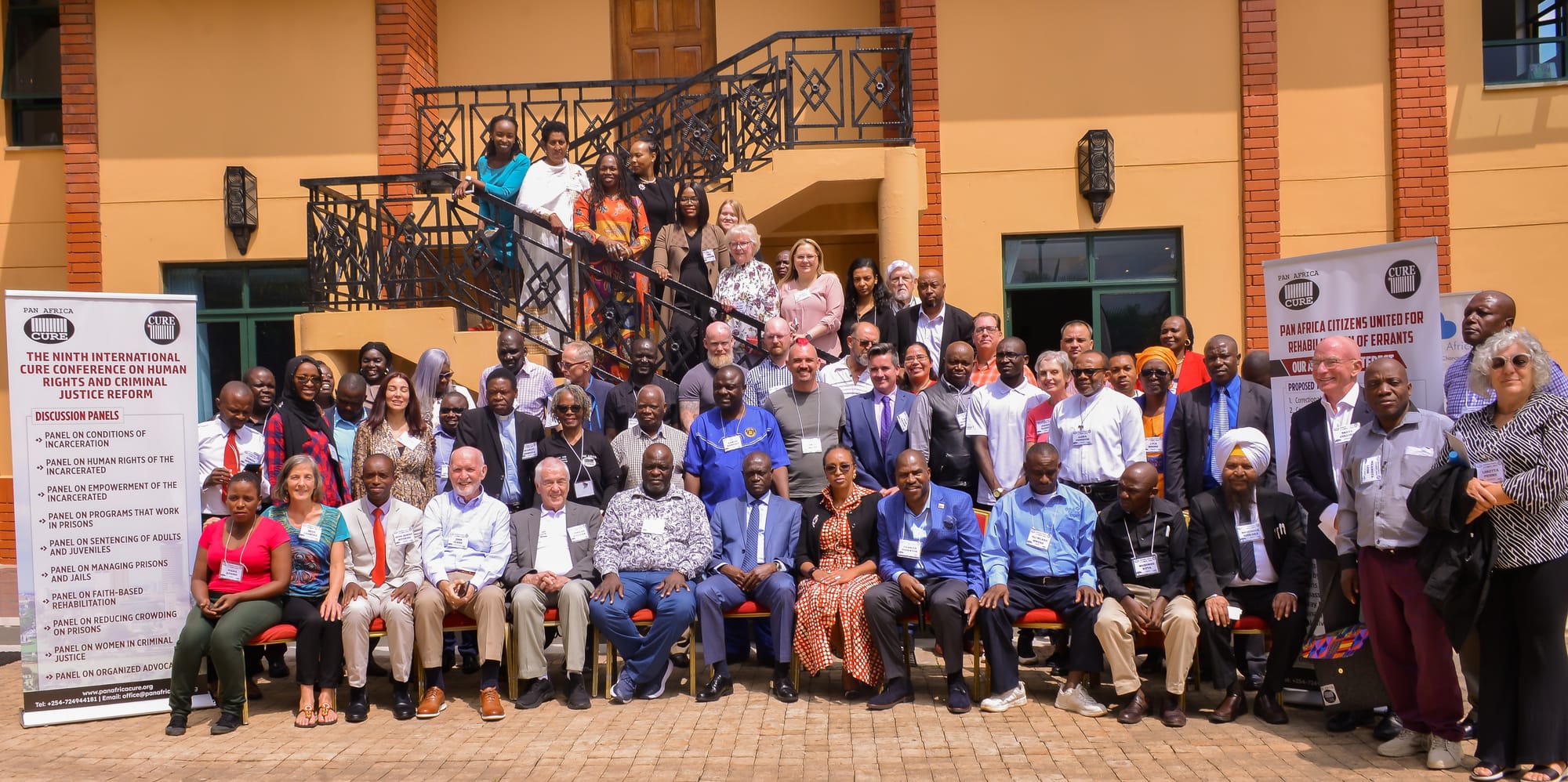
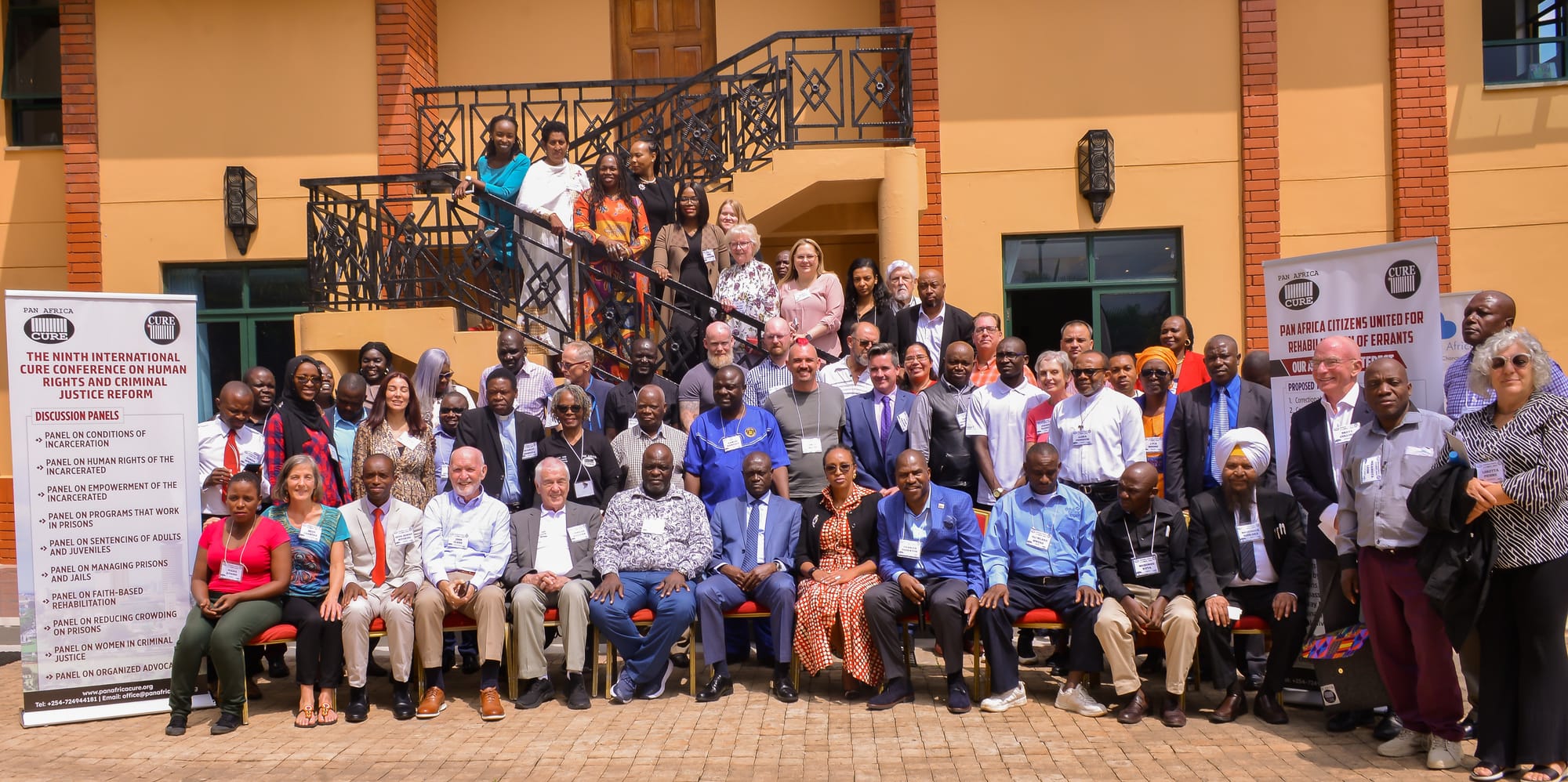
CURE, the Citizens United for Rehabilitation of Errants, is a grassroots organisation that was founded in Texas in 1972, based on the belief that prisoners should have all the resources needed to assist in their rehabilitation. CURE became a national organisation in the US in 1985. Since then, it has also opened up many chapters worldwide, the latest being Peter’s branch in Kenya. And this year saw CURE’s ninth international conference, which was attended by 95 people from 28 different countries, coming together to discuss how to improve conditions in prisons worldwide.
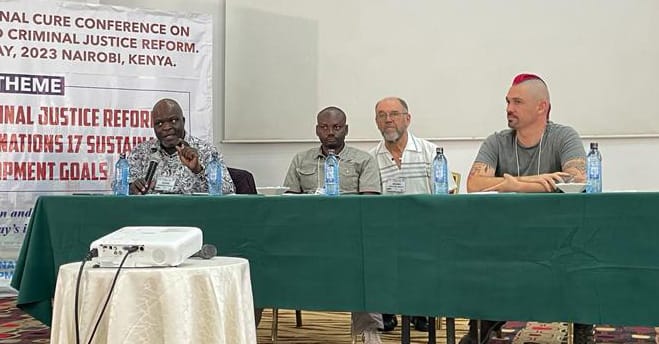
After the formal introductions, I had the honour of being the conference’s first speaker, where I talked about conditions in the Australian prison system. Africans in particular were shocked to learn that Indigenous Australians are the most incarcerated people on the planet, and that Australia is also one of the very few Western nations to imprison children as young as ten.
As I listened to other participants from around the world, I was struck by the common struggles of people impacted by criminal justice system’s worldwide. A speaker from Uganda talked about the issue of prisoners being released to homelessness, who then deliberately commit crimes so they are sent back to prison, where they at least have both food and accommodation. This is an issue that also undeniably occurs in Australia, albeit on a smaller scale. A speaker from Rwanda talked about how their nation only had a ratio of just one psychologist working in prison for every 15,000 prisoners. I can only presume this would sound terrible to any reasonable Australian. However, I suspect most Australians would be equally shocked to learn that the ratio of psychologists to prisoners in Western Australia, for example, is only one per 2,000 prisoners. Certainly better than Rwanda at least, though that’s hardly something for a developed nation to be bragging about.
Issues in developing nations, not surprisingly, were worse across the board. And while I believe the Australian prison system has no shortage of problems, hearing about the conditions prisoners in other countries face was quite sobering. While many prisons are operating above capacity in Australia, those in Congo, for example, are overcrowded to the extreme. One prison designed for 1,500 people is currently housing over 6,000. Speakers from Kenya highlighted how many people are often forced to spend a week in prison, simply for being unable to pay a fine that is the equivalent of less than an Australian dollar.
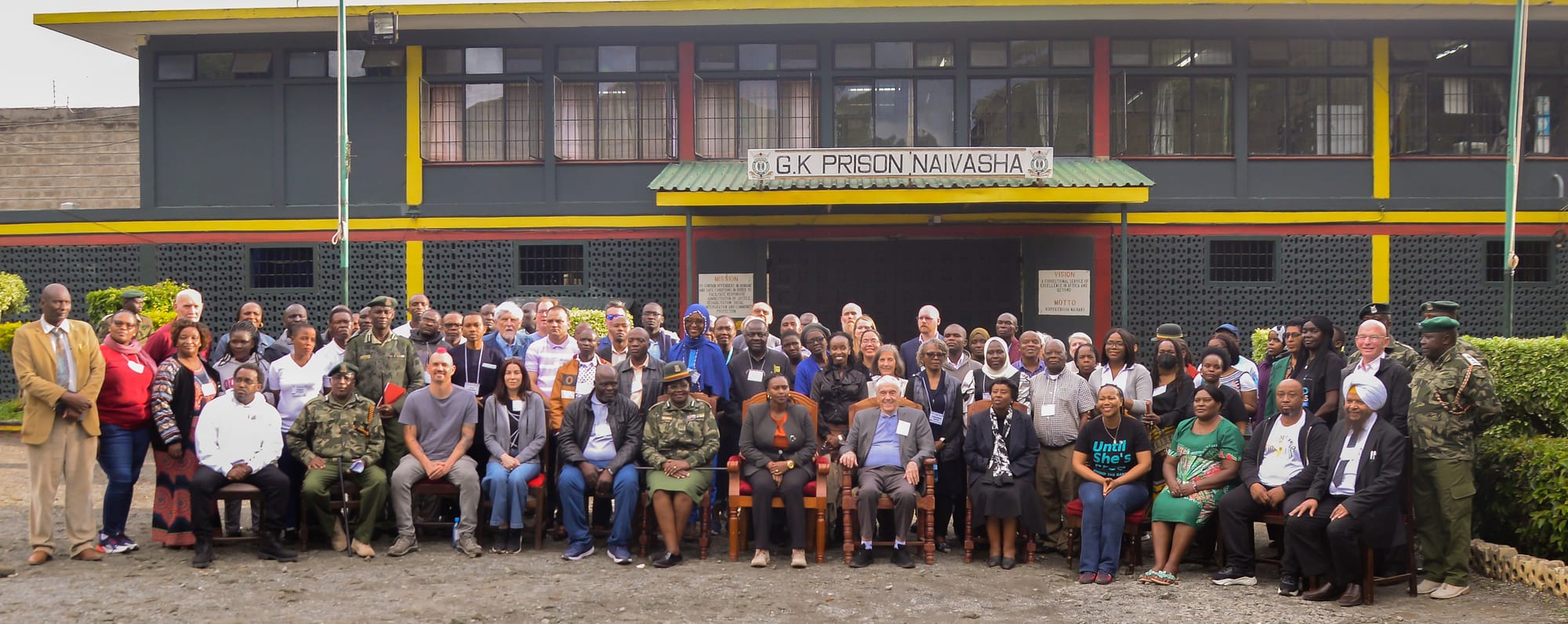
The conditions in Kenyan prisons were also discussed, but I’d rather tell you what I saw myself. One of the conference speakers was Kenya’s then Principal Secretary of Prisons, Mary Muriuk, who arranged for our conference to inspect Kenya’s largest prison, located in the town of Naivasha.
Naivasha Prison Inspection
The conference’s second day consisted entirely of our prison visit, which took us a good two hours’ drive from the Kenyan capital of Nairobi. Driving through the checkpoint into the prison grounds, the first buildings to come into view are made of stone, the size of small houses. Washing is seen hanging on lines and a handful of children are running around playing. I wonder if this is a minimum-security part of the prison which allows unrestricted visits from children, though I’m informed that the squalid accommodation is for the guards and their families. Driving along, tall concrete walls and guard towers quickly come into view, and I get an understanding of exactly how enormous this prison is. Our bus parks and we walk up to the main entrance. Entering the first gate, we wait in the reception area. An official poster on the wall states that COVID-19 vaccinations are safe and will not interfere with men’s fertility or ‘ability to perform’. Stupid conspiracies about vaccinations exist all over the world, though the ones that have made their way into Kenyan prisons are a bit different from back home.
A large blackboard several meters long occupies almost all of the left wall. It gives detailed information about the number of prisoners currently inside, and appears to be updated daily. It tells us there are 2,291 prisoners at Naivasha. 1,163 ‘lifers’, 1,118 ‘convicts’, 9 ‘special category’ and a single person on remand. A large white cloth obscures a section of the blackboard. One of the men on our tour takes a peak behind. It’s a list of escapees, complete with photographs and their details. There are about 20.
Entering the grounds, we’re immediately confronted with what seems like every one of the 2,291 prisoners, crowded on our left-hand side. They mostly wear black and white striped pants and shirts, the prison uniform colloquially referred to as ‘Zebras’. Some prisoners wear bright orange jumpers. Many of the clothes are dirty or have holes in them. A handful of prisoners, the trustees, wear considerably newer purple and dark blue tracksuits. Guards, by comparison, wear green military style uniforms, complete with berets. Most carry wooden batons. I don’t see any guns.
Nothing separates the prisoners from us, other than a concrete footpath. It’s clear they’ve been told to stay on their side. We are greeted warmly and there are many smiles, waves and thumbs-ups. My red mohawk seems to draw particular attention and excitement. Behind the rows of hundreds of prisoners are the cell blocks. I also spot a couple of faded murals on the walls. One depicts a zebra, one a woman pouring water, another shows people playing soccer. One depicts Nelson Mandela, perhaps the most famous of all former prisoners. On our right are a variety of smaller buildings with well-kept gardens out the front. Walking down the footpath, with about a dozen guards escorting us, we’re taken into the first of these buildings.
We crowd into a room with dirty floors and thick layers of soot lining the ceilings. Many of the tiles on the wall are broken. Eleven very large vats full of rice are being attended by prisoners. Some are being stirred with what I can only describe as a makeshift wooden oar. Welcome to the prison’s kitchen. Everything is being cooked with firewood, which quickly explains the soot everywhere. We’re told the prisoners get three meals of rice or beans a day. Serving sizes, I am later told, are ridiculously small. Those working in the kitchen are not paid, though are eager to volunteer as the job has privileges, namely being able to eat more.
Our next building inspection is the carpentry workshop. It’s rather run-down, though clearly still in use as evidenced by the fresh sawdust everywhere. We walk past old and damaged work benches, band-saws, machine drills, and some incredibly impressive hand-carved furniture. At the end are two open-stalled squat toilets, offering potential users no privacy at all. A rusted fire-extinguisher that looks like it stopped working decades ago is mounted to the wall, as is an old sign. “Fanya kazi kwa bidii usaidie kujenga Kenya yetu!”, it exclaims. A friend translates for me. ‘Work hard to help build Kenya’.
From here it’s off to the upholstery section, where we walk past many extremely old-fashioned Singer sewing machines, the kind I assume my grandmother may have used in her youth. Old, faded motivational posters abound, many in English. ‘A candle loses nothing by lighting another’, one states. Around a corner, we see where the hand-carved furniture is then leather-bound. The Principal Secretary boasts about how the prisoners are learning valuable skills to help assist in their employment post-release. She insists they are paid for this work, though former Kenyan prisoners in our group tell us quietly as we leave that this is an “outrageous lie”. Near a blackboard listing customer dates and orders, I spot something that grabs my attention. It’s a series of hand-drawn pencil portraits that were affixed to the wall many years ago. A couple retain the evidence they were drawn using the grid method, a method I also used to make art when I was in custody. On our way out, we go past another working area, this one long abandoned. There are several old-fashioned printing presses, though a female guard tells me they broke down many years ago.
I catch a glimpse of a sports field in the distance as we leave the working areas, one of many places that don’t feature on our tour. Our second last stop, however, is one of the cell blocks. And here is the point where it becomes immediately apparent the staff have done absolutely nothing to censor the prison or clean it to give us a false impression of what conditions are actually like. Stepping into the dark concrete building, we are able to look in but not enter the cells on the ground floor of the three-story building. The stone in the wing is old, the floor is filthy, the paint is chipped and flaked and the entire area screams depression and claustrophobia. Still, that isn’t any different from my first cell block when I went into custody in Tamworth. The cells, however, are considerably worse than what was available to me. Slightly smaller than the two-out cells we had in Tamworth, the general manager tells us these ones house three prisoners. I ask a lower ranking guard how many they actually house. “More like three to five”, he tells me. This is confirmed by what we see in the cells. Some prisoners have managed to obtains scraps of mouldy old foam mattresses. Others just sleep on scraps of cardboard. Each cell indeed contains about three to five spots where people compete for space on the floor to sleep. One cell I look in has a rather impressive painting of an AK-47, alongside a wall of text that I don’t have time to read. All the cells have collections of yellow buckets with red lids. It’s clear they originally were used to store food, and have now been re-purposed to store prisoners’ property. We leave cell block E, walk past the identical looking blocks D, C, B and A, and head to an open area near the front gate, where about 200 prisoners are seated in the audience and waiting for us. Seats at the other end have been reserved for the conference members. The Principal Secretary sits at the main desk and tells the prisoners the good news.
I’m surprised at the instant warmth between the prisoners and the Secretary. Addressing the audience, she asks how they are, then asks how many of them are innocent of their crime. About three quarters of the prisoners put their hands up, to roars of laughter from prisoners and guards alike. After explaining who the conference members are and saying we have come because we want conditions in prison improved, she says that is exactly what she is going to do. A believer in prison reform, she is going to make sure each and every prisoner at Naivasha will have their own blanket and mattress. The news is greeted with thunderous applause. Unlike the statement about prisoners being paid for work, the former Kenyan prisoners in our group tell me they have no doubts this promise will be followed through, partially because they know they mattresses have already been donated, which means the prison doesn’t have to spend a cent keeping the promise.
The Secretary has a second piece of good news. I’m shocked to learn that we are the first visitors to the prison in three years. Just like the rest of the world, Kenyan prisons stopped visits during the pandemic. Unlike the Western world, for whatever reason, visits have yet to be reinstated in Kenya. This ends today, she tells the audience. From now, visitors will be allowed again. Not surprisingly, more enthusiastic applause follows. The Secretary asks if they have any other concerns. One man yells out ‘The food is not enough’, to some cheers from the prisoners, though this is only met with a brief silence followed by awkward laughter. The prisoners will have to make do with mattresses and visits for now.
We’re treated to a theatrical performance from three prisoners dressed in makeshift guard’s uniforms, who proceed to mock the staff. The guards, however, seem to find this as amusing as the prisoners. What happens next though, catches me off guard. Before I know what is happening, music plays and the Secretary is dancing and encouraging others to join her. There seems to be no hesitation from prisoners, staff, and some of our group as well. I turn to the man from our conference next to me, an American, who gives me a puzzled glance which seems to say what I’m thinking: ‘It must be an African thing.’
Conference Attendees
While nothing quite compared to our prison tour, hearing the stories of the various attendees, and their reasons for coming to Kenya, never ceased to amaze me. Having the rare opportunity of so many inspiring people in the one place, I resolved to interview as many of them as possible about why they had come to the conference.
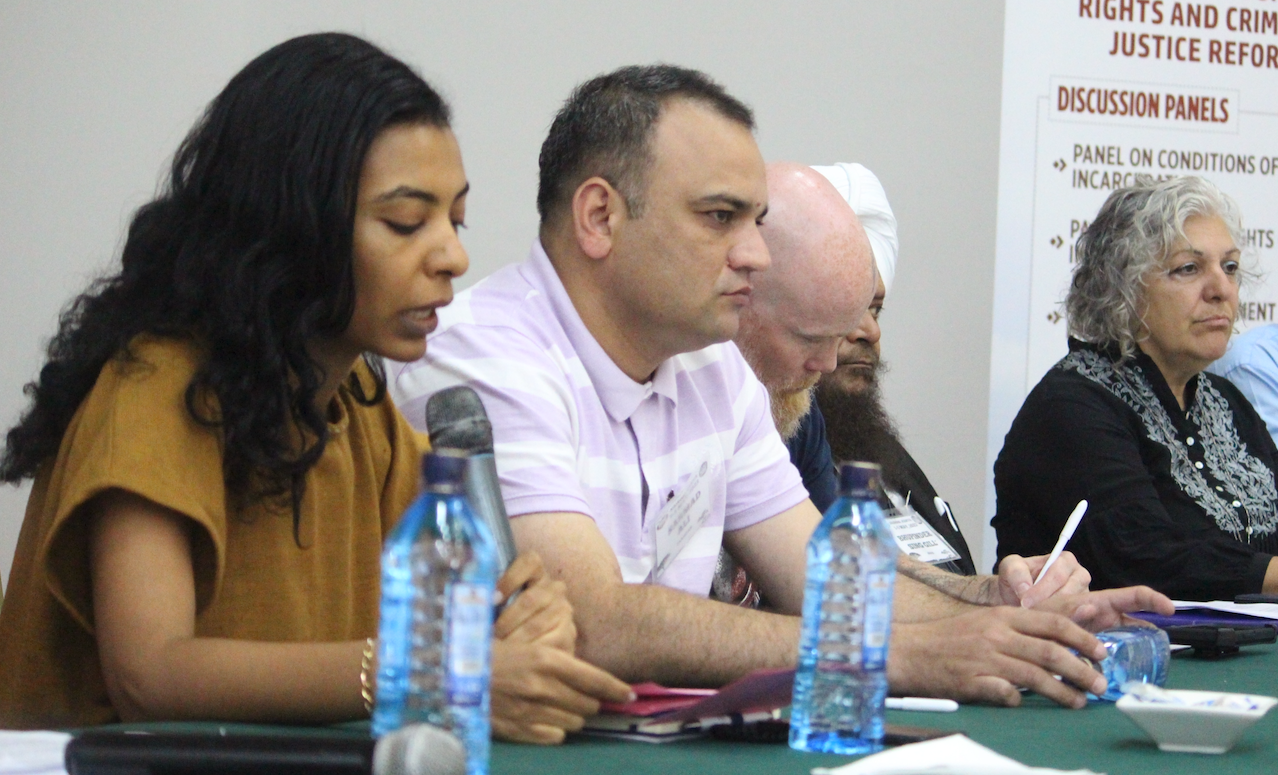
Selam Kibret has come from Ethiopia, where she is a lawyer specialising in youth justice. She also works as the project manager of a criminal justice reform unit.
‘I was asked to participate to give feedback on rights in relation to prisons in Ethiopia’, she tells me. ‘But criminal justice reform is a very new idea to Ethiopia and we do not have a lot of experience. I was hoping I could learn what others are doing in the rest of the world, so I can share what has worked when I return home. We also need to find expert consultants, and here is a great place to network, to find people who can help us, and people we can help as well.’
I ask Selam about conditions in Ethiopian prisons. ‘Our prisons have very limited resources, their budgets cannot even sustain healthy diets. Sometimes it is challenging just to have three meals a day. Most prisons are not constructed properly, and there are a large number of people in makeshift dorms made out of corrugated iron. There are also issues with things like fresh water to drink. Our laws dictate that all prisons must have their own health centres, but we don’t have enough professionals willing to work in them, or high enough budgets to employ enough people anyway. There are also a lack of vehicles, so sometimes prisoners have to be transported places on foot.’
‘One thing we’re advocating for is a separate justice system for children in Ethiopia, because currently children sent to prison are incarcerated with adults. Obviously, this causes a lot of issues.’
Anne Munyua, a lawyer from Kenya, also talks to me about her reasons for attending the conference. ‘I do a lot of work in the criminal justice area, so I wanted to learn, interact and network with people, but also promote my organisation. It’s called CELSIR, the Centre for Legal Support and Inmate Rehabilitation. We do legal support, teaching people who cannot afford legal services how to represent themselves in court. We also do public and civil education to give people a better understanding of what prisoners go through, and understand that people are not necessarily criminals, but may have committed a crime because of what they have gone through in their life. We try to change the perspective of what the criminal justice system is all about. We also take programs into prisons themselves to help reintegrate them, and continue to help them post-release.’
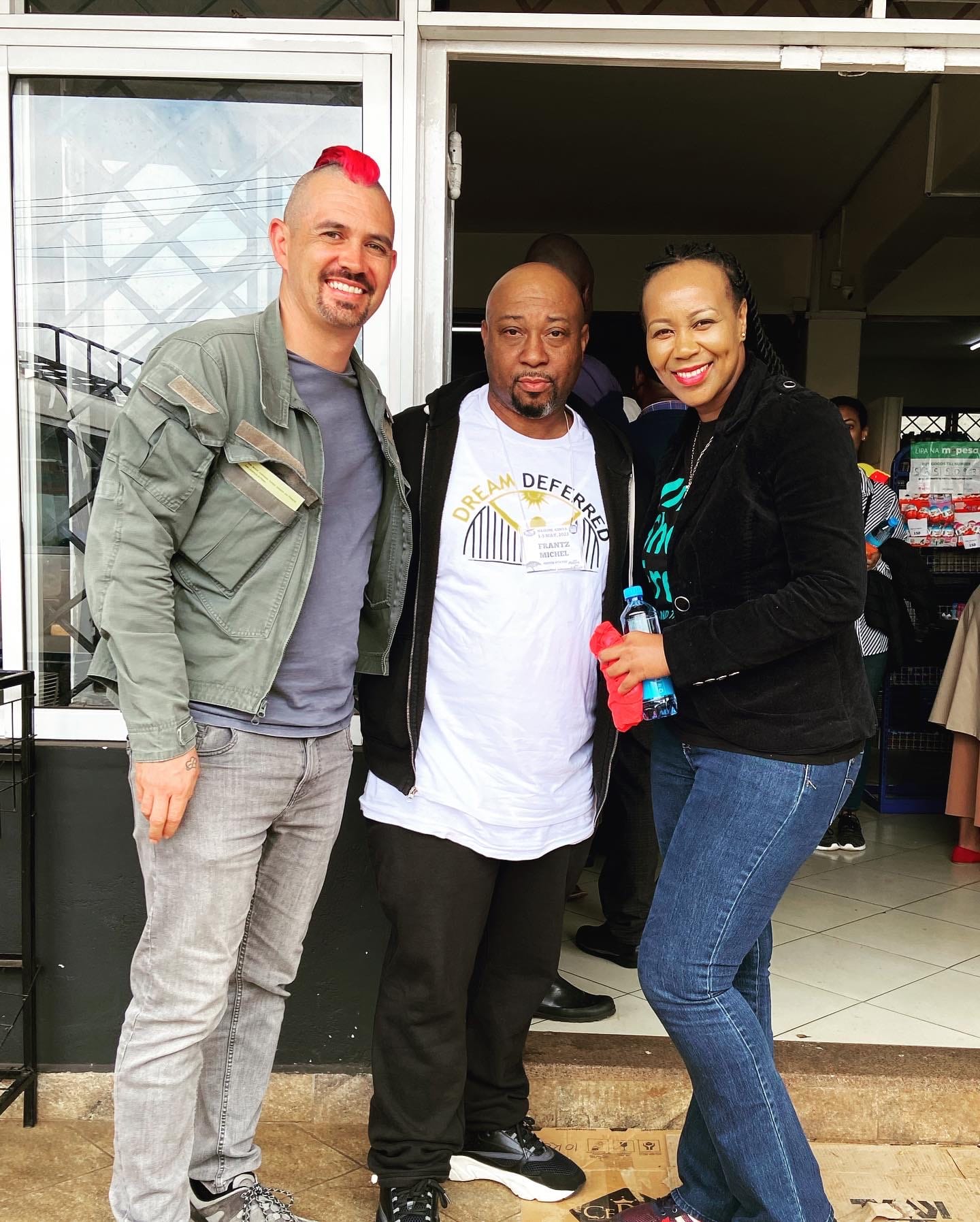
Frantz Michel and Dream Deferred
There are many people like Selam and Anne at the conference, but I’m surprised to see the number of former prisoners also in attendance. The first one I talk to is Frantz Michel, who was sentenced to life imprisonment without parole for non-violent drug offences in the United States. His sentence, however, was commuted by President Barack Obama in 2015. Making the most of his time inside, Frantz completed many programs himself in prison, and then helped teach educational classes to others, gaining a lot of respect from prisoners and staff alike. I ask him about his Presidential pardon, and what has brought him here today.
‘When it came time for me to write a petition to the President for release, I asked a couple guys inside to write letters of support on my behalf. And lo and behold, before I knew it, I got over 500 letters from men on the compound, about every single person. I also got many letters of support from staff, and I had a lot of support from the community too. Even the judge who sentenced me to life in prison wrote a letter to the President asking for my sentence to be commuted, also saying that he’d never done that before. ‘
‘When I was in prison, I saw there were a lot of young, black men given very long sentences. What was interesting is that most of the guys came from particular neighbourhoods, and it blew my mind that these neighbourhoods were targeted. So I said, when I’m released, I’m going back to the neighbourhoods to try and do something. One of the things I did there was start up basketball tournaments on the weekends. The tournaments were all free, and I bought juice and soda and snacks for everyone. I bought T-shirts for the men and kids to wear. A lot of them were gang members, and they really looked forward to the tournaments.‘
‘Shortly after the tournaments started, the shootings in the neighbourhood dropped so dramatically the cops wanted to know what was going on. The commander of the precinct and the councilwoman investigated and found out about me. They gave me an award, and the cops asked if it was possible for me to have the gangs play them. It was the first time the gang members played the officers. They didn’t want to do it at first, but I talked to their leader, and I told him ‘This is going to be the only opportunity you are going to get to whip these cops’ asses fair and square’. And he looked at me and he said, ‘I’m game’. It was one of the most exciting games in the park, because the cops didn’t want to lose, but the gang members definitely didn’t want to lose either. The cops lost in the end.
But the best thing was some of the officers came by the next weekend to thank me. One said he had worked in that neighbourhood for so many years and he couldn’t believe one of the gang members walked right by him, gave him a high five and kept walking. He said that moment meant everything to him, because only then did he understand what needs to be done to stop crime. All the evidence shows ‘Tough on Crime’ approaches don’t reduce crime. Its been proven over and over. Long sentences are no deterrence, neither is over-policing or the death penalty. If you want to stop offending, what you need to do is help people and build communities.‘
‘So I founded an organisation called Dream Deferred. We teach formerly incarcerated people computer literacy, because if they get those skills, they might be able to earn a liveable wage. We also have run a safe house for women. Women can stay there for 18 months as long as they’re going to school or working, and then we help them find permanent housing. That’s the goal, to get stability.’
‘What I’m hoping to get out of this conference is a better understanding of what’s going on around the world, and to meet other people who have been through the system, like you. We have different backgrounds, we look different; however, we’ve suffered similar injustice and now understand what the problems are and how we can work together to come up with solutions. I’m hoping to work with people all around the world.’
‘And it brings joy to my heart to know that you’re taking these interviews to the men in Australia. Hopefully if they read that a man sentenced to life had his judge come around and support him to get a commutation from the President, and is now free to go home and work in the community, maybe it can give them hope. Maybe if someone isn’t feeling well that day and decided to hurt themselves or someone else, and they read that story, maybe they can realise things could change for them to. If I had spent prison engaging in crime and activities that I shouldn’t have, my sentence never would have been commuted, I’d still be in there.’
‘My daughter asked me once what was the moment I decided to change. My moment came when I was part of a program in prison called Reaching Out to Provide Enlightenment. We spoke to kids from middle-class affluent communities who had contact with the justice system. They were going in a direction where their school knew they needed help, so they brought them to us. There were 13 of us in prison hand-picked by the staff to mentor the kids about changing their lives, and we had a rule that no matter what the kids told us, unless it was threatening self-harm, we wouldn’t tell the staff.’
‘Every day at the program the kids got to pick someone they wanted to speak to, and one day this young girl said she wanted to speak to me. I started out saying what I always said to kids, ‘You know, you can tell me anything because I don’t know you and you don’t know me, so you’ll have an opportunity to tell someone anything you want and to have no backlash, I’m not going to judge you.’ She started telling me about her life and I knew she wanted to tell me something more so I pressed a little, and she ended up telling me she was using heroin, and sleeping with older men to pay for it. She was about 14. And that blew my mind, because it made me think of my own daughters. Heroin was the drug I sold, but I never thought children that age used heroin. She started crying then I started crying. And I told her she needed to go home and talk to her parents about it so they could get her help, and she promised she would.’
‘When I left the visiting room, I went straight to my room and laid down. People thought I was sick, because I never laid down before we were locked in. But I was thinking ‘You know what? I’m done with this shit.’ I’m not selling heroin ever again. And that was my moment. But what was more beautiful, about a year later, a letter came to the psychological department of the prison, from that little girl telling her story. She said she went to her parents and she got clean and that she wanted to thank me. You know the girl was white. I could have just said ‘Fuck her’. Because everyone who prosecuted and sentenced me was white. I could have looked at her and said, ‘What does your problem have to do with me?’ But I didn’t, and she got clean, and that was confirmation for why I was done with heroin.’
Teresa Njoroge and Clean Start
Frantz isn’t the only formerly incarcerated person at the conference to have started an organisation that helps prisoners’ transition back into the community. Teresa Njoroge served one year in prison in Kenya. Her conviction was later overturned, but not until after her release.
‘I worked as a banker here in Kenya for about a decade, until I got falsely arrested, maliciously prosecuted and wrongfully imprisoned. There’s a lot of corruption in Kenya at every stage of the criminal justice system. Someone higher up at the bank was accused of wrongdoing, but they bribed the police to arrest me instead. This is very common here. I was sent to Langata women’s prison, along with my three-month old daughter, who was allowed to come with me. Prison really opened my eyes to the injustices that women and children encounter in the criminal justice system here.‘
‘Being in prison inspired me to set up Clean Start, to empower these women because it was very clear that the criminal justice system is very harsh to the poor and vulnerable. Most of the women are in for petty crimes related to survival because poverty has been criminalised. So Clean Start exists to offer them hope and dignity and to ensure they get off the revolving door of poverty.’
‘We go into prisons with peer-led programs. We begin at the level of the prison officers because if you want to see lasting change in prisons, you definitely have to work with the officers. So we empower the officers, we train them to understand our modules and models. We then train the women serving longer services, those on death row and life. We train people who are about to leave prison on forgiveness, trauma, healing, communication and entrepreneurial skills, and prepare them whichever way possible for their release. We do not end there though. We meet them at the gate on release and offer them housing as the first step to rebuilding their lives, and then eventually set up jobs for them. Decent, sustainable means of livelihood as most have gone into prison because of crimes of poverty.’
‘One of the reasons I came to the CURE conference is that we are a community of 4,000 formerly imprisoned women in Kenya, and as the host county, we said this is a great platform to amplify our voices in advocating for human criminal justice systems.’
‘When we went to Naivasha prison yesterday, I spoke in front of the men in Swahili. One of the things that kept me going in prison was when people came to see me, it would give me hope. So every time I go into a prison now I make sure I leave the prisoners with hope, and in a positive state of knowing things will get better. So I said to the men that these visitors have come from different continents to visit them, and this is not by sheer luck. They should take it as a sign that their cries are being heard, and that the gates will open one day. But while they are still in here, they should keep empowering themselves with various skills so that when they leave, they can hit the ground running.’
‘My advice to prisoners anywhere is that everyone is worth a second chance. We are not the worst mistakes that we made.‘