By Damien Linnane. Published in Issue 15 of Paper Chained in September 2024.
Most if not all people in prison probably have strong feelings about some of the laws in our country. There’s a solid argument to be made that many laws that end up putting people behind bars are, shall we say, counter-productive, and not evidence-based. For example, there’s an overwhelming consensus among legal and health experts that drug use should be treated as a health issue, rather than a criminal one. In 2017, a group former state premiers, former police commissioners and even former heads of corrective services called for drug decriminalisation in Australia, as did a government-commissioned inquiry in NSW in 2020. Evidence consistently shows that policing drug users is not effective in reducing drug use, and ignores underlying reasons for use such as child abuse, domestic violence and poverty. In places where personal drug-use has been decriminalised, HIV transmission, overdoses, prison sentences and strain on emergency health services have plummeted. But to date, Australian governments have declined to implement such progressive reforms.
While many of our laws in Australia are not exactly smart, today we’ll be going state by state to look at some examples of current and recent laws that are particularly stupid or unnecessary.
Victoria
Starting in Victoria, Section 4(d)(i) of the Summary Offences Act 1996 states that ‘Any person who flies a kite in a public place, to the annoyance of any person, shall be guilty of an offence.’ If found guilty, you could be fined up to $826.

The reason why this law was introduced was to uphold the ‘good order of towns’. It aims to stop a kite’s interference with power lines, houses and people. Exactly how annoying your kite has to be in order to break the law, however, is not entirely clear. So next time you plan on visiting Victoria, make sure you fly your kite away from any grumpy individuals.
You may not want to start your cleaning too early in the morning either. Under Section 48A of the Environment Protection Act 1970, it’s illegal to make unreasonable noise with a vacuum cleaner after 10pm, before 7am on weekdays, and before 9am on weekends. Noise is classified as unreasonable if it can be heard in a bedroom of another house. If you ignore a police direction to stop your vacuuming, you could face a fine of $18,655.
Under Section 49A of the Summary Offences Act 1966, it’s also still illegal to beg in Victoria. The maximum penalty is 12 months in prison. While the law is still actively enforced, the punishment is now typically a fine. Obviously, giving someone a fine for being desperate for money hardly solves the underlying issues. There are also anecdotal reports that police in Victoria have confiscated the money people have collected from begging, classifying it as ‘proceeds of crime’.
Queensland
It is illegal for both the driver and the passenger of a car in Queensland to play a noisy instrument. So you can’t play a trumpet while you drive, not that I see how that would be possible anyway, and if a friend with a trumpet wants a lift, tell them to store it in the boot in case they’re tempted to play a tune. It should be clarified that this law only applies to instruments considered noisy. If your passenger can somehow manage to play the cello softly while you’re driving, this is apparently still legal. Under Section 292 (2) of the Transport Operations (Road Use Management — Road Rules) Regulation 2009, the maximum penalty for breaking this law is $3,096.
Under Section 18 of the Tow Truck Regulation 2009 Act, a tow-truck driver in Queensland must also be “neatly dressed” while working. The maximum penalty for breaking this law is also $3,096. So make sure you wash and iron your uniform before operating a tow-truck in the sunshine state.
Tasmania
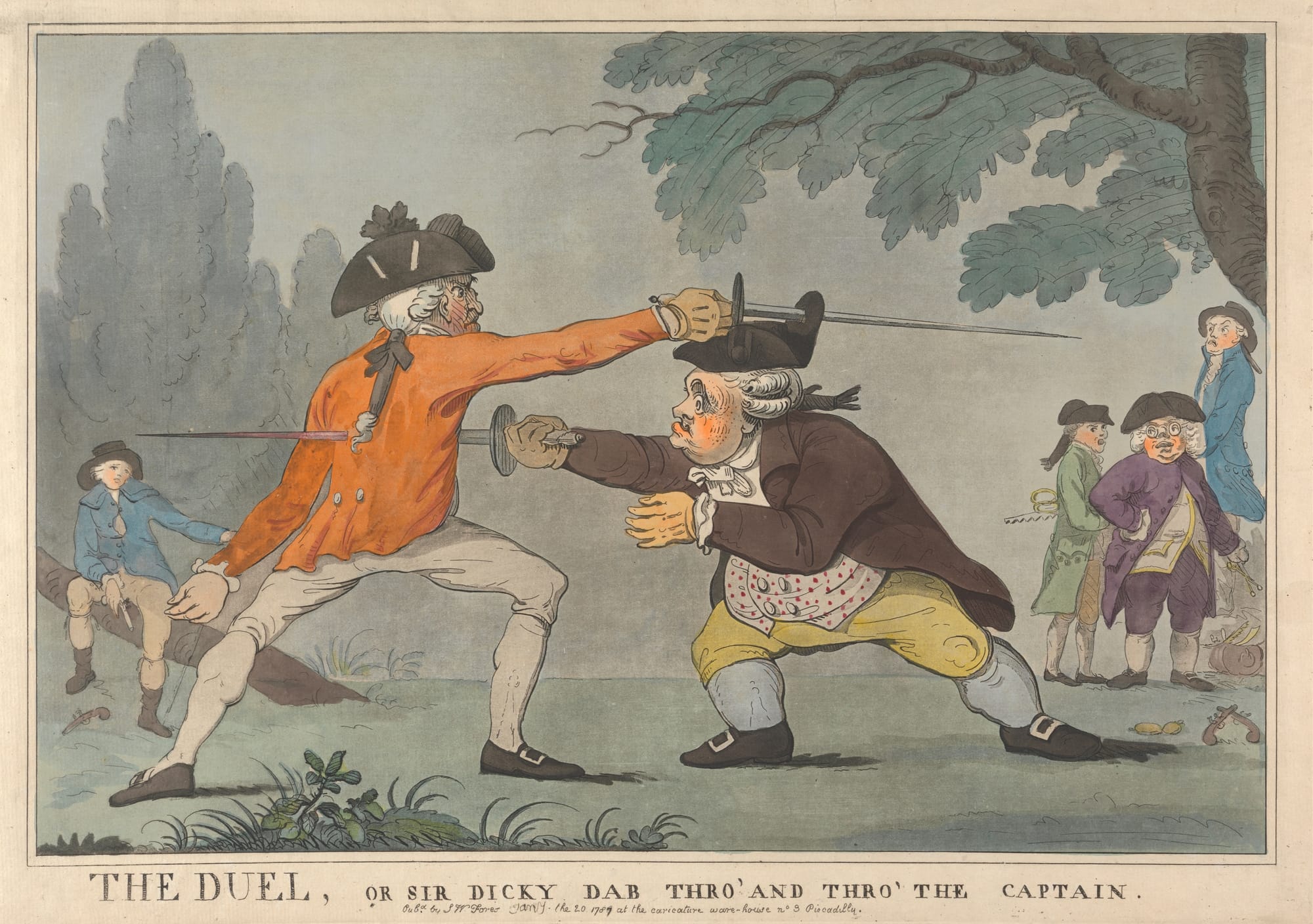
Has someone insulted your honour recently? Well if you’re in Tasmania, you may wish to settle the matter without resorting to violence. Under Section 81 of the Criminal Code 1924, it’s illegal to challenge someone to a duel in the apple isle, or to participate in a duel. This is also illegal in Western Australia, but as you’ll see, there are even weirder laws there.
New South Wales
Regulation 291-3 of the Road Rules 2014 stated that motorists needed to avoid splashing mud on people waiting for a bus. There were two particularly interesting things with this law. Firstly, it only applied to mud, and it only applied to people waiting for the bus. It was perfectly legal to splash water on people waiting for the bus, and mud on anyone else, but mud on people waiting for the bus could have resulted in a fine of $187. Those who elected to challenge the fine in court could have had it increased to $2,200. Secondly, the fine applied to circumstances where splashing mud was entirely unintentional. Simply not slowing down enough to avoid splashing muddy water, or not swerving out of the way, could have gotten you a fine. It isn’t difficult to imagine that swerving out of the way to avoid a muddy puddle in heavy rain and traffic may have caused much bigger problems than mud on someone’s clothes.
This law was repealed in 2020, meaning that accidentally splashing mud on people at a bus stop is no longer a fineable offence. Going out of your way to do it on purpose, however, will quite possibly still get you a charge for negligent driving.
South Australia
In South Australia, under Section 58B of the Summary Offences Act 1953 it is illegal to sell a fridge with a capacity of more than 42.5 litres, unless all the doors can be opened easily from the inside. This law was likely enacted after a child became stuck in a refrigerator. Prior to 1953, fridges did not have the modern seals we have today that can be easily opened. Nevertheless, the law still remains in effect. And the penalty for dealing in illegal fridges? $750.
You can get off a little cheaper by ringing a door bell without a reasonable excuse in South Australia. Under Section 50 of the Summary Offences Act of 1953, disturbing someone by knocking on their door or ringing their door bell without a valid reason will only set you back $250.
Western Australia
When it comes to stupid laws, both current and former, Western Australia is clearly the winner. In WA it is illegal to clean or collect seabird or bat droppings without a licence. You could be imprisoned for up to a year for committing such a heinous crime as per Section 387 of the Criminal Code Act 1913. So how do you obtain such a licence to clean or collect these droppings? I have no idea; there is no relevant information online. So if a seabird or bat decides to crap on your car in WA, to stay safe you may have to cross the border before you can wash it off.
A mention must be made to Section 22 of the Marketing of Potatoes Act 1946, which made it illegal to possess more than 50kg of potatoes in WA. The law was enacted due to food-security issues after World War II, though quickly became unnecessary. But the law wasn’t repealed until 2021. Until then, the penalty for a first offence of having more than 50kg of potatoes was up to $2,000. Repeat offenders could face a fine of $5,000. Under Section 22A of the act, police also had the power to stop and search a vehicle suspected of having more than 50kg of potatoes in it.