Published in Issue 15 of Paper Chained in September 2024.
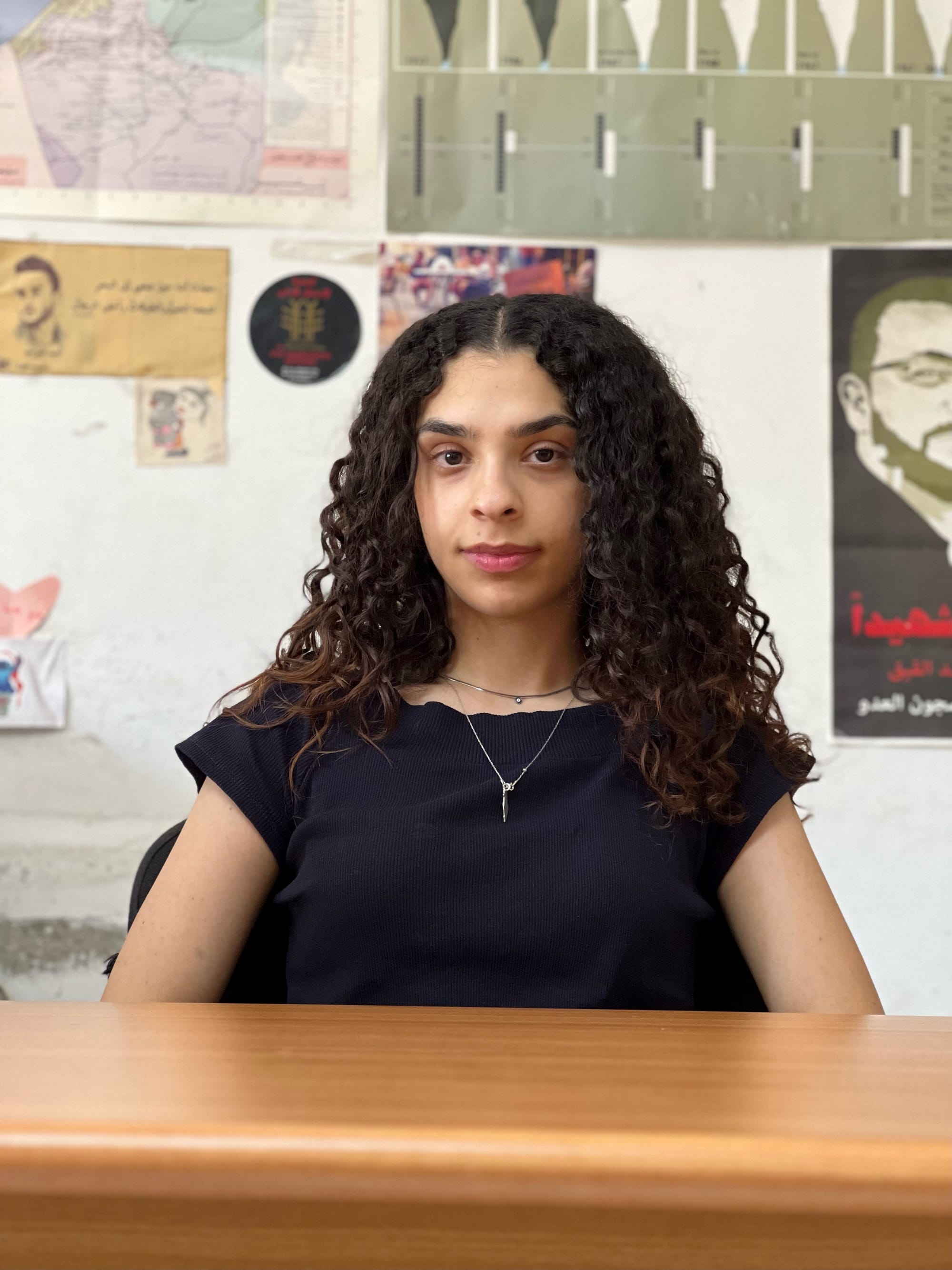
For decades, Israel has frequently arrested and held Palestinian people in ‘administrative detention’, a process where people are held in prison for months without even being charged with a crime. Since the October 7, 2023 attack in Israel, the process has increased significantly, and while it has been reported on sporadically in mainstream media, many people remain unaware of the issue at all, or how many people and families it impacts. To learn more about administrative detention, Paper Chained editor Damien Linnane talks to Jenna Abuhasna from Addameer, a Palestinian human rights organisation that assists and advocates for people held in prison.
Can you tell me about administrative detention and what Addameer does?
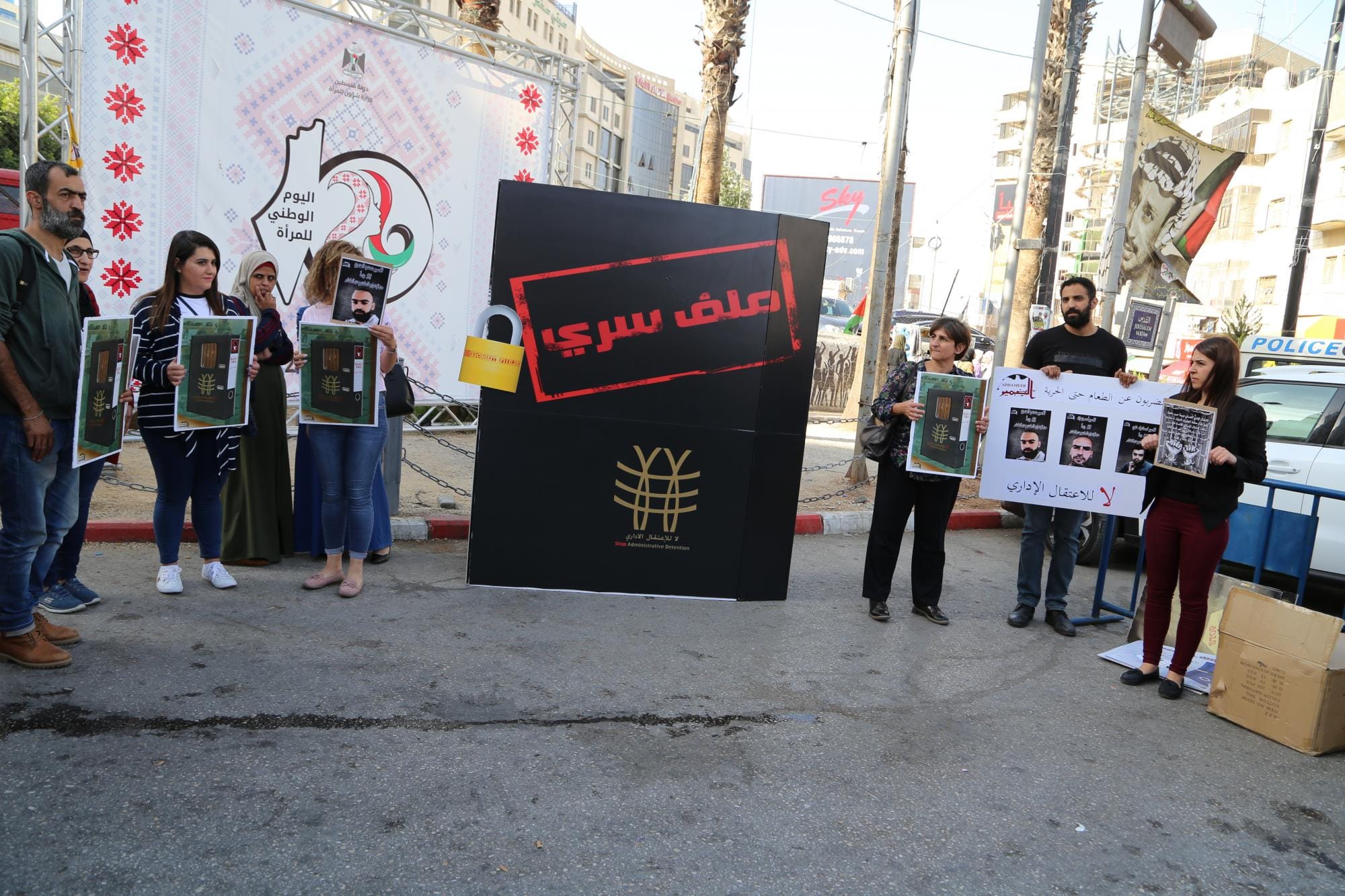
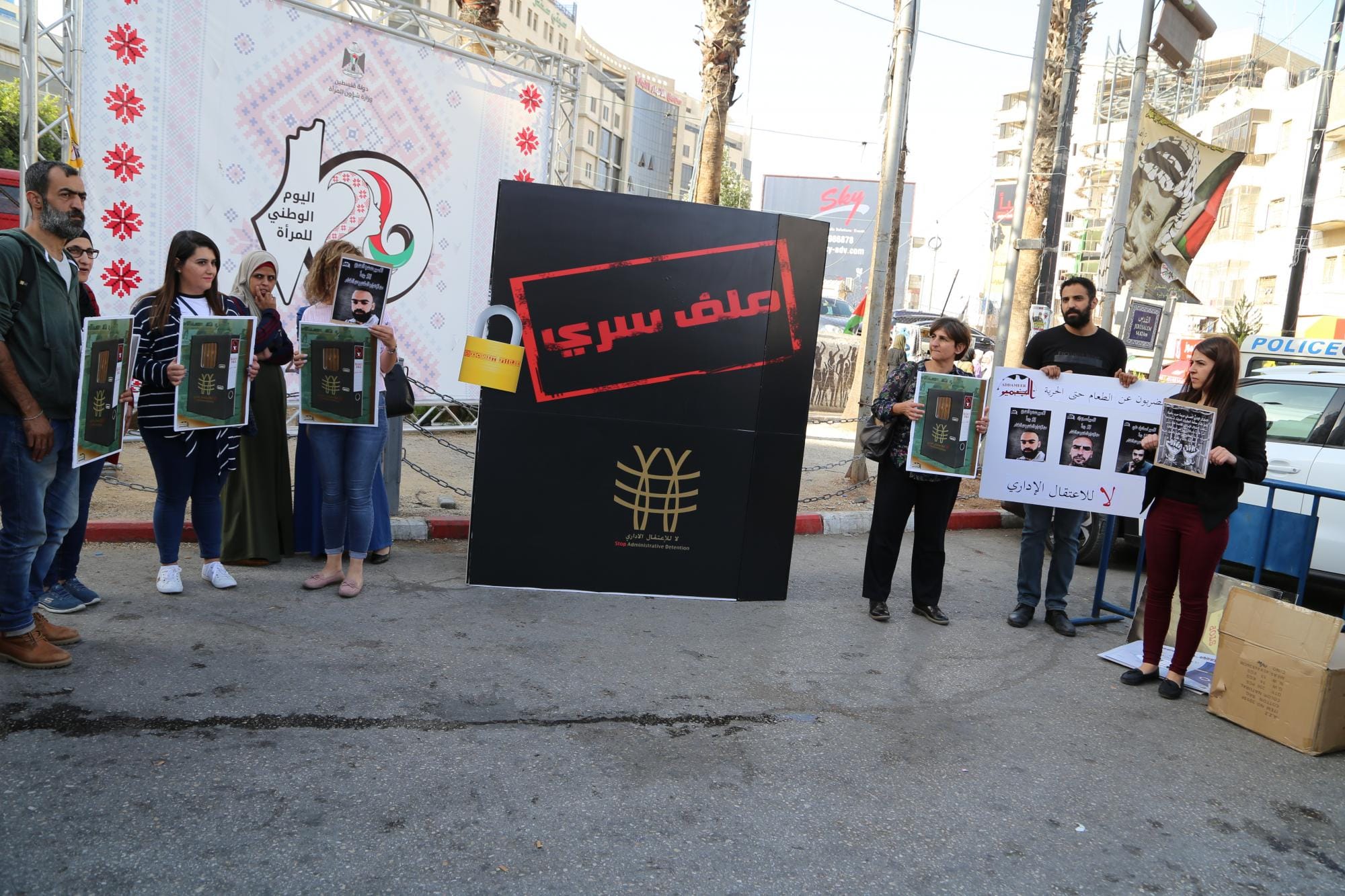
Administrative detention is one of the biggest issues that we face as Palestinians, and one of the biggest issues that Palestinian lawyers face, because at the end of the day, it is detention without any charges given. We have our own lawyers that represent prisoners held in administrative detention. Their cases are held in military courts, which do not operate like normal courts in other countries around the world. Any evidence against the prisoner is kept in a secret file that only the Israeli prosecutor and the Israeli judge have access to. The Palestinian lawyer will be showing up to court and trying to find a way to build a defense case for the detainee. But without access to the file, ultimately there’s nothing that can be done.
People in administrative detention may be held for six months, after which a review will take place where either the detention is extended or the prisoner is released. Most of the time the detention is again extended for another three-to-six months. Administrative detention is a tool used by the occupation to control Palestinians, and as a form of collective punishment against Palestinians.
Addameer also does advocating work, which is more my job. We advocate for the rights of prisoners on an international level, taking the stories and conditions that the prisoners are facing to raise awareness of the international law violations and human rights violations that has been occurring within these prisons, especially after October 7. We try to make sure that everybody is made aware of what really is going on within these Israeli prisons.
In Australia, if you can’t afford a lawyer, you get legal aid, which is funded by our government. Who pays for the lawyers for these prisoners?
Addameer is non-profit, so we do not take money from the detainees or from their families. Most of our income comes from donations. Either individual donations or endorsements from other countries. Our government gives us no funding.
There are over 9,300 Palestinian prisoners, of which 3,400 are administrative detainees. So are there about 6,000 prisoners who have actually been charged with a crime?
Yes, but often these crimes could just be incitement, for example, ‘inciting violence on social media’, which could just be sharing anything supporting Palestine and the Palestinian cause, spreading awareness of what’s going on. Attending a peaceful protest could also be a charge. Any form of resistance is seen as violent resistance to the occupation. Any small action could lead to you being sentenced for over 20 years.
I note their number of detainees was relatively stable between 2011 and the October 7, 2023 attacks, with about 4,500 to 5,000 prisoners. There are now 9,300 prisoners. Is this increase due to mass arrests after October 7?
Exactly. Before October 7, there were around 5,000 prisoners in total, of which I believe around 1,200 were in administrative detention. Then after October 7, mass arrest campaigns targeting Palestinians were used.
And those 9,300 prisoners are just from the occupied territories and West Bank. This number does not include new detainees from Gaza. There may be around another 3,000–5,000 detainees from Gaza alone. However, there’s no way to confirm these numbers because we have no information on the detainees taken from the Gaza Strip, because Israel is not sharing any of their information. Basically, people are subjected to enforced disappearance because we have no information on them whatsoever. We have no names. We do not know how many have died within these prisons as well.
Detainees from Gaza are put into two military camps that did not exist before October 7. They were actually military bases which have been transformed into camps. They’re not equipped to hold the detainees, and especially not the amount of detainees they have.
From October 7 up until very recently when they began letting lawyers in, the detainees from the Gaza Strip were completely isolated from the outside world. They were not allowed any lawyer visits, no family visits, nor visits from the International Red Cross. So, it’s very difficult to obtain accurate numbers on them.
How many prisons is Israel holding Palestinians in?
Across all of Palestine from the West Bank and occupied territories, there are twenty prisons, not including interrogation centers. There is a prison in the West Bank, and all the remaining prisons are illegal under international law because they’re in the occupied territories.
Do these prisons house Jewish Israelis as well, or are they just for Palestinians?
They are just for Palestinians.
What are the conditions in the prisons like?
We’ve been visiting the detainees from the West Bank and the occupied territories because they are allowed lawyer visits. However, they are not allowed family visits. They have not been allowed any family visits since October 7. Many of these prisoners have not seen their families in months and they cannot speak to them over the phone either.
We have spoken to detainees who were previously held in these military camps and were then released back into the Gaza Strip. The conditions are terrible in both places. However, it’s evident that there are some things occurring to the detainees from Gaza that are not happening to the detainees from the West Bank. For example, the detainees from the Gaza Strip are zip-tied and blindfolded throughout their entire detention, from the moment that they’re arrested to the moment that they’re released. They’re forced to sleep, eat, move around, use the bathroom, all while being zip-tied and blindfolded, and these zip ties are very harshly tightened. Some Israeli doctor whistleblowers from these camps have come out and said that they were forced to amputate limbs off of detainees because of the effects of the zip ties and how harshly tightened they are. The ties leave lasting marks on their bodies, and of course, due to the torture going on and the beatings, they have other marks all over their body.
I’m glad those Israeli doctors reached out to the media to report what was happening; it helped bring the conditions in these prisons to my attention in the first place. What else happens in the prisons?
A starvation policy is being practiced by the occupation against all detainees, from both the Gaza Strip and the West Bank and occupied territories. They’re technically being fed around three times a day. However, the quality and quantity of this food is very insufficient. Most of the time, the food is completely inedible—it could be contaminated with mould because of how old it is. Sometimes, it’s leftover food from the prisons for Israeli criminals. The detainees from Gaza have said that when they’re fed, the Israeli soldiers will scoop the food with their hands and then put it on whatever surface is in front of the detainee. These are completely dehumanising conditions and treatment. Children, the elderly and even pregnant women and all subjected to the same starvation policy.
The detainees have said they are forced to bark like dogs, as well as being forced to say all kinds of degrading things about themselves, their families and against Palestine in general. They’re forced to chant ‘Long live Israel’.
Detainees from the West Bank and occupied territories can be held in the same prisons of the detainees from Gaza, but they’re separated and not allowed to mix. The detainees from the West Bank and occupied territories have said that they’ve heard the howling coming from the sections that hold the detainees from the Gaza Strip. They can hear the torture that’s going on. They can hear their screaming almost throughout the entire night. The Israeli soldiers, the Israeli prison service, as well with the Special Unit forces will come in multiple times a day for head counts, and during these head counts, in which they brutally beat the prisoners. The prisoners themselves have said that these special forces that enter will not leave the cell until they see blood or they hear a couple of bones cracking. The detainees describe everything going on in the prisons as a form of revenge, a form of revenge against all Palestinians for the events of October 7. Even though many of these prisoners were already in prison during the events of October 7, they are still being tortured and punished collectively. There have been 18 deaths in the prisons, confirmed by physicians for human rights groups in Israel that have been able to autopsies on the bodies and have seen the signs of torture. For the detainees from the Gaza Strip, it is said that there are around 35 deaths, but we have no way to confirm this number.
Many of the prisoners that are taken from the Gaza Strip are not even registered in any system. They are under the control of the Israeli military, not under the Israeli prison system, like the prisoners from West Bank and occupied territories. So there is no way to ask about the whereabouts of prisoners from Gaza as they are not registered. Family members from Gaza often have no idea where their loved ones are being held.
If you don’t mind me asking something a bit personal, how do you cope dealing with this horrifying situation and trying to support these people?
I don’t think I have an answer for you. During almost every single interview I’ve done about prison conditions, I have been asked this same question, and every single time, I still don’t really have an answer. I don’t do anything specific to cope. I do what I can for the prisoners and I focus on them. I don’t really focus on what I’m feeling, and of course, what I’m feeling is helpless. Even though my job is to advocate for these prisoners and raise awareness, at the end of the day, despite all the advocacy and everything that we are documenting, nothing seems to be accomplishing anything, because these violations are still going on. The conditions of the prisoners are getting worse every day.
Some nights are harder than others, especially hearing everything that is being done your own people, and then you have nothing to help with or aid with, and then you yourself can be subjected to arrest as well. All of us here can be subjected to arrests and detention, and then nothing is going to change. No one can stop it if it does happen.
Our office was raided two years ago and then Israel designated us as a terrorist organisation, along with five other Palestinian human rights organisations, just for the work that we do advocating for the rights of Palestinians and making sure that they’re treated humanely in these prisons.
Amnesty International, Human Rights Watch and experts from the United Nations have condemned Israel for designating you as terrorists, noting Israel had still not provided any evidence for these claims several months after making them, but the designation limits other countries from continuing to provide Addameer support. Thankfully, many European countries have rejected Israel’s designation of you and the other groups as terrorists. However, if Israel regards you in this way, are you afraid they will arrest you?
They’ve already arrested workers and human rights defenders and lawyers from other organisations, however, thankfully, no one from Addameer has been subjected to arrests yet, because there is no evidence. They raided our offices and couldn’t find anything, because we have nothing to hide. All of our work is public. But Israel considers “terrorism” to be any form of advocating for human rights or resisting the occupation.
How can people support what Addameer does?
By educating themselves on the conditions of prisoners, reading all the material that we have available on our website, all of our reports that document all of these violations and more, because there’s so many that I haven’t even gone into here.
And also just by opposing administrative detention without charge. Do whatever you can to advocate for the rights of these prisoners and making sure that these military courts and these illegal prisons are completely dismantled. We can only hope that raising awareness will help.