By Damien Linnane. Publishes in Issue 19 of Paper Chained in September 2025.
It’s my first time in the Philippines, and on my second day in the country, I’m visiting Davao City Jail. Davao is the largest city in the Philippines in terms of land, and the third largest in terms of population, after Quezon, and the capital of Manila. The taxi ride takes me a little out of the city centre, and I really don’t know what to expect. The outside prison gates aren’t exactly welcoming. My visit is approved of course. The BJMP, the Bureau of Jail Management and Penology, were very supportive of my request to write an article about their arts program, though the application took a lot of time. I knock on a door to the side and show my letter of approval to an officer. I’m led into a room filled with trainee prison officers to wait.
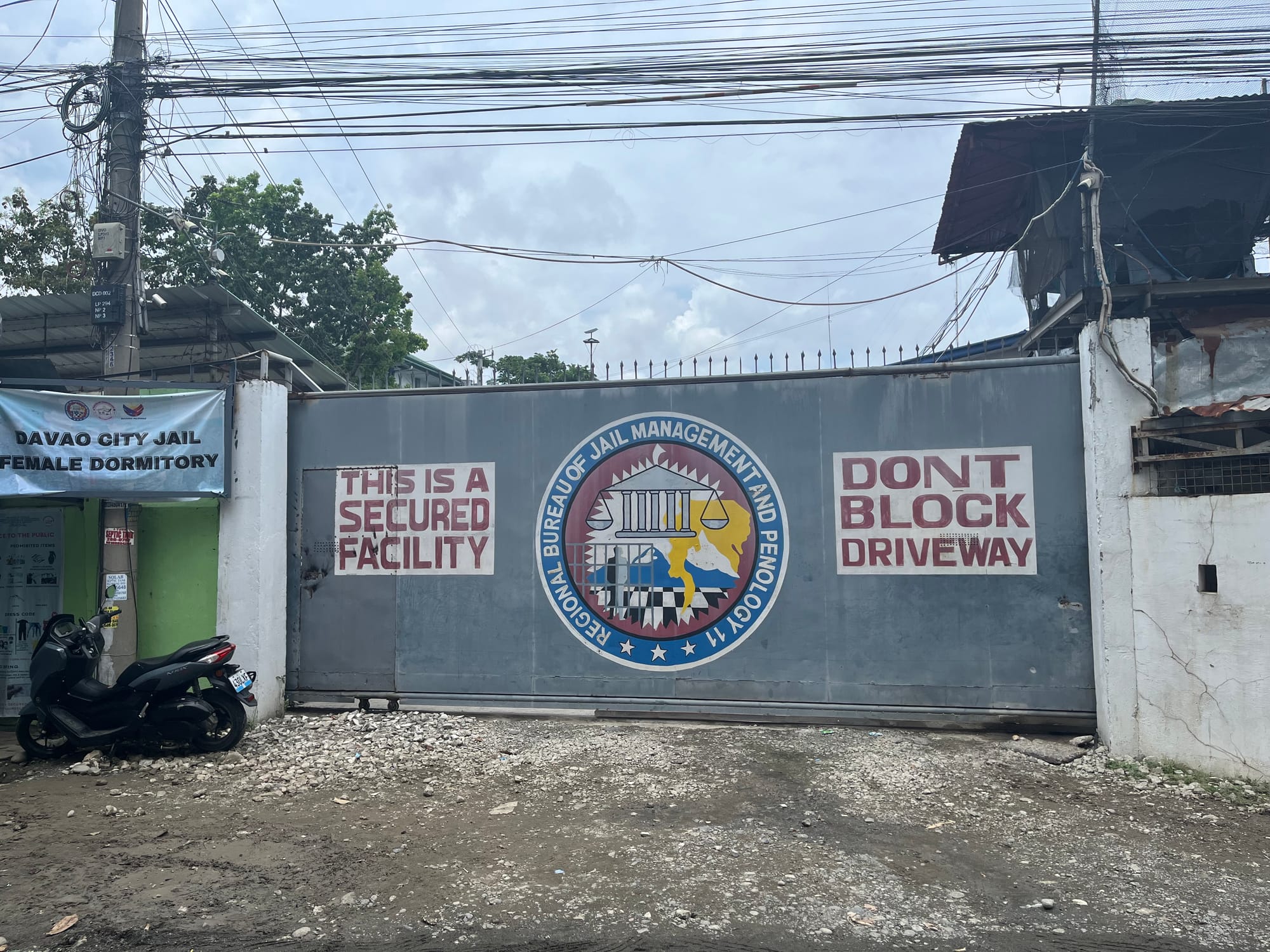
They are incredible young, and are almost all women. The girl sitting next to me looks about 16, though tells me she is 22. They all have their hair cut incredibly short, which I am told is a requirement for their training. They are two weeks into their five-month training course, and are immaculately dressed in maroon trainee shirts and black pants. Their shoes shine brightly. A couple of the women are wearing flats, but most have kitten heels. I’m told the high-ranking officer who will be leading my tour is busy in a meeting, and what happens next really catches me by surprise. The trainee guards take it upon themselves to start singing to me, to keep me entertained while I wait. Eventually, I come to learn that this is a bit of a Filipino thing. Prison guards later break into song at random while I am inside, as do people in the general community, and even one of my taxi drivers at one point. Filipinos are a people who love to express themselves through song. At first, the songs are all in English – one male trainee does an impressive rendition of Adele – though some of the trainees aren’t confident in their English, and eventually they start switching to Tagalog, also known as Filipino. The girl next to me takes it upon herself to translate.
‘Your odour is good. It makes my heart ouch,’ she says. I’m sure a better translation would be ‘You smell so good it hurts my heart,’ but I get the gist. There’s a lot of giggling among the young women while they’re singing and translating, but eventually I get to see why they are in the room. In the Philippines, like most south-east Asian countries, your family is allowed to bring you food in prison. The prison is currently on lock-down, meaning visits are cancelled, but food is still allowed in. One by one, visitors start bringing bags of food into the room I am in, and the trainees form an assembly line. Most of them have kitchen scissors. They start opening the containers of food for people in custody, and cutting up pieces of meat to see if there is any contraband hidden inside. Containers of rice are prodded thoroughly with plastic utensils. Something I notice immediately is that there is absolutely no tension between any of the guards and the mostly older women, who are presumably delivering food for their sons in custody. The women delivering food and the supervising officer talk cordially in Tagalog and share laughs. I ask the supervising officer whether any kind of food is prohibited. “No fruit,”’ he tells me, because it can be used to make alcohol, and also no processed food, no shellfish, and no internal organs like intestines, which are otherwise common in Filipino food. He explains that they’ve found contraband in intestines brought into the prison before. One of the trainees continues to sing during the entire food-searching process, though this no longer appears to be solely for my benefit.
Eventually, I’m met by Alma Arguelles, the prison’s chief welfare officer, who takes me through to their lounge area, named the Nelson Mandela Lounge. There are many photos of Mandela in the room, along with quotes I would never expect to see inside an Australian prison. “A nation should not be judged by how it treats its highest citizen, but its lowest ones,” one reads. Alma, a friendly woman, explains that she was a teacher first, before applying to become the chief welfare officer at Davao City Jail, which puts her in charge of 2,700 PDLs. The BJMP uses the term ‘Person Deprived of Liberty’ or PDL for short, rather than “prisoners” or the horrendous, demoralising term we use in Australia: Offenders. This was explained to me during the Zoom meeting when I first applied for approval to enter the prisons. “When you go into the prisons, do not call the people inside prisoners,” the senior officer told me. “It’s dehumanising, and they still deserve respect even though they are in prison. You must call them PDLs.”
Alma’s previous history as a teacher shines through her persona. She says she is the only senior female officer in the Philippines who has her office inside the actual jail, where PDLs can visit her directly. Later she shows me this office, and the PDLs indeed treat her with enormous respect, typically referring to her as ‘Mum,” in a way that sounds genuinely affectionate rather that forced. “The PDLs are all my children. I love them,” she tells me with a warm smile. “I am not here to judge them. I believe there are two sides to every story, and jail is a time for thinking about the future, not the past. We can’t change the past but we can change the future.” One of the ways they do this is through arts and crafts, or what the BJMP call livelihood programs. The BJMP promotes the artworks made in prisons in galleries and even shopping malls. This includes weaved bags and paintings. For some reason, making money boxes is particularly prevalent at this prison. They are made on an assembly line. One person does the epoxy, another paints the boxes. Newest recruits are given the task of cutting the tubes to size, which is the easiest part. The livelihood program also makes trophies, as well as game boards such as darts and chess. Most of the products made are ordered from outside the prison. Alma tells me the programs are designed so that people in custody can still support their families from inside.
She brings two PDLs to meet with me. Jong is a political science graduate. He teaches all subjects to other PDLs in the prison now. “Except math,” he tells me. “I hate math!” He works weekdays, and also participates in the art programs to make money, using the funds to give to his family and to buy hygiene products for himself. Jong learned to draw when he was young. Making the coin banks with epoxy, however, is something he learnt in prison from staff. “We are not just doing this for ourselves,” he tells me, “but for the whole prison.” The profits are also spent on materials, and are divided among all the people who make art, he tells me. “Making art helps keep me busy, and also stops me from missing my family so much. I love art because I can express my own ideas, whatever I want. I base my art on my imagination. I do not copy things. I like to encourage all my fellow PDLs to make art. It’s a big thing for me, you can do it by yourself, and you can influence others too. This is my second time in prison. The last time I did not do art. I saw the difference the livelihood program was making to other people, so I volunteered to be trained in it. I love it, I think it will help me not to come back a third time. You cannot just depend on one skill, it is much better to have plenty of skills. Having many will help you not come back to jail.”
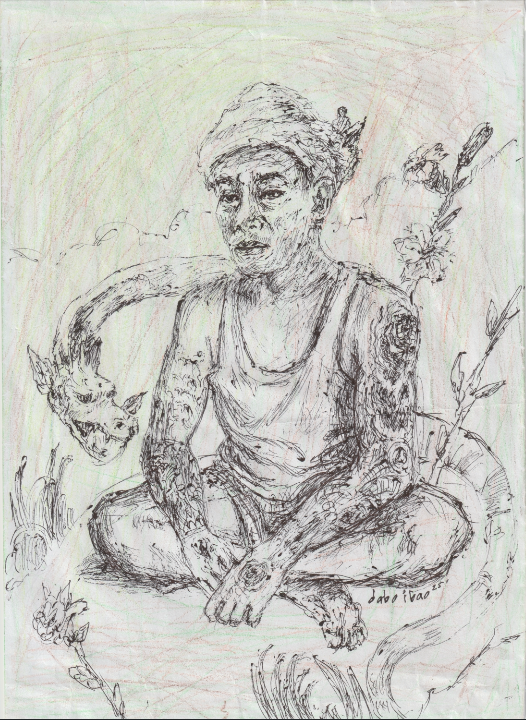
The second PDL I meet is Dave. He is 38 and completed a fine arts degree about ten years ago. He was a full-time artist before coming to custody, painting about nine hours a day, mostly on commission. In 2017, he was actually hired to paint the outside walls of this very prison. At the time, he never thought he’d end up inside those walls. He now does some small murals in cells, mostly using pencil and crayon, even though he’s not sure if this is technically allowed. Dave makes all forms of artworks, using acrylics, pastels and whatever he can get his hands, but resources are limited. “Paper and pens are expensive to get here,”’ he says. I ask if Dave has any art he can sell me. He asks Alma if he can go back to his cell. Minutes later, he returns with five drawings. He also has two paintings, the only two he has been able to do in his four months here due to a lack of materials. “I wish I could do more are in here,”’ he tells me. ‘“It’s good for me. Art is a self-expression, and an escape. It’s a reflection of God. It heals, and it saves a lot of lives. I feel alive when I make art.” I buy all of Dave’s drawings and one of his paintings, hoping he can use the money to buy more materials to continue his passion.
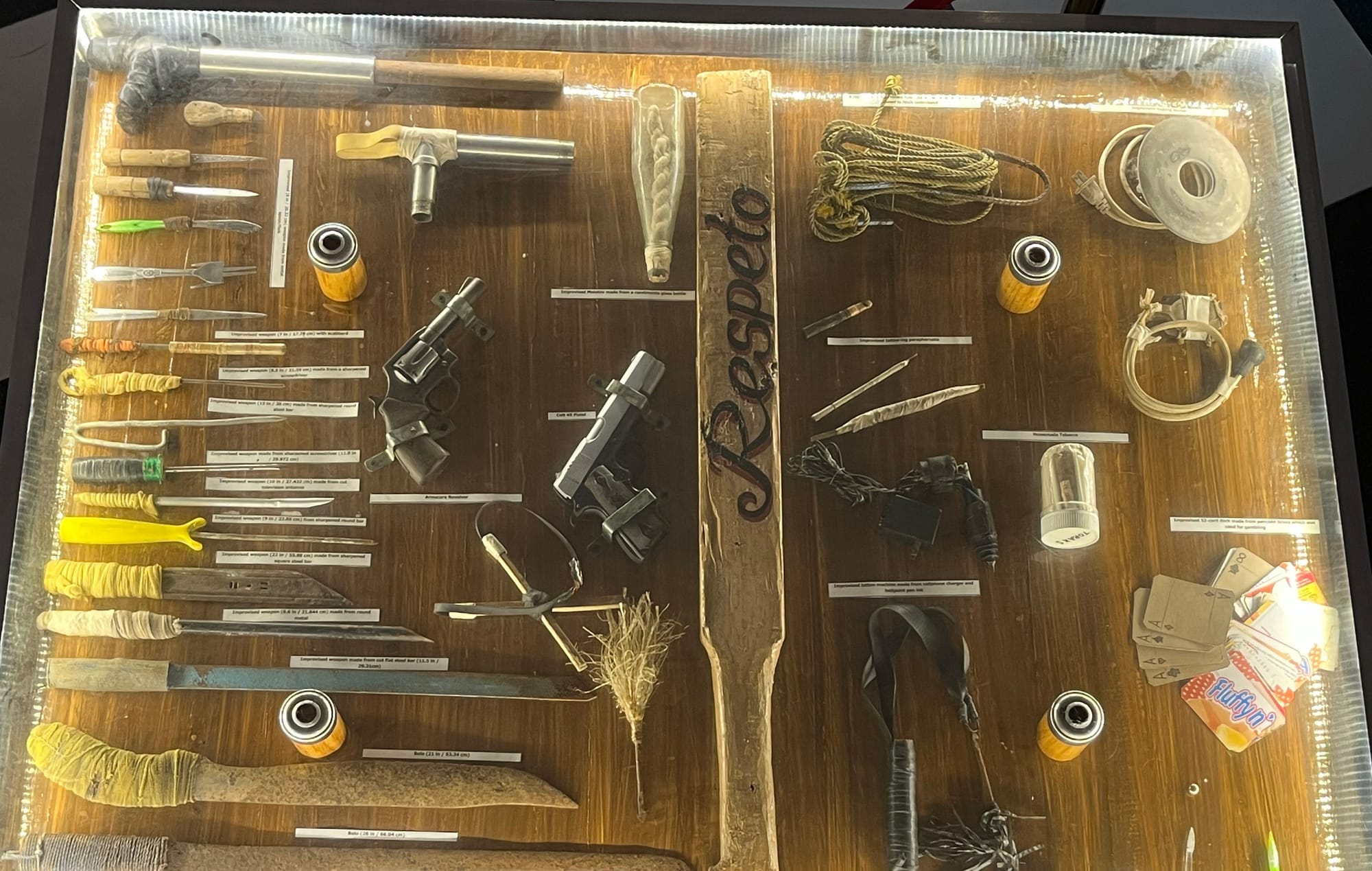
My time at Davao City Jail ends, but four days later I arrive at the larger Manila City Jail for my second and final prison tour in the Philippines. Manila City Jail is larger than Davao, occupying 2.1 hectares, and is more prominently located in the city. Several officers accompany me on a thorough tour of the prison. I’m shown a video on the prison’s history – construction began in 1847 and was completed in 1865 – and am even given a tour of the museum, located within the prison. The whole time I’m in the museum, PDLs outside are curiously watching me through the windows. Among other things, there’s a display case of confiscated makeshift weapons. They’re mostly shivs similar to what I saw in custody myself, but a couple things really catch my eye. A fully functional revolver and semi-automatic pistol, but there’s also a set of playing cards, hand-made from cardboard. Confused, I ask why this is in here. The officer leading my tour, Elmar, explains that anything that can be used to gamble is contraband in Filipino prisons. There are also homemade tattoo guns in the cabinet. Elmar explains the livelihood programs are intended to transform the creativity of people who make contraband items into something more constructive.
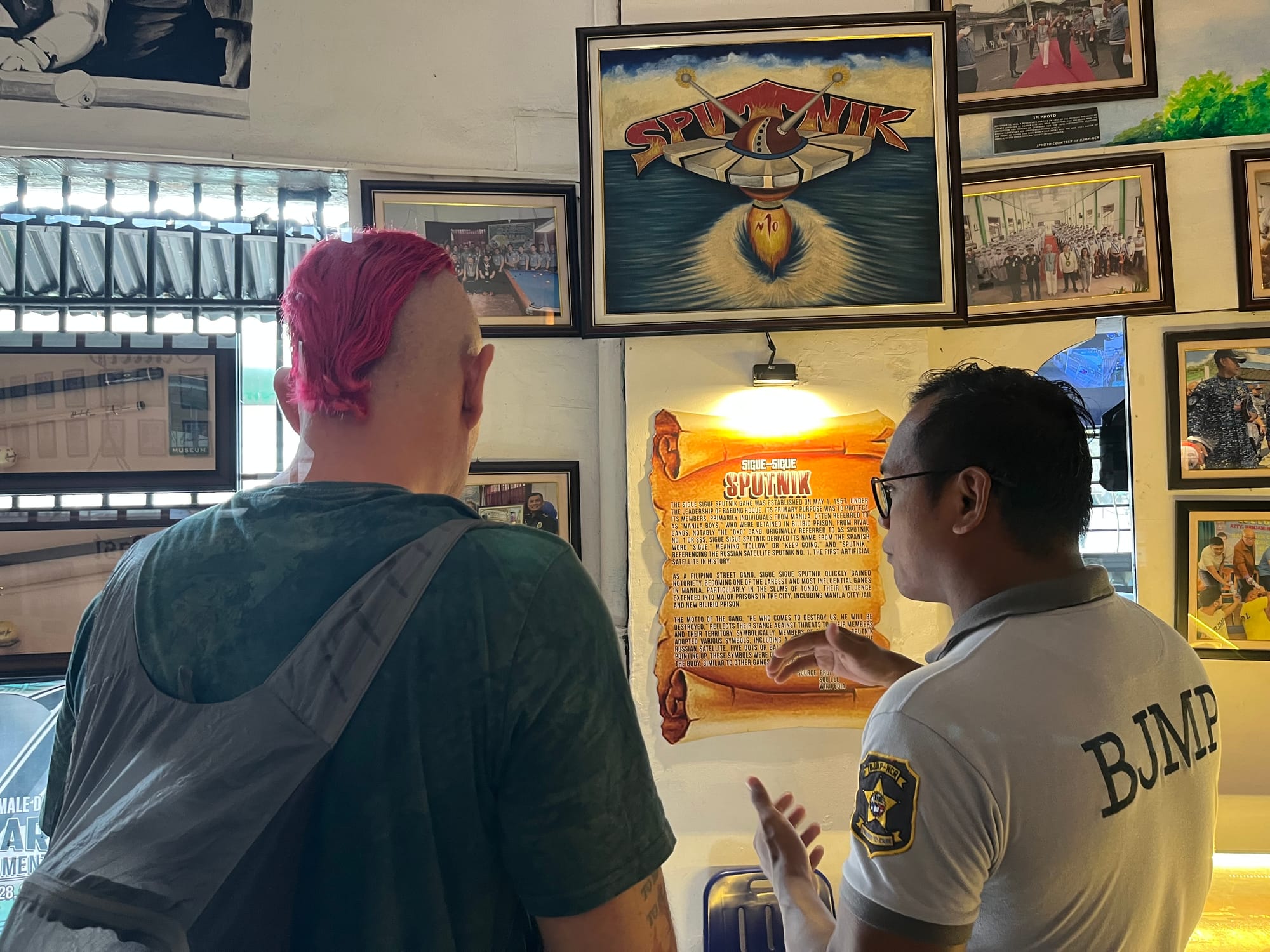
Some things not allowed in Australian prisons are allowed here, though. The museum contains artworks showing the logos of the prison’s four gangs. Almost everyone in prison in the Philippines is a member of one of them. There’s the Bahala Gang, whose logo is surprisingly a Viking, as well as the Commandos, Sputnik, and the Batang City Gang. “We’re not trying to promote the gangs by showing their art,” Elmar tells me, “but we need to acknowledge them and their history here.” Some prisons do not allow this, but Manila seems to have taken a sensible approach. “How could we ban the gangs anyway? We can’t,” continues Elmar, ‘we can only try and manage their behaviour.”
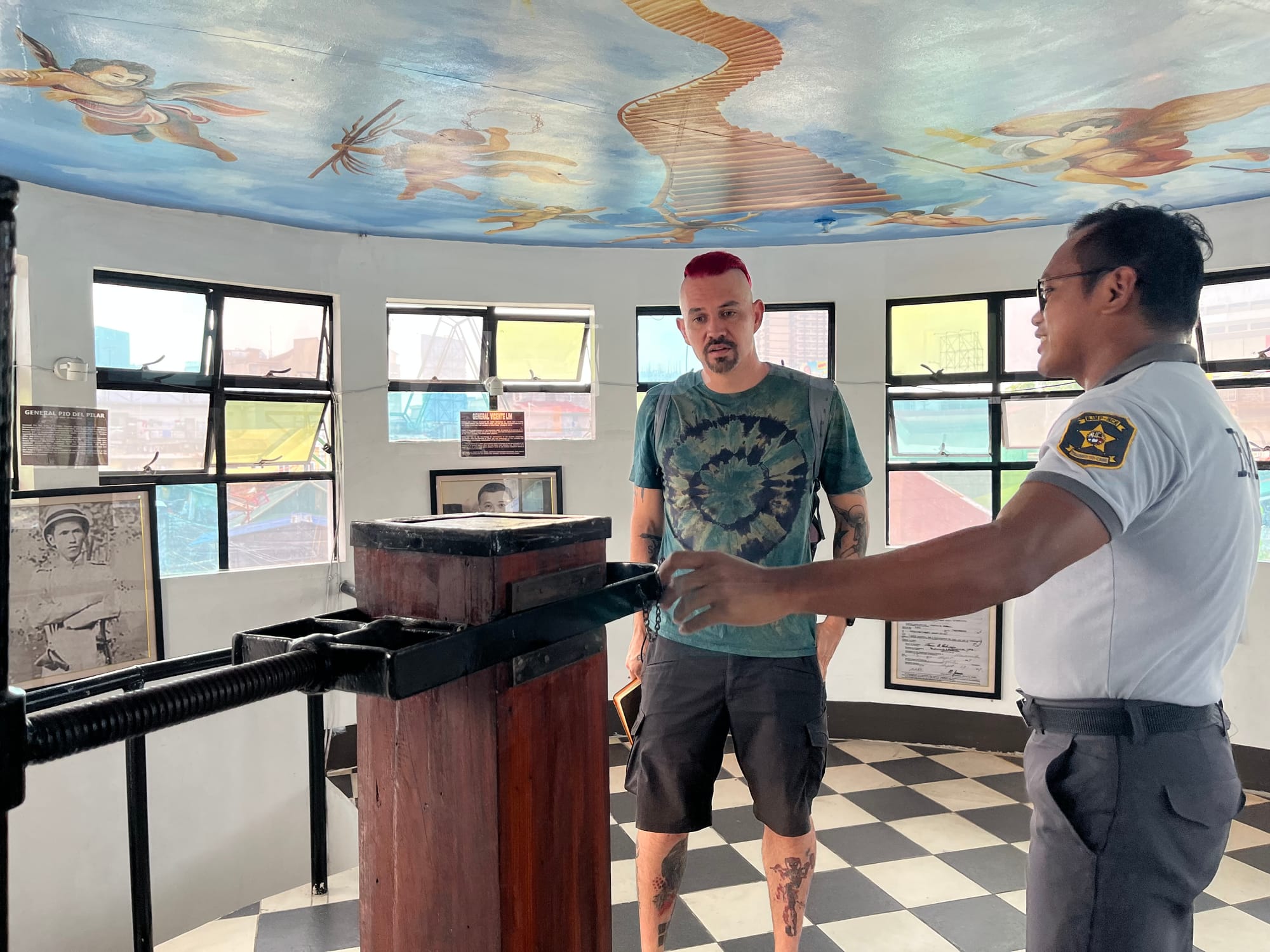
Those not in a gang are referred to as Querna, which translates as “unaffiliated.” They make up about 5% of the prison’s population. People are housed in the prisons according to their gangs, or lack thereof, and the section for quernas is deliberately larger so as to encourage people to leave gangs and move there. Despite the fact that almost everyone is a gang member, PDLs tell me that violence in the prison is low. Elmar confirms he’s only witnessed one gang riot in his eight years at this prison. The top floor of the museum, which doubles as a functioning watchtower, also contains a fully operational garrotte, a device that was previously used for executions in the Philippines. A stray cat walks through the watchtower while I’m being shown how the garrotte works.
From the top floor, I can see all five sections of the prison for the gangs and quernas. There’s also a much smaller section in the distance. “That is for the LGBT persons,”’ Elmar tells me. “There are 97 there. We separate them if they want as some receive abuse and harassment, but also to stop them doing sex work.”’. The small section for LGBT PDLs is painted pink. From the guard tower, I can also see something I was previously told about. The prison is in the centre of the city, and the slums around it have built houses that are now higher than the prison walls. “This makes it too easy for people to throw contraband into the prison,”’ Elmar explains. The prisons have complained about this issue many times, but there is a lack of interest from the government to do anything about it.
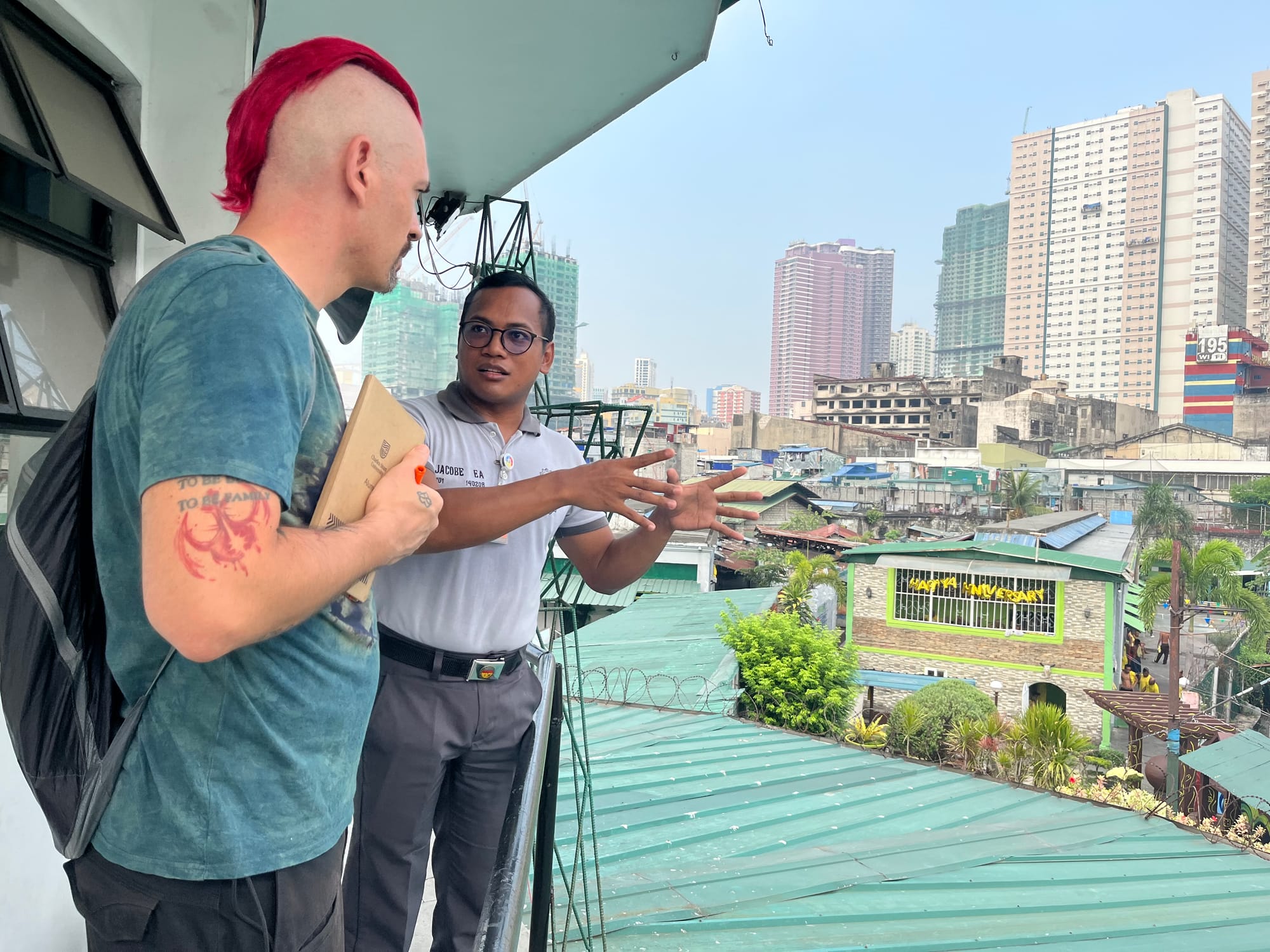
Coming down from the museum, I meet with the prison warden, Lino Montano Soriano. Among other things, I tell him that people held in Australian prisons, including those on remand who have not been convicted of any crime, are referred to by our prisons and prison staff as “offenders.” He frowns. “That sounds very judgemental,” he says. “We call them PDLs because they are only deprived of liberty for the meantime.” While conditions here are much more overcrowded than Australia – this prison is designed for 1,182 people but currently houses 3,800 – I’m continuously amazed at some of the common-sense things the prisons do better here than in Australia.
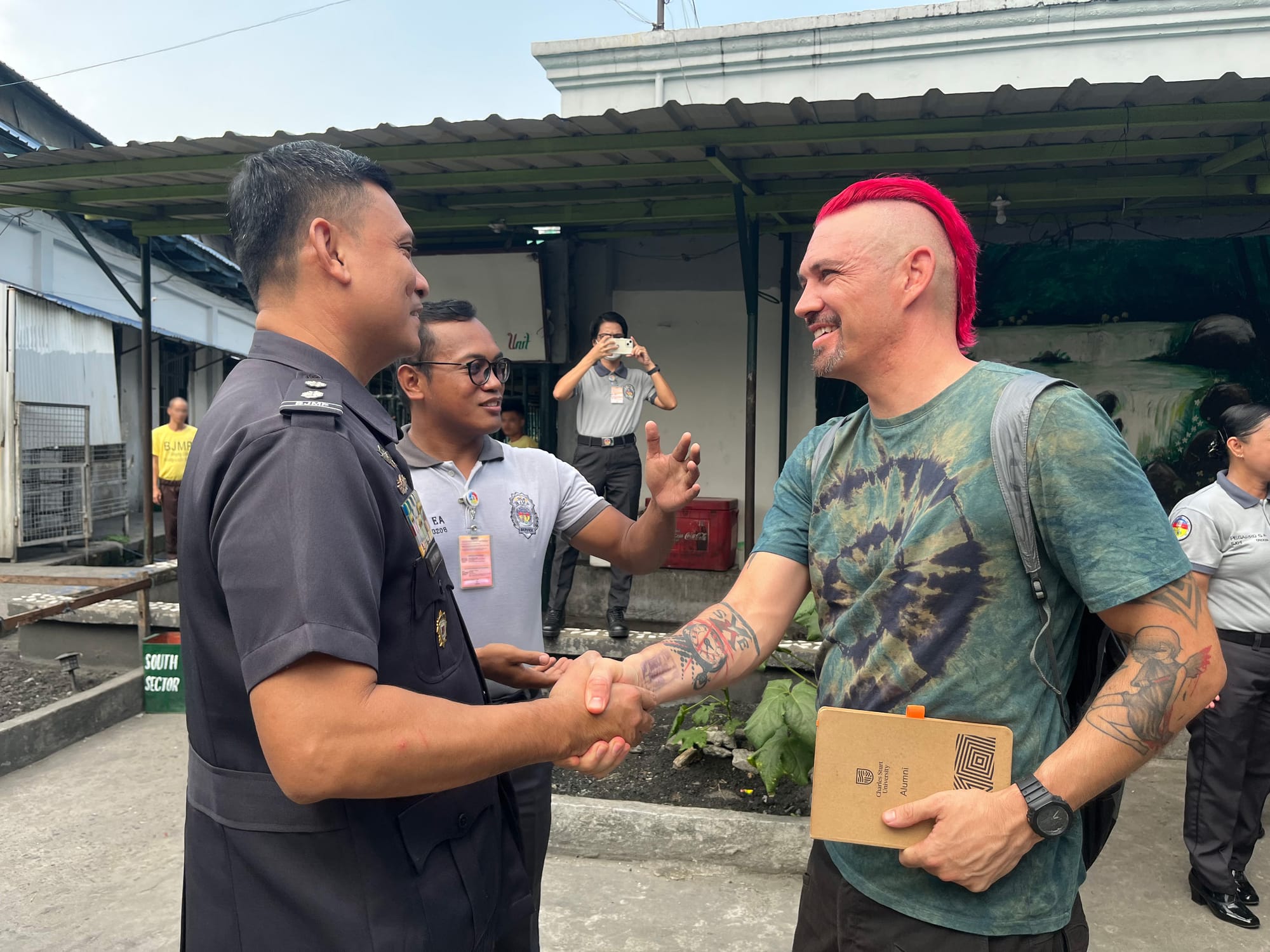
Before going to see the arts program, I walk past the mobile tuberculosis-screening clinic, which is currently seeing people. Once a year, each PDL is checked for tuberculosis. I’m shown the prison bakery, the tailor shop, before being taken to the barbershop and massage room. Massage by PDLs is charged at 100 pesos an hour for visitors to the prison (about AUD 2.80), and 50 pesos for other PDLs. All PDLs are allowed to have actual cash, in order to purchase services like haircuts. The barbershop also offers hair dyeing, but only in black. “You cannot get bright red like your hair,” Elmar jokes with me. I’m also shown an educational class where about 30 PDLs are being trained in how to do massage. Later, I see the conjugal visits area, containing two small rooms with single beds where PDLs are allowed to have sex with people they were already in relationships before being imprisoned. There are only two rooms and 3,800 prisoners though, so each PDL is only allocated 20 minutes in there with their partner at a time.
Eventually, I’m taken to what I most wanted to see: the prison art program. In this room, many PDLs are hard at work making jewellery and key-chains out of beads. Also on display are screen-printed bags, lamp stands made from paper, and purses made from recycled coffee bags.
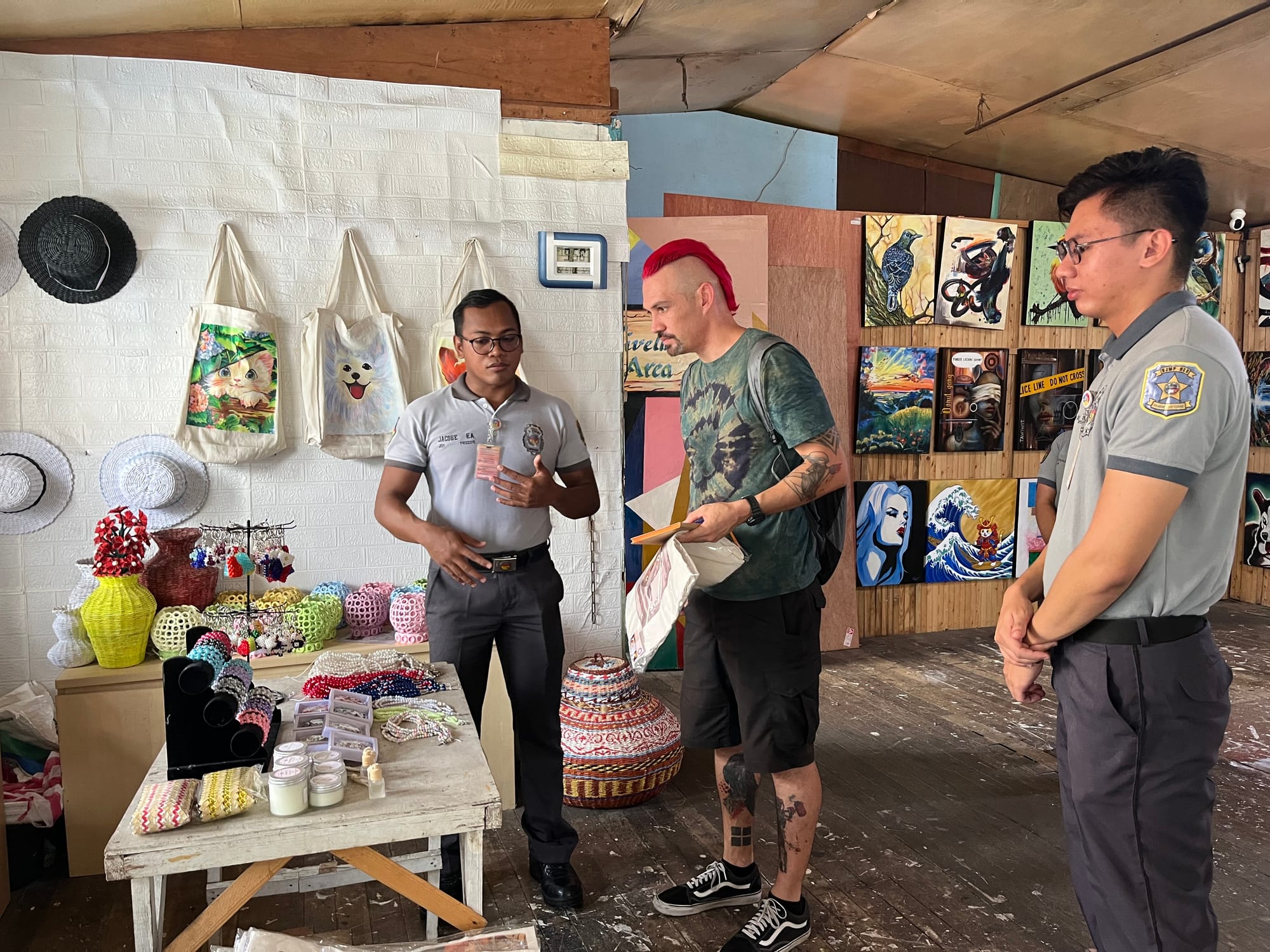
The art centre has many impressive paintings on the wall, and one painter hard at work on a commissioned portrait. His name is Dandy and he paints here every day, usually finishing one painting a week, typically commissioned from photos. Dandy is 44 and has painted since childhood. He worked as a tattoo artist prior to his arrest, and hopes to return to this job once he is released. He tells me that art helps give him a living, with money for food and hygiene products. It also helps keep him productive.
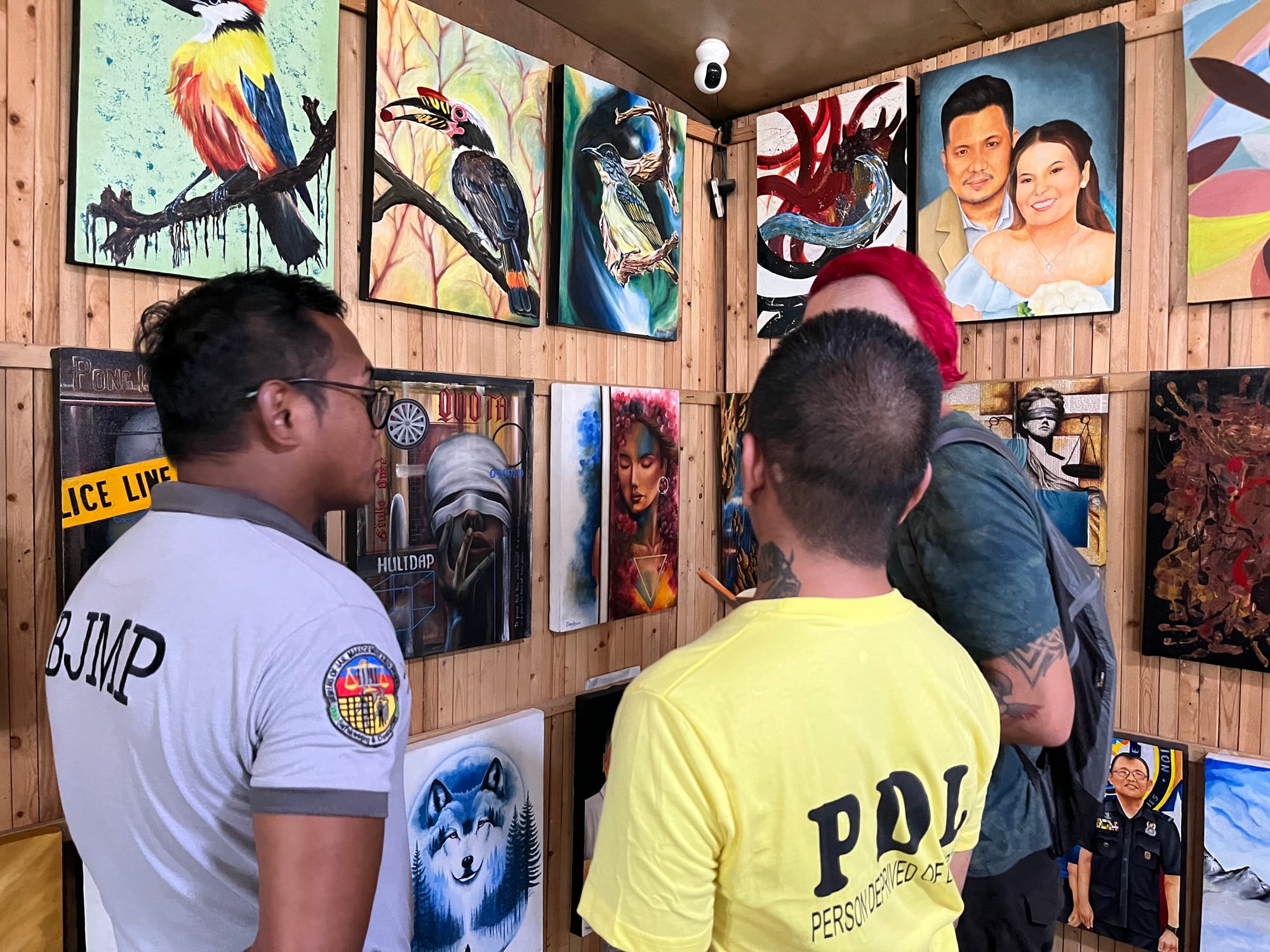
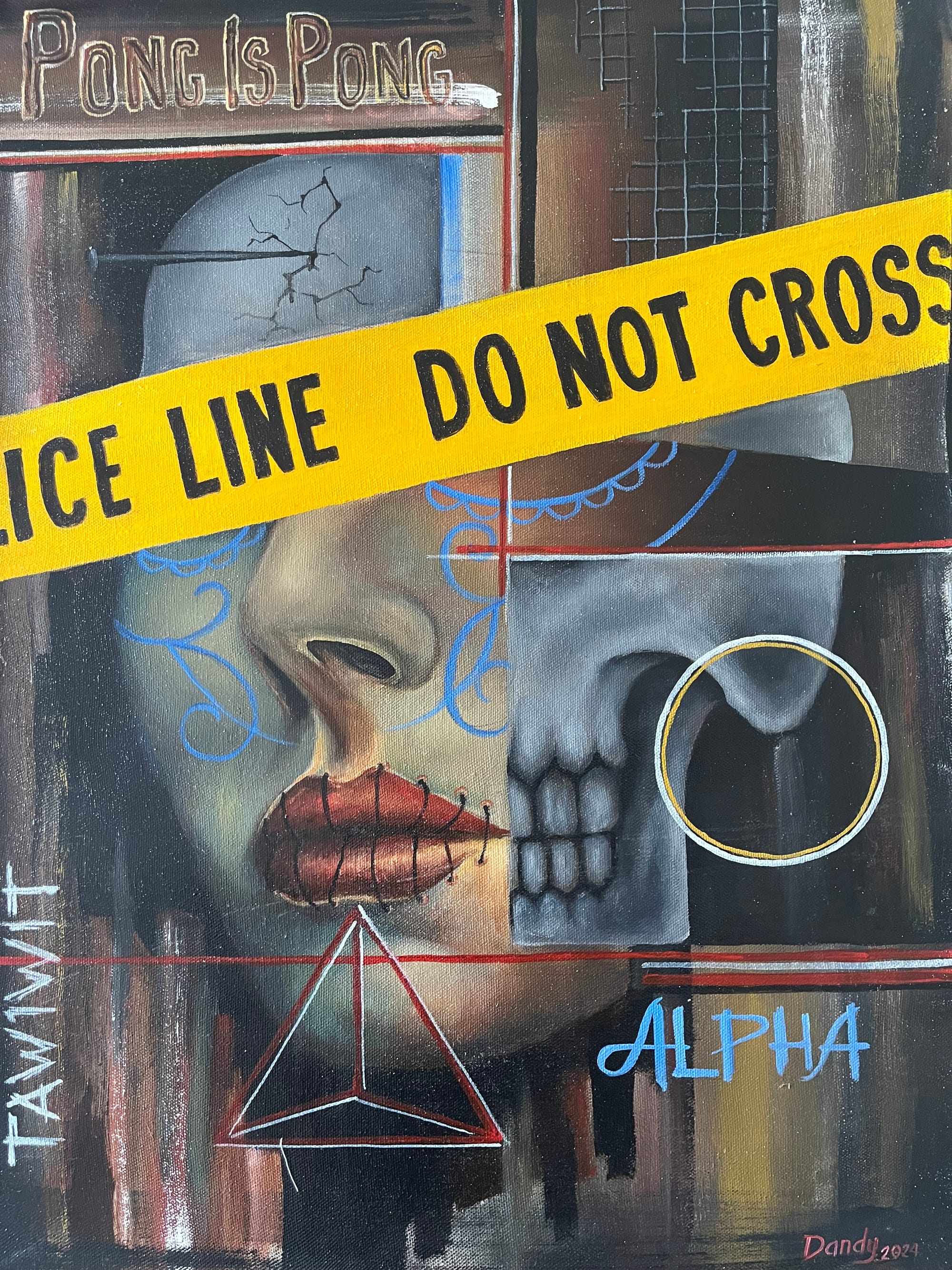
“I develop more talent in here. Outside there is a lot of influence for doing drugs, but in here I can just focus on painting”, he tells me. His works, and others, line the walls. All of Dandy’s art supplies are provided by the jail. Custom orders are sent into the prison, and then finished artworks are posted out. The price of paintings is left up to the officers, but Dandy receives 60% of the sale. The rest is used to buy new materials. Most of Dandy’s paintings are typical portraits, but there’s three abstracts that look different from the rest. I came here hoping to find an artwork I could use as the cover of the next issue of Paper Chained, and upon seeing them I immediately know one is the painting I’m going to be using for that. I leave the prison with a bag of prison handicrafts in one hand, Dandy’s painting rolled up in the other, and a fascination for what I’ve learned in my short time inside Filipino jails.