By Jarrod. Published in Issue 21 of Paper Chained in March 2026.
In prison, time runs slow. The monotony can eat away at you unless you keep yourself busy. I learned fast that to fill up your day was to keep your mind healthy. Typically, you can exercise or play a sport. You can cook up a meal. You can read books that mostly have all the pages. You can also play cards and occasionally chess. Or you can pace back and forth if you don’t like any of the above. Most people choose the pacing.
But there was one time I spotted some inmates in a hallway. They had pulled out their chairs from their cells and formed a circle practically blocking the walkway. They had pencils and were busy scribbling on printed sheets of paper. They had dice made at the wood-shop, stealthily snuck back to the cells after work. Every now and again in prison there is a rare item, a relic from the past. A Walkman perhaps. If you’re lucky, a guitar. Sometimes something as simple as a vortex football. On this day, it was a Dungeons and Dragons 5th edition Starter Set.
I had played games in the past, but never D&D. It’s the most famous fantasy role-playing game in the world. I jumped in and immediately realised the potential of the game. At face value, it’s just paper and rolling dice, but there was something here. I also realised that like most things, a game is only as good as the people you play it with.
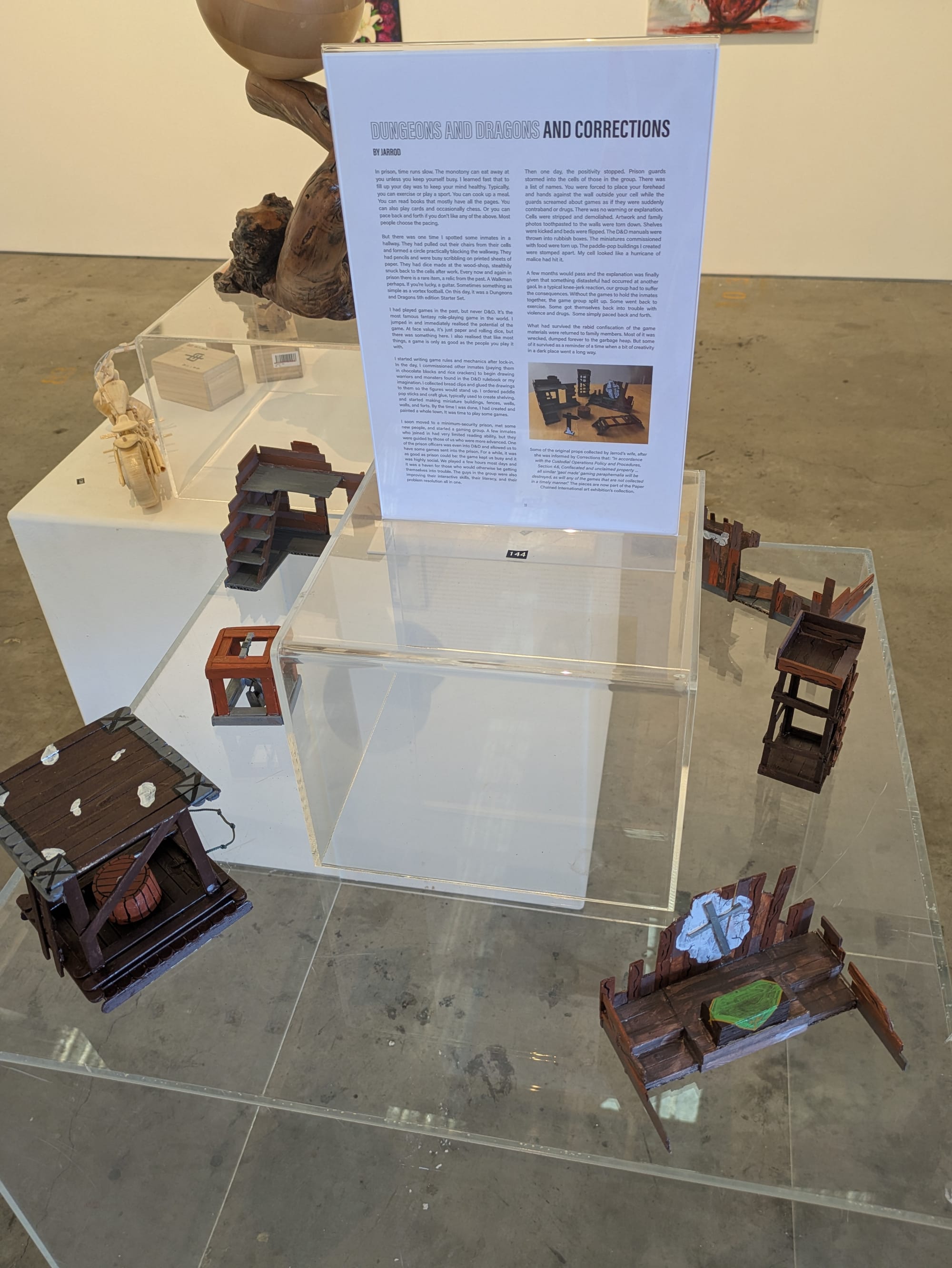
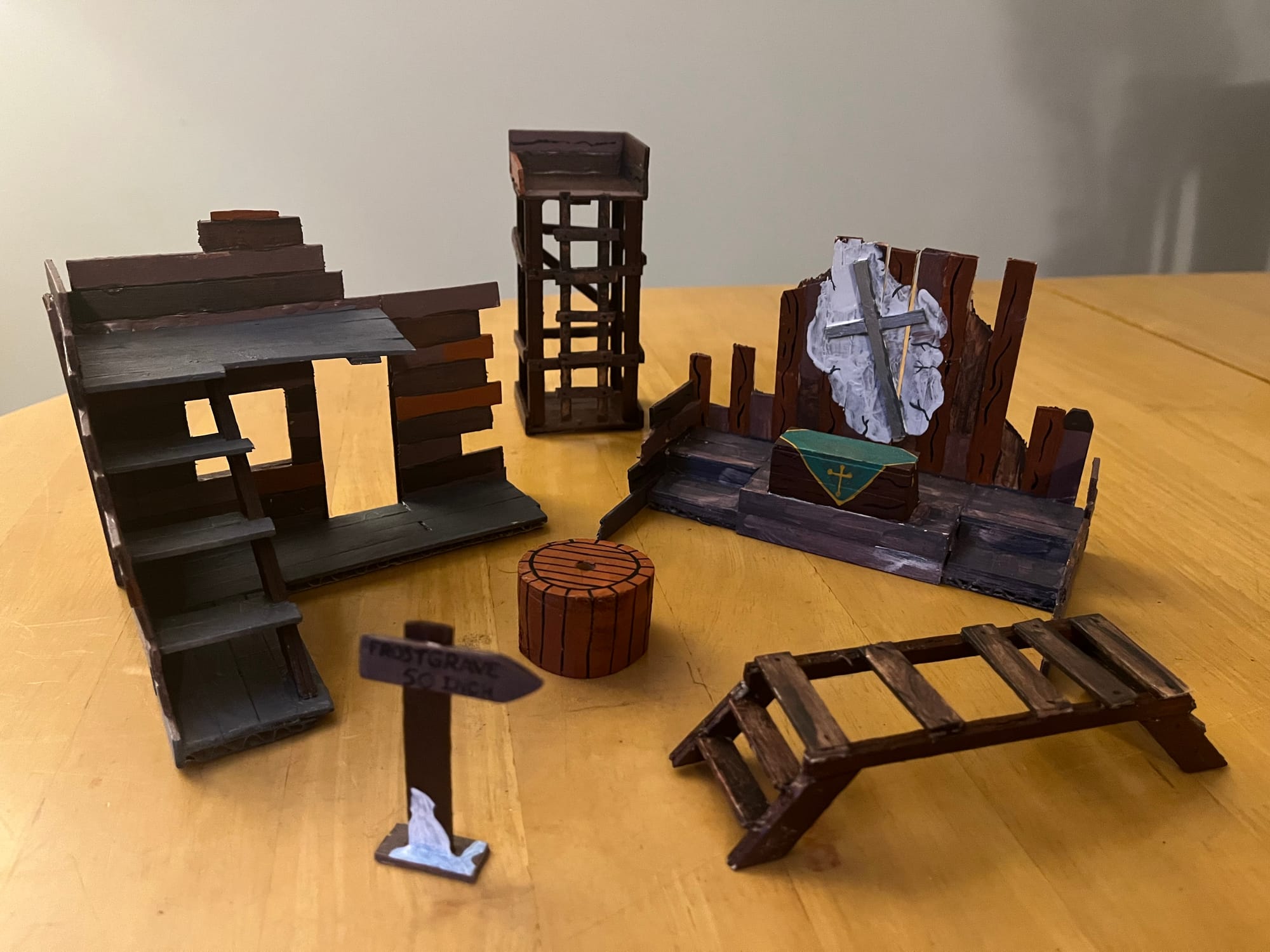
I started writing game rules and mechanics after lock-in. In the day, I commissioned other inmates (paying them in chocolate blocks and rice crackers) to begin drawing warriors and monsters found in the D&D rulebook or my imagination. I collected bread clips and glued the drawings to them so the figures would stand up. I ordered paddle pop sticks and craft glue, typically used to create shelving, and started making miniature buildings, fences, wells, walls, and forts. By the time I was done, I had created and painted a whole town. It was time to play some games.
I soon moved to a minimum-security prison, met some new people, and started a gaming group. A few inmates who joined in had very limited reading ability, but they were guided by those of us who were more advanced. One of the prison officers was even into D&D and allowed us to have some games sent into the prison. For a while, it was as good as prison could be: the game kept us busy and it was highly social. We played a few hours most days and it was a haven for those who would otherwise be getting themselves into trouble. The guys in the group were also improving their interactive skills, their literacy, and their problem resolution all in one.
Then one day, the positivity stopped. Prison guards stormed into the cells of those in the group. There was a list of names. You were forced to place your forehead and hands against the wall outside your cell while the guards screamed about games as if they were suddenly contraband or drugs. There was no warning or explanation. Cells were stripped and demolished. Artwork and family photos toothpasted to the walls were torn down. Shelves were kicked and beds were flipped. The D&D manuals were thrown into rubbish boxes. The miniatures commissioned with food were torn up. The paddle-pop buildings I created were stomped apart. My cell looked like a hurricane of malice had hit it.
A few months would pass and the explanation was finally given that something distasteful had occurred at another gaol. In a typical knee-jerk reaction, our group had to suffer the consequences. Without the games to hold the inmates together, the game group split up. Some went back to exercise. Some got themselves back into trouble with violence and drugs. Some simply paced back and forth.
What had survived the rabid confiscation of the game materials were returned to family members. Most of it was wrecked, dumped forever to the garbage heap. But some of it survived as a reminder of a time when a bit of creativity in a dark place went a long way.