At this stage, my ongoing research into prison newsletters and magazines in Australia has found over 100 unique publications. Only two of these publications, however, have been produced at juvenile detention centres.
Searching for records has been complicated by the nature of historical institutions for children in Australia. Many twentieth-century institutions housed both orphans and wards of the state alongside those sentenced for criminal offences. Usually, no efforts were made to separate these two distinct groups of children. BoysTown in Beaudesert, Queensland, a Catholic-run institution that operated from 1961 until 2001, housed both destitute children and those referred to them by courts, and were later found to have enacted horrific sexual and physical abuse against boys in their care. Boys Town Calling, the institute’s newspaper, ran with varying frequency between 1961 and 1995. The newspaper was really just a mouthpiece for the authorities, a promotional publication aimed at milking more money from the institution’s financial supporters. From the second volume the newspaper was supplemented by very short articles by the boys at the institution. Typically, these were about day-to-day life, including sports, excursions, and livestock care. Photos of boys were frequently published, and some boys are recognisable as those who have come forward as adults to speak of abuse at the institution. What is clear, however, is that the boys had no control over the editorial and publication process of the newspaper, nor were they the target audience.
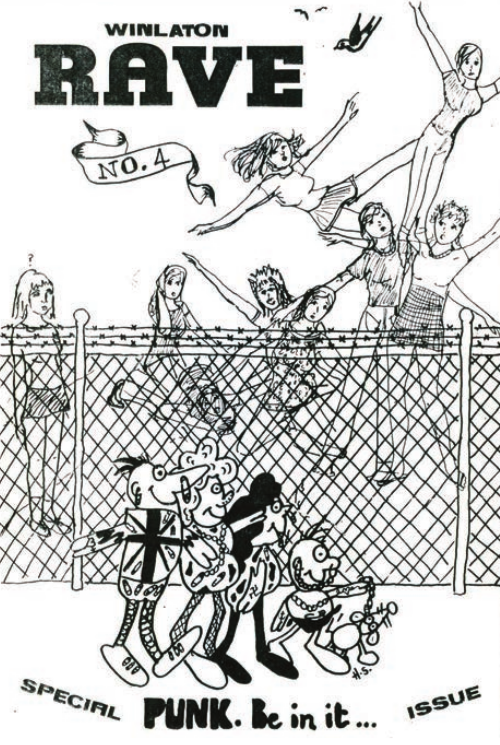
Conversely, the only other youth publication found, Rave, was also one of the most authentic and uncensored. Within its pages, incarcerated girls were given a voice and considerable freedom in writing at a level not often enjoyed even by adult publications. Rave was the publication of Winlaton Youth Training Centre in Victoria. The juvenile detention centre opened in 1956 and housed girls aged 12 to 21. It was designed to hold 95 residents comfortably but at times experienced overcrowding. Only about 10% of the girls at Winlaton were criminally convicted. Most were either wards of the state or sent there for ‘being exposed to moral danger’, a catch-all term used almost exclusively to incarcerate adolescent girls who were either engaged or suspected to be ‘at risk’ of sexual activity. This included girls being incarcerated for their own ‘protection’ after reporting that they were raped by family members.
Rave was created by Laryssa Zynevych in 1976 and would continue to be produced by incarcerated girls, usually with oversight from a staff member as editor. It ran until 1992, shortly before Winlaton’s closure the following year. Around 63 issues were made. People in the community could subscribe to Rave for a modest fee to cover printing, and it was posted free to other juvenile detention centres as well as adult prisons.
As is noted by the Victorian Government’s website on Winlaton, Rave magazine presented “the thoughts and feelings of the trainees in a way that the other institutional records do not.” In 1985, The Age noted that Rave increased literary skills and provided “a therapeutic outlet for frustrations”. Girls were given remarkable freedom to write about their lives. Personal narratives would often feature stories including physical and sexual abuse at home, and previous experience with drug use and sex work. Sex in general was a frequent topic, and the magazine often surveyed girls or printed their commentary on topics such as pregnancy, rape, abortion and relationships, some of which featured considerable age disparity with their male partners.
As opposed to magazines at adult mens prisons, which often featured complaints from prisoners about being too censored, Rave once conversely featured a complaint from staff that girls were allowed to include too much ‘negative’ material. The same issue also featured incarcerated girl Zita Silvey interviewing Winlaton Superintendent Dr Eileen Slack. Slack mentioned she read Rave but chose not to interfere with it. Girls were quick to respond to people who did appear to want to interfere with their magazine.
It really pisses me off when people go off about our “Rave”. It’s the girl’s magazine, we have fun making it and it gives us something to do. So if the staff or anyone else don’t like our “Rave” then DON’T READ IT!!!!’
Commentary from ‘Woody’ in Issue 19 of Rave in 1983.
Girls aired many grievances in Rave, including through a dedicated ‘Rage Page’ featured in most issues. Complaints were often focused on the loss of freedom, too few cigarettes, or simply consisted of literary gold in the form of statements such as: “I hate this fucken hole!”. Mail censorship was a frequent complaint: “Most of the girls haven’t committed any crime and we have a right to privacy,” opined one inmate. Detailed coverage was given to girls being pressured to take Depo-Provera contraceptive injections prior to being allowed out on weekend release. Frequent commentary was also given to compulsory participation in ‘triad therapy’, a form of group therapy where participants were forced to accept responsibility for any subject they brought up, including for being a victim of sexual assault.
Read in the wake of the 2017 Royal Commission into Institutional Responses to Child Sexual Abuse, some of the complaints in Rave are particularly harrowing. An issue in 1980 made several criticisms of male staff, with one girl stating: “a few of them are pervs. I don’t reckon they should be allowed to walk down the passage in the morning when we are getting changed.” An issue from the magazine’s final year, 1992, also featured a complaint about male staff entering girls’ rooms without warning.
The Royal Commission heard many substantiated complaints from girls of Winlaton being sexually assaulted. Overcrowding at the institution was found to have hindered adequate supervision to protect girls from abuse. The Department of Youth Services had no formal policy for reporting sexual abuse at the time, and Winlaton internal policy forbid notifying police about sexual assault allegations until 1987. One girl who reported sexual abuse from her father said staff made her feel as if she were to blame and forced her into triad therapy. The Commission found that triad therapy was inappropriate for sexual abuse, as it required children to take responsibility for all issues raised, and was conducted in a group environment by people not trained to respond to such issues.
Dr Slack, who instigated triad therapy, appeared at the Royal Commission and accepted the criticism of the program. The Commission also criticised that Winlaton’s response to one girl’s fear her father would sexually assault her on day release was only to give her the Depo-Provera injection so she would not become pregnant from the abuse. It was found that Depo-Provera was also prescribed with unclear consent at a time when its usage was supposed to be restricted for research purposes. Dr Slack had raised her own concerns about the drug at the time but was overridden by medical staff and did not have the authority to stop its use. The Commission also accepted that girls were subjected to unexplained internal examinations from medical staff and that this would have been experienced as sexual assault.
Winlaton is likely viewed as an institution of abuse by many of its former victims. Rave, however, appears to have been a beacon of hope in an otherwise often bleak environment. Laryssa Zynevych, the creator of Rave, returned to Winlaton in 1986 as a volunteer. She wrote for the magazine again that year, stating:
With so much time to spare ... it was difficult to think of things to do to keep us occupied and out of trouble, but one afternoon I had an idea that we could produce a Winlaton magazine and so began the Winlaton Rave .... I didn’t have much encouragement in my new venture. When people within the compound saw me coming toward them with trusty biro and writing pad in hand, they’d head off in the opposite direction. After a while however, it became evident that some good things were coming out of it, i.e. staff and girls alike were able to submit articles anonymously and express their opinions ... It was a really good means of communication and I was thrilled to learn that it’s still going stronger than ever and now ... Personally it feels good to know I left behind something other than bad memories and my initials carved in the odd wardrobe and bedroom doors.
Forty-one issues of Rave are held by the Public Records Office of Victoria. Using the generous funding of Paper Chained’s associate editor Dr. Jedidiah Evans, I paid for these magazines to be digitised as part of my ongoing research into prison publications. After the records were digitised for me, the Public Records Office thankfully chose to make many of the newly digitised files available for free online. So thanks to Paper Chained, people outside custody can now read many of the issues at: https://prov.vic.gov.au/archive/VPRS18019/records
If you’re a former Winlaton girl, or know anything about Rave, including where we might find some of the various missing issues, please get in touch with Paper Chained. And as always, if you know anything about any other prison publications, or if your prison has one now, please write and tell us about it and send us a copy if that is allowed. We’d love to hear from you.