Published in Issue 9 of Paper Chained in March 2023.
In this issue of Paper Chained, Editor Damien Linnane talks to Rachel Montgomery and Glenda Duffy from Sisters for Change, a Red Cross program run at Townsville Correctional Centre in Queensland.
So tell me about Sisters for Change. Is it mostly run by the two of you?
Rachel: Glenda and I are facilitators of the program which is all about improving prison health, wellbeing and safety. The important thing is that the priorities and activities are led and designed by incarcerated women, not us. Red Cross trains, resources and supports women interested to join the Red Cross family as special status volunteers, a network of women inside dedicated to creating change in the prison to improve conditions. It is the women themselves who are at the heart of the program. It is their lived experience and understanding of issues, problems and how things work, that makes the projects they come up with successful. We supply training in harm reduction, mental health first aid, first aid, cultural competency, communication and health needs. The women combine this with their lived experience understanding to identify the health, well-being and safety risks and needs of women in prison, and design solutions and improvements that they then roll out. They are an amazing group of women. They’ve recently trained 140 women in sexual assault prevention within the centre. They understand what happens inside, and they want to improve women’s safety. They shared definitions of sexual assault and rape and sexual touching. They talked about the impacts, and importance of bystander action. They explained supports available to women, and safe women to talk to inside. We’re uniting women to stand up and say no, we’re all here together. We’re gonna look after one another. Another project they developed was a visitation roster to visit women in solitary confinement in the ‘Safety unit’.
The prisoners are visiting the other prisoners?
Yes, up here if you’re identified as being at risk of self-harm you get put into solitary confinement. The centre reduces risk by separating women and observing them 24/7, but the women said, ‘look, the isolation just makes it worse.’ You are removed from your supports, stripped, surveilled and kept alone. Yes, reducing risk is important, but taking us away from our mates and supports makes it harder. How can we take care of mental wellbeing and enhance support? Women need more compassion and supports when they are in a bad head space, not less. The psychologists we have here assess people, but they don’t provide any treatment or interventions.
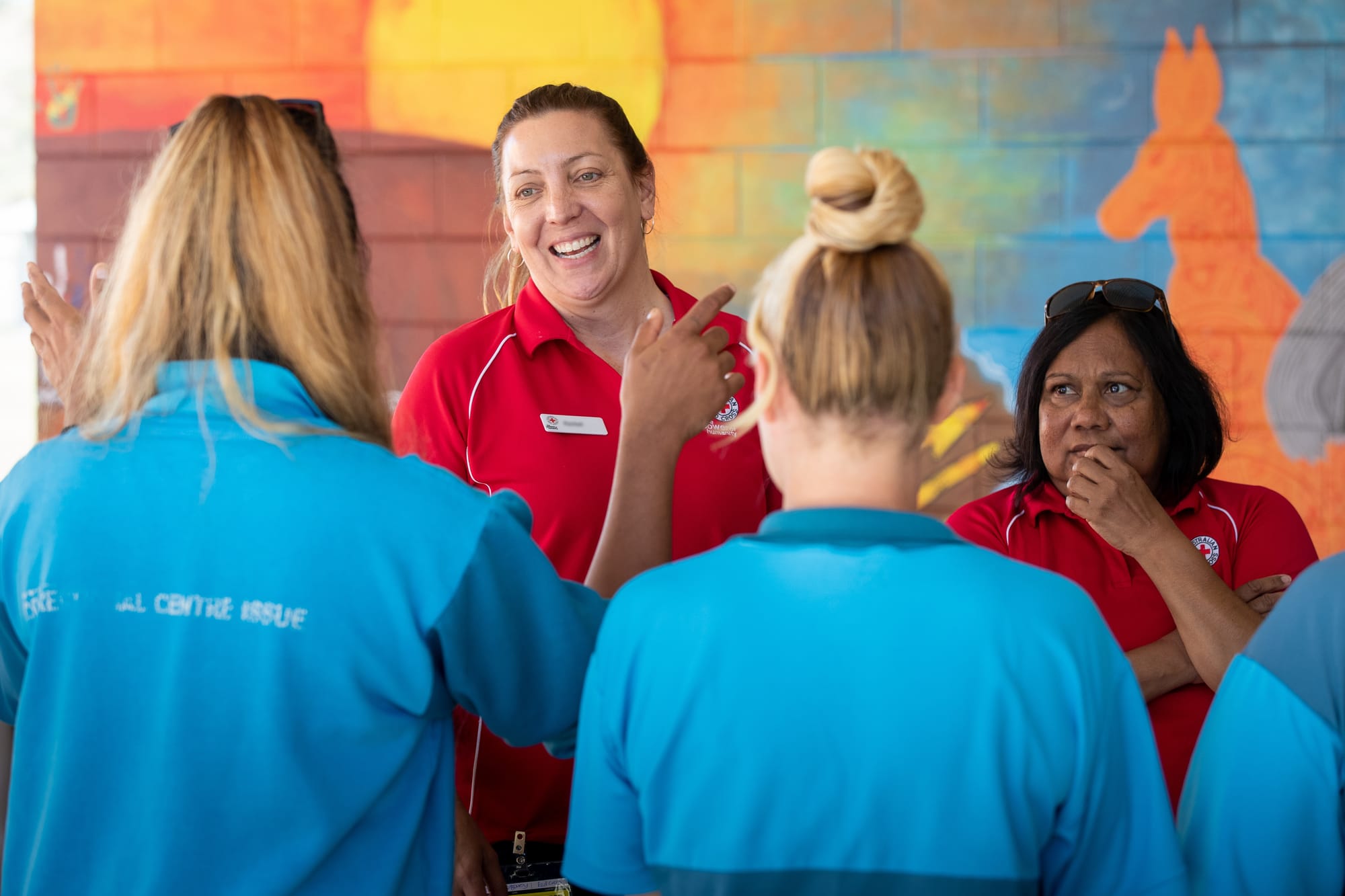
The typical ‘treatment’ for severe depression is just being placed in isolation. An auditor general actually condemned this back in 1999 but it’s still happening all around the country, not just in Queensland. It’s so ironic that the people who probably need mental health treatment the most don’t get any.
People need a safe person to talk to and open up with who can hear their worries without judgement and help them process or develop strategies to move forward. While Sisters for Change are not professionals, they have time and compassion and lived experience. They’ve got a deck of cards, some drawing stuff, and other resources to help break the ice. The women can choose to have a chat with the Sister for Change or if she’s not feeling up to it, she can decline. Most woman want that interaction, and appreciate having someone to talk to who understands, doesn’t judge, and isn’t going to share her story all over the prison. The Sisters for Change are really proud of that project. There have been a range of improvements to the Safety unit. Murals, coloured furniture, chalk paint, music and more. They also do working bees to clean up the solitary cells, which get terribly graffitied and there’s food and toilet paper chucked on the cameras and on the walls and ceiling. Cells may not be cleaned in between prisoners. The women say that its dehumanizing and makes them feel worst of all, like they’re not worth anything, so the girls have decided they’re gonna roll up their sleeves and do something about it, and they get in there and clean it from top to bottom. That’s what Sisters for Change is all about. It’s grassroots prisoner-led change.
The Sisters for Change identified the lowest points of a women’s stay in prison. Staying in solitary was one, but another low point was prison ‘reception’ where you first arrive. You’ve been separated from your kids, you are in shock, dirty, scared, and have just spent a long time in multiple watch-houses where there is no clean underwear or clothes and access to sanitary items depends on the officer. Women just want to wash and feel human again, but there is no roll-on deodorant, toothpaste and shampoo provided. These need to be bought. So for women who arrive without money it was hard. They could ‘book up’ toiletries on credit, but that then meant they then couldn’t use the phone to call their kids until they repaid it, which could take weeks. The Sisters for Change thought women shouldn’t have to choose between washing their hair and calling their kids, so what they did was partnered with local community groups who pledged to donate the items for free. They wrote a book for women to reduce fear, ‘The Guide to Inside’, which explained how things work and everything women need to know for their first week inside. They sewed toiletry bags put the toiletries inside. These dignity packs were given to women on reception by officers and it took some of the fear away, and made women feel more human, less afraid and less alone. The project has been a real success, and we got some positive media coverage where Sisters for Change explained the problem and the solution they had come up with. Now all centres in Queensland are providing basic toiletries for free on entry. They’re an amazing group of women.
A key part of the program is to build positive working relationships between Corrections and Prison Health and prisoners. Red cross is known for its neutrality and ability to work with ’both sides’ in conflict and this helps in prison where you are working with two groups on either side of the fence. We establish a reference group that puts everyone around the table together, builds a sense of shared purpose, and a new way of working together. We provide a platform for the women to explain the problems, pitch the proposals, and negotiate solutions with management and prison health so they can be approved. Not everything gets approved, but the sense of empowerment that women experience when they do get approved is what it’s all about.
Tell me more about how the program started?
Red Cross around the world is dedicated to improving the health, wellbeing and safety of people around the world, including in places where there is poor health infrastructure.
This program is known as the ‘Community Based Health and First Aid (CBHFA)’. It is all about equipping everyday people with knowledge and skills that can help them make change at the local level. The program is run around the world training people on the ground to educate others about health issues impacting them and implement changes to reduce risk. It was the Irish Red Cross took the program and first applied it in a prison setting, the logic being that prisons are places where needs are high, but resources are scarce, where you haven’t got health infrastructure to meet all the needs of the community. In prisons there is potential to mobilise people who have a lot of time on their hands to be part of the solution. It started in Wheatfield Prison in Ireland, and now is in every prison in Ireland.
There are some YouTube clips you can watch about the Irish CBHFA program called ‘Journey of Change’. There’s videos about what projects they came up with to improve prison health and safety. One of the neat ones was a weapons amnesty. There was a lot of homemade shivs and things, and a lot of the violence in the prison involved slashings. The guys came up with this proposal for a weapons amnesty where everyone on the same day disposed of all their weapons without being prosecuted for having them. The prison went from 97% of assaults involving a weapon down to only 6% in just one year. And that’s good for everyone, for the prison and for the prisoners and prison budgets.
Australian Red Cross saw the great work they were doing and trialled the program in a few states, to see if it was effective in the Australian context. We can now say yes it is! CBHFA is now at Townsville Women’s Correctional Centre (QLD), Saint Heliers (NSW), Risdon and Mary Hutchinson’s (TAS), Acacia (WA) and Adelaide Women’s (SA), with plans to expand.
In Townsville, the girls said, ‘That program name is crap, no-one can remember it’, so they came up with ‘Sisters for Change’ instead. Its really stuck and it’s much catchier. The program in Ireland won the World Health Organisation award for best practice in prison health, and here in Australia, Flinders University found the program improved prison health and safety and that the women who are involved are more hopeful. It gives people involved a sense of hope and agency to make a change not only in the prison, but in themselves and their friend and family networks.
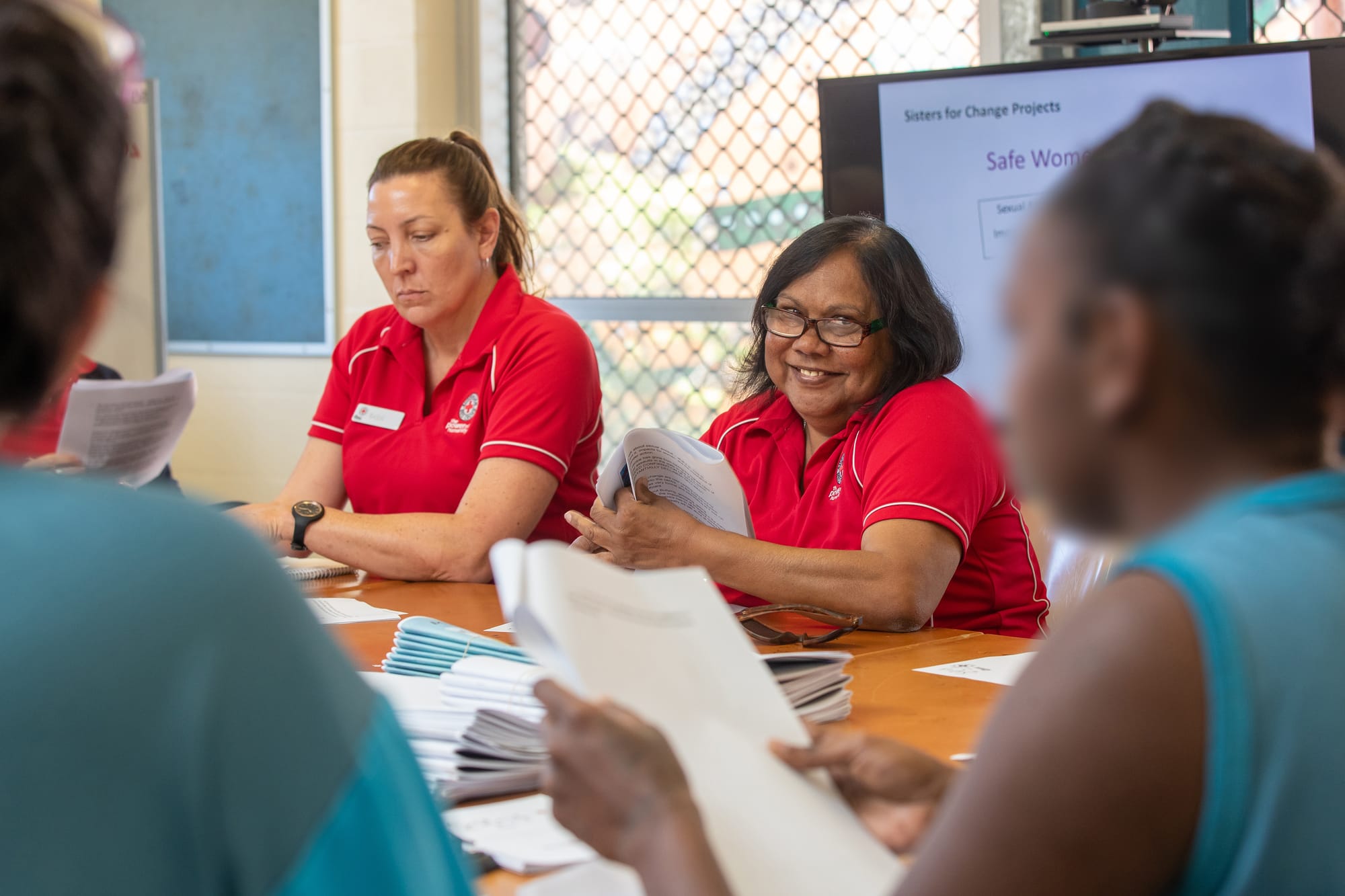
What made you want to work in prison?
For me, it was the opportunity to learn from and work alongside people inside a powerful system to push change from the inside out and bottom up. It was a chance to prove that the program could work with women, and work with first nations women in prison to create change about things that matter to them. The program in Ireland showed great success with men, but there were no stories from women. So it was a chance to see and show what women’s priorities and projects look like. What impacts them and how is it different for First Nations women. This program is not about having two experts come in and tell everyone what to do. It is about an exchange, two-way learning. I have learnt so much from the women inside, not only about how things work but how they don’t work and the shared humanity regardless of the situations in which we find ourselves. There’s no way Glenda and I could design or come up with these projects. Neither Glenda nor I had never stepped inside a prison before. Without the expertise of the women, we would have nothing. Our background is community development working with people and communities to make positive changes, to be a part of a change and leave things for the better. But the women have been our teachers and we have gained so much from their stories and strength, perseverance, persistence and power.
Have there been any particularly rewarding moments?
Glenda: When we first started the women said they needed more cultural supports, more cultural safety, more validation of their culture. A group of elders came together in response to the women’s call. They called themselves ‘Elders for Change’ and they come into the prison and sit down with the women. They do grief and loss counseling in a cultural way. They do yarning, dancing and storytelling, and writing classes. The Elders for Change work hand in hand with Sisters for Change to respond to women’s need for culture inside. Some of the Elders work, some are semi-retired, some are pensioners, but there is shared passion, energy and commitment to helping mob inside and getting our mob out of the justice system. They come from all over and are united by common purpose, just like the Sisters for Change are. That’s probably been the big highlight for me, bringing community in through prison walls, and now we have a very inspired and motivated group of Elders working across the justice system in Townsville being a voice for women on the outside. They are doing restorative justice conferences, joining up to the justice group and helping people at court, working to design better programs for mob, and getting involved in supporting and helping women inside.
There’s so much energy and passion. Seeing people come together with shared purpose. Native title can be divisive, but all of our cultural group are over-represented in jail, so that provides a reason to come together across differences and be there for people whose family and communities are very far away from here. That’s what’s good about Elders for Change is that the membership is open to any elder, its inclusive. The only thing you have to have is a passion to see justice. The focus is on the system itself and elevating the voices of prisoners and their experiences too. The Elders look at the system itself and say, ‘What are you doing that’s funneling all these people in here?’
A lot of the programs I saw run in prison by Corrections are really meaningless, and you essentially pass them just by turning up. So what do you think makes Sisters for Change different and successful?
Rachel: Women participate by choice. That’s important. Also, the program is long term. It is there for the length of women’s stay inside. But most importantly it is not a program that treats the women as problems or their behaviours as problematic. Rather the women are a valuable asset with knowledge, experience and skills that can’t be taught or found in textbooks. The women say that it gives them purpose, and that helping others helps their own healing. It is rewarding and provides an opportunity for women to put their knowledge and skills to good use and better the system for those around them. I guess the team of volunteers that meets each week also really becomes a source of support and guidance through the highs and lows of prison. There are shared values, principles and shared purpose. No one is perfect and we are there to help each other get back on track when needed. The women are striving to do better and be better, and to help those around them.
I’ve found some of the most successful education courses in prison are ones that don’t have tests. Rather, where a teacher just sit you down and teaches you how to read and there’s no formal assessments.
Definitely! It takes all that pressure off from learning. It helps people relax and creates more meaningful connections.
Can you tell me about the ‘Mum’s in Jail’ book?
So most women in prison are mums, and sadly many kids are tipped into care arrangements or the child protection system when their mums go to jail. The book came about from one Sister for Change who was a mum to young boys. Her young son thought she was living in a cage. All children know about prison they learn from what they see on TV, so their understanding of was really out of touch. So she said, ‘Sweetheart, I’ve got a bed, I’ve got a desk where I write my letters to you, I’ve got friends, I have a job and I go to school just like you do’. So that’s where this Mum’s in Jail story came about, and it really told that story in pictures and words, because a lot of child protection type placement arrangements don’t necessarily explain where Mum is or Dad for that matter, or nobody talks about it because there’s a lot of shame around it. The women wanted to do something about that, so they wrote this little storybook, to help improve the well-being of their children, but also for themselves as well. And it also helps prepare kids for the visiting process and what to expect. You know, they’re gonna go through these scary corridors and be sniffed by a dog. And everyone looks big and scary with their black boots. It really helps prepare the kids for the visit by saying, ‘The guy in the uniform, he’s there to make sure that you’re safe’. It prepares them to not be afraid in that situation and let them know what the visit will be like.
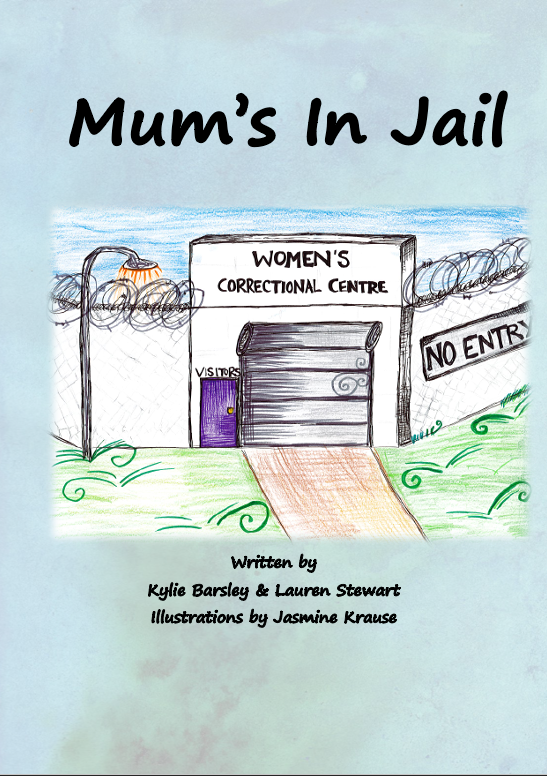
We got approval from corrections to print it and provide it to every mum coming into the prison, so they can send it out to their kids. They also wrote another book to go with it. It’s called ‘Information for Parents, Families and Carers’, and it explains everything that a parent needs to know to help maintain connection with family on the outside. How the phones work, how to organise a visit? What forms you need? Did you know there’s a parent liaison officer? Did you know that if you want to have baby photos or kid photos sent it, they can’t be this, that, or the other. And if your kids send glittery drawings in to you, well, that’s gonna get mailed back. It lets people know of all the ins and outs and crazy rules in custody that everyone falls foul of.
It’s read by Mum and then it’s posted out to family along with some cards that she can send to her kids to immediately reconnect. Because if you don’t come in with money, you can’t make a call. You get a little allowance but that doesn’t kick in for about four weeks here. Any parent knows that if you cant connect with your kids, it sends you a bit out of your brain. So the cards are there so mums can immediately write to their kids. Queensland Corrections and Queensland Health have come on board and have been supplying prepaid envelopes for the women to send out at no cost. The Sisters for Change are very proud of that and they get good feedback from the mums and from the kids and carers as well.
We’d love to really publish it, make it that little bit jazzier than what it is now, which is just printed A4 and run off the photocopier here. Jasmine has done a beautiful job with the drawings. They look like Anna and Elsa from Frozen with the big eyes, and she’s got women of all cultural backgrounds reflected and different scenes from the prison.