Published in Issue 8 of Paper Chained in December 2022.
Ear Hustle, an award winning podcast, was created by inmates Earlonne Woods and Antwan Williams, and volunteer Nigel Poor, at San Quentin State Prison in California. It was the first podcast created entirely inside a prison. By 2021, it had been downloaded more than 54 million times, and its 10th season started in 2022. Paper Chained Editor Damien Linnane interviewed Nigel and Earlonne, about their podcast, and how he got the contract to illustrate their book.
Nigel, when did you start volunteering in prison and what made you want to begin?
Nigel: I started volunteering in 2011 through a program called the Prison University Project. I’m a visual artist, and my work has always been about how people find meaning. How do you sort out a life? What’s worthy of being documented and remembered, and how do we pass on our experience to others? And I started thinking about how that happens inside of prisons and I wanted to figure out how to get inside a prison to start thinking about that. And then I heard about the Prison University Project and how they were looking for a professor to come in and teach a history of photography class. I answered that ad and that’s how I originally got in there.
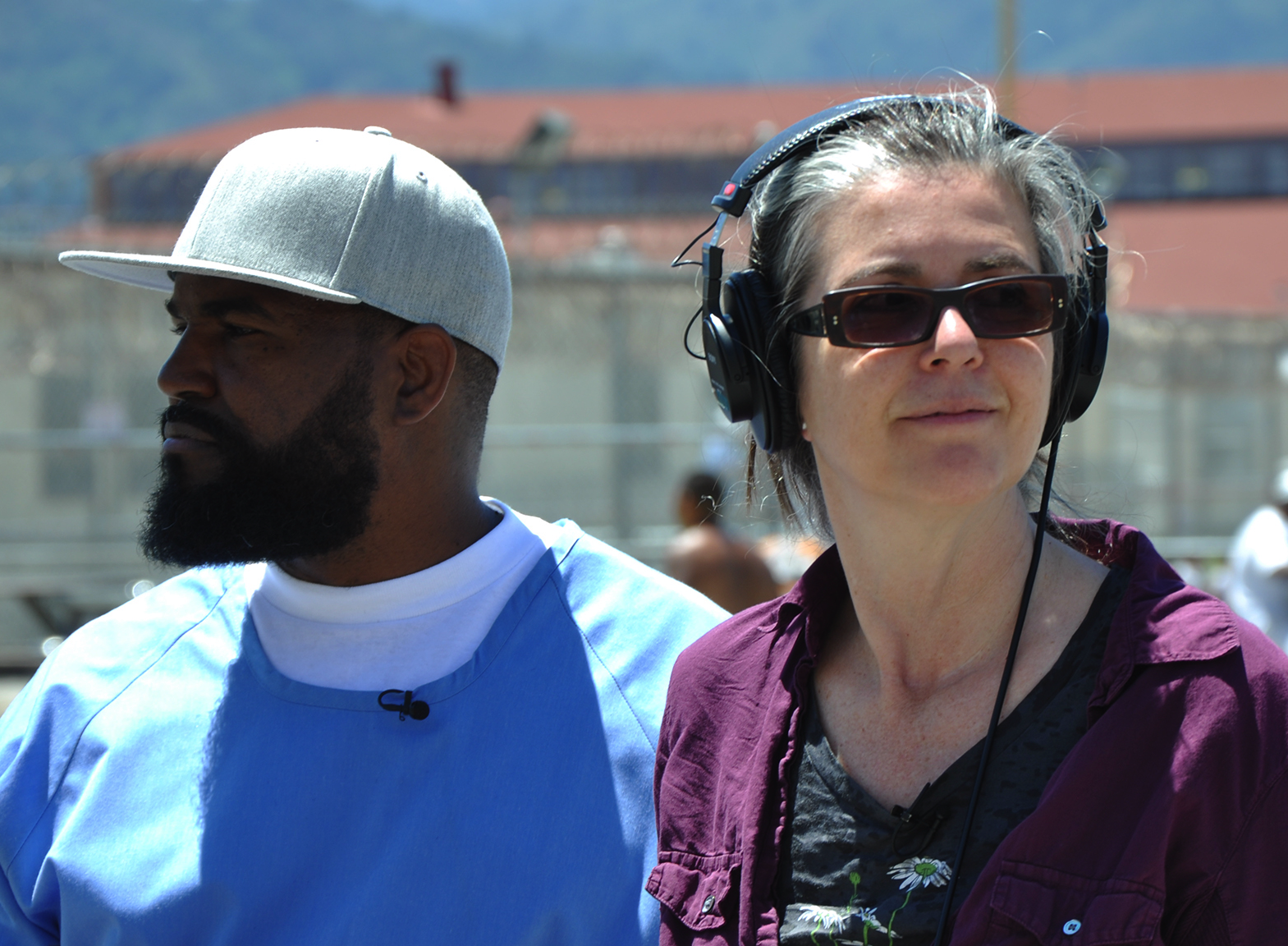
Earlonne, you were serving a 31-year-to-life sentence, and you started your sentence elsewhere. What brought you to San Quentin?
Earlonne: So, it all started when I was on a 10-month lock-down in another prison, and on the TV they had a show on the Discovery Channel called San Quentin Film School, and I was always fond of film and stuff like that so my mission was to try my best to get to San Quentin. Every year you’re able to able to put in a transfer to go to another prison... I tried for six years to get to San Quentin but couldn’t get there till 2011.
Nigel: I forgot we got there the same year!
Earlonne: (Laughs) Yeah, I got there in 2011, and got down to the media centre later that year.
At the time, what were you hoping to achieve by transferring to San Quentin Earlonne?
Earlonne: I know me – if I have my mind on something I’ll pretty much get it done. I knew there were only two prisons they could send me to at the time because of my [classification] level. I knew they were either going to send me to Soledad or San Quentin, and they actually sent me to Soledad. I was there a total of 67 days, but in the time I was there, they had a volunteer list to go to San Quentin, and I was like, ‘Man that’s where I was trying to get from the gate, let me sign up!’
Nigel, what gave you the idea to make a prison podcast?
Nigel: Well, I’d been teaching a history of photography class and a lot of the class was about storytelling, it was about looking at photographs, asking the students to insert their own narrative into them and tell a story based on looking at the photographs. I did that for three semesters and I got more and more interested in expanding ways of telling stories inside of prison, and I found my way down to San Quentin’s media lab where Earlonne was. I didn’t know him yet, but I knew there were volunteer opportunities down there. I started volunteering and meeting other people there. We talked about doing audio stories about life in prison, and so the idea was to do stories we would air inside the closed-circuit station inside the prison. I was doing a lot of interviews – they were about daily life inside, not unlike Ear Hustle, but not that sophisticated yet. And while we were working on that a local radio station found out about it and offered to help us and train us. And Earlonne was part of that. I think that was 2012. And over the ensuing couple years, Earlonne and I got to know each other better. He was interested in storytelling. And so we both thought, let’s just take those skills and move it towards doing radio. So we worked on that for a couple years but it wasn’t really moving forward in the way that was very satisfying for me or I don’t think for Earlonne. And so one day I just proposed to Earlonne, you want to try to do a podcast? And then he asked me what a podcast was, and I explained to it was a storytelling project. And he’s like, absolutely.
And so we sat down on October 5th, 2015, and we hashed out our idea. We still have that piece of paper about what we wanted to do. And the idea was to tell everyday stories of life in prison, and that he and I would be the hosts. I would be the outside person and Earlonne would be the inside person, escorting people through the stories. We wanted to use first-person narrative. We didn’t want to be journalists. We wanted to be doing this from the perspective of artists. And so we kind of just fell into it and it snowballed from there. We had a plan, but we didn’t really know what was going to happen with it. And then we found out about the Radiotopia Podquest competition. Radiotopia was looking for a new podcast and we got permission to apply and out of... Earlonne always remembers the numbers.
Earlonne: Out of 1,536 other contestants across 53 different countries, we end up winning.
I remember in one episode Nigel talked about explaining what a podcast was to Earlonne, and you played him one and he said, ‘Oh this is going to be easy’. Now that you’re into Season 10, what’s been the most challenging part?
Earlonne: Well, I mean I wouldn’t say the most challenging part, but what we definitely had to get better with was interviewing people in less time. So we wouldn’t have four hours of tape to go through for a 23-minute episode, you know what I’m saying? And in the beginning I thought it was just we sit down and talk and then whatever. But you know it was way more scripted than that. So it was way more writing for the writers, you know what I’m saying? Way more. Trying to make sure everything add up so it wasn’t what I thought in the beginning at all. Totally the opposite of that. Wasn’t that easy. It ain’t been that easy since.
Nigel: It’s never easy.
Earlonne: Never. It’s never gotten easier. It’s still as hard as it was in the beginning. And yeah, it’s a trip.
Nigel: I think the goal is to always make it sound easy. So when you hear the final episode, it sounds effortless. Like we don’t want it to sound like, you know, this is blood, sweat and tears. It should be engaging and entertaining and emotionally intense, all that stuff.
Earlonne: It should be just like I thought the other one was, they was just having a conversation. That was it. That’s what I thought. They was just having a conversation. I didn’t think it was all edited and cuts and cuts and retracts.
Nigel: Oh my God, I think one thing neither Earlonne and I understood was that in some ways we’d have to become actors because we have to do the narration.
Earlonne: Pick that laugh up! Pick that laugh up again. Ha Ha Ha! (exaggerated false laugh)
Nigel: But it sounds better than that. So that was a funny thing too. I mean, I don’t think either of us are natural. I don’t know if we are or not, but you know, that was funny. I didn’t think about that at all.
So Nigel, there’s obviously a public fascination with the prison system, but why do you think Ear Hustle has become so overwhelmingly popular? I assume it’s a lot bigger than you ever thought it would be?
Nigel: Way bigger than I ever thought would be. I think there’s a couple of reasons. One, you’re right, I think people are fascinated with the prison system. And we give them a look at something that a lot of people don’t have access to. But we also do it in a different way. We don’t focus on crime. We don’t focus on scaring people. We focus on, from our perspective, what life in prison is really like and trying to show the connections between life inside and life outside and dispel some of the myths that people have. And so I think people come because they’re curious and then they’re surprised. And I think that hooks them. And I think we tell really good stories with compelling and surprising characters and that holds people’s attention. And I think my friendship with Earlonne is also something that people are surprised by and they can hear our affection for each other and I think that’s a draw for people as well. And we tell stories people do not expect to hear about prison, and we don’t tell people what to think. So we’ve got listeners from across the political spectrum because although both of us have very strong political views, that’s not what we do on the podcast. We give people the information and let them make up their own minds. And so I don’t think people ever feel like we’re preaching at them.
Earlonne, you received a life-sentence under the three-strikes policy in California, but your sentenced was commuted in 2018 and you were released. You’re campaigning against three-strikes laws now. Can you give us a brief outline of how the policy works and what you’re doing to campaign against it?
Earlonne: Yeah. So the three strikes law. Just one of those laws that said if you have two prior convictions, then your third conviction would be a life sentence if it fell under a certain category. But when it first came out, you know it didn’t matter what your third strike was, as long as you had this one called a qualifying strike to make you a three-strike candidate. And me, I went to jail when I was like 17 and I had two felonies in one case. And when I got out of prison and became an adult and went and got back into crime and went to jail for the first time, I ended up getting a life sentence.
Nigel: He didn’t even know he was a three-striker, since his first two convictions were as a juvenile.
Earlonne: So to answer your question, what am I doing currently? We tried our best maybe a couple of months ago to get a bill on the ballot called The Repeal California Three Strike Act of 2022, and we failed to reach the prerequisite amount of signatures that we needed. So we weren’t able to get it to qualify for the ballot. We’re looking into it right now to see if this is something that we’re going to do for 2024. And I think this time if I play a role, it’s going to be more of a backseat role. But I still definitely assist in every way I can. But it takes signatures just to get it on the ballot, that’s not even to get people to get it off the books. It’s just to get people to vote on it again. And it’s really hard. We needed 1,000,000 signatures, we got 623,212, but we needed a million to make sure that it was like 100 percent accurate. So it’s just a lot of work if you don’t have the money to do it, the volunteers is one thing, but trying to keep all the volunteers organized, keep all the signatures on the right page for the right county, for the right city, that was hard, you know, so I think when you try to run a campaign like that, you gotta make sure that you have the funding necessary to hire the professional signature gatherers to collect those signatures.
Hopefully, if nothing else, you’ve got a better understanding of how to how to organize it next time.
Earlonne: Oh I’ve got a totally different understanding of that. Sometimes you just gotta go through it to be able to understand it, you know? Because if not, you’ll just keep thinking about it a certain way.
So you’re on season 10 of Ear Hustle now. Did you think this you’d come this far? And is it possible you’ll have a season 20 one day?
Earlonne: Yeah, so I mean right now, I’m looking at it like we’ll be on episode 79, maybe episode 80, so we got 20 more to reach that 100, you know what I’m saying?
Nigel: We just have to finding things that keep us interested so that we can keep telling different sorts of stories. So a goal both of us had for a really long time was to move into a women’s prison, which we’re starting to do this season, to start telling stories from inside a women’s prison. This summer, we did international travel, so we have a couple stories from other countries. So I think, you know, we want to move into those areas. Earlonne is super interested in juvenile incarceration. That’s an area we haven’t gotten into yet. So I feel like until we start repeating ourselves, we’ll keep doing it. I plan to do this with Earlonne until I can’t do anything else anymore.
Earlonne: But we could also run those same 78 stories in the women’s prison, from the women’s perspective, you know what I’m saying? Same subject, but just from a whole different circumstance.
Nigel: And totally on topic, we haven’t spent that much time in a women’s prison, but the little time that we have, it’s such a different world.
I’m always interested in the similarities between the prison slang. You might be interested to know, we call a prison-made sex toy a Fi-Fi here in Australia too.
Nigel: (Laughs) Where did that term come from?
Earlonne: It’s probably from a song somewhere.
But some slang is completely different. I was really interested to hear that ‘bone-yard’ is a slang term for the conjugal visits room in the US, because in Australia ‘bone-yard’ is slang for protective custody. One term I hadn’t before at all before though was ‘Ear Hustle’. So can you just explain what that means and why you chose that name?
Earlonne: “Ear Hustle” is just one of them slang things that mean you know, you using your ear to listen to things. Some that might be for you, but most of it is not for you. It’s not intended for you, but being that it’s interesting, you listening in like fly on the wall, it’s eavesdropping. Just hustling. And I think, you know, prison is one of them spots where everybody do some listening in, whether they want to or they don’t want to. It might just be juicy, you know? I was standing in line one time hearing about a dude tell another dude about an escape he did, how he got away, and that was interesting. I was ear hustling that conversation. It became the 10th story of season one. You know what I’m saying? It’s just being places and listening and shit.
Nigel: It sounds cool too. Ear Hustling.
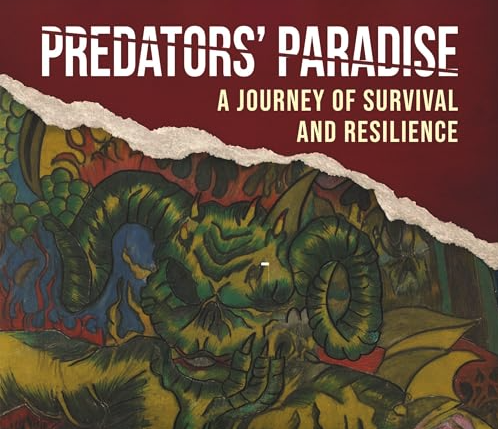
So I got the contract to illustrate your book, This Is Ear Hustle, after I had an art exhibition where my theme was people who made the most of their time in prison. I drew Nelson Mandela and Malcolm X, and, of course you, Earlonne. When I tagged you in the picture on Instagram, I was hoping you’d just like and comment on it. You hadn’t announced you were writing a book yet. How long had you been looking for an illustrator at that time?
Earlonne: The first person that we had in mind was our boy Antwan Williams, who started the podcast with us in the beginning because he do good illustrations. He did all the illustrations pretty much up to season 10, you know? But his relationship with the book company didn’t work out, and that’s when you came about, you know what I’m saying? You drew a picture of me that I shared with the team. I said, look at this shit! I’m on the wall with the greats.
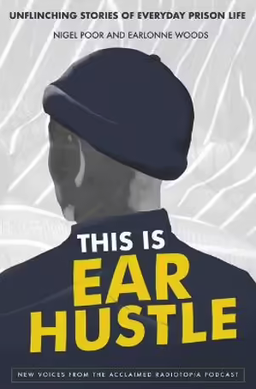
Nigel: I think as soon as I saw it, I was like, ‘Oh this guy’s perfect’. It was the right style. You obviously were really good at doing realistic imagery. You work super-fast and with precision, so it just seemed like a really good fit. The thing that really stood out to me about the illustration of Earlonne was that it wasn’t just that it looked like him. You captured the feeling of Earlonne, like the little way his eyes kind of sparkle and the way he smiles. And so it seemed it was more than doing a likeness. It was like capturing the essence of somebody. I mean, certainly a lot of people could do something like this, but it’s getting that inner spirit that not everybody gets. And it’s like that picture you did of Alice for Episode 80. You’ve never met her, but like somehow you capture just the way her body moves. You haven’t even seen her face. But somehow you complete something really three dimensional about a person. So that’s what really spoke to me with your illustrations.
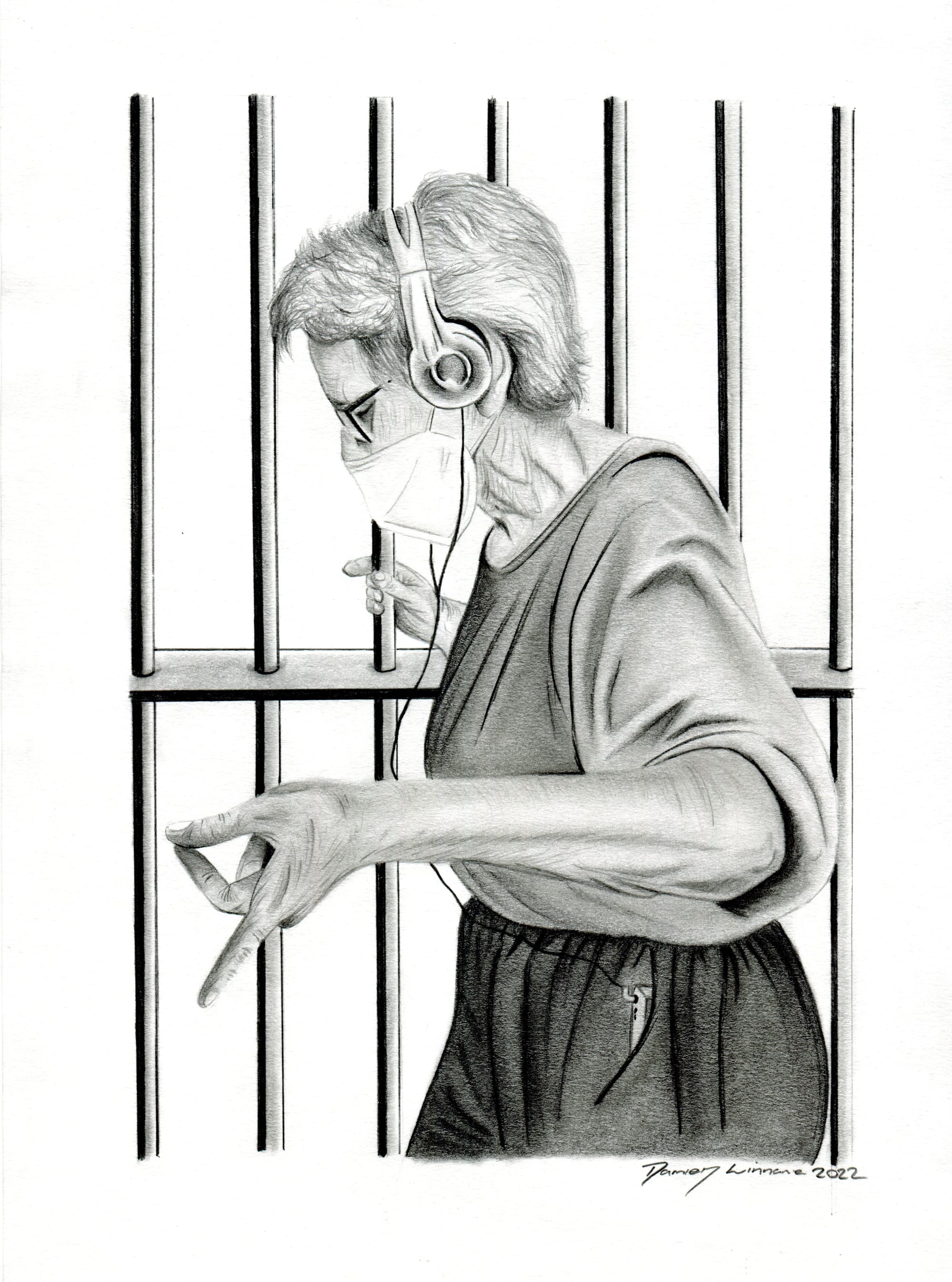
Something I’ve never told our readers of Paper Chained is that Ear Hustle is the reason our magazine is widely available now. There was no prison magazine when I was in custody; I got involved with Paper Chained, which was just starting up, after I got released. I helped out the previous editor for five years, then she told me she couldn’t work on it anymore and asked me if I wanted to keep it alive. And I took the project on even though I didn’t have the time or the money to produce it, because I knew how important it was to people inside.
After I got the contract to illustrate your book, I had the exhibition for those illustrations at Boom Gate Gallery. The assistant commissioner for Corrective Cervices NSW, Luke Grant, attended. I explained that some prisons were rejecting our magazine without giving an explanation and I asked him if he could do anything about that. He generously offered to make the magazine available on the tablets they have in prisons now. Which was great, except that meant my readership went from about 100 to several thousand overnight, and I already didn’t have the time to volunteer on the project. So I applied for funding and the short version is the Community Restorative Centre kindly offered to hire me. So now not only do I have a job because of Ear Hustle, I get letters every day from prisoners telling me how much Paper Chained makes a difference during their sentence. How does it feel to know that something like Ear Hustle has indirectly given a resource and a creative outlet to inmates in Australia?
Nigel: I love that. I mean, the name of your publication, Paper Chained, what it implies about creating links when you do good work about an important issue. It does create this often-invisible chain. But sometimes that chain becomes visible and it connects people in a really profound and beautiful way. It ties into so many people’s stories. So I mean, it feels amazing and I love that we’ve been inspired to people. Then we inspire other people and it keeps moving forward and it makes life feel less random and lonely. So I think that it’s really beautiful. And I love the idea that you can affect people that you may never meet. You don’t always know the effects of your endeavours, of course. But it just makes you feel like you can make a difference, that in a really crazy world that sometimes seems overwhelming and depressing, people can actually make real connections and give your life meaning. It’s great.
Earlonne: Definitely. You know what, this a trip, because I was in prison because I assaulted an Australian citizen. So it seemed kind of, I don’t want to say full circle, but something that happened in 1997 in Manhattan Beach, California is now affecting people in Australian prisons in a way, you know what I’m saying? That’s deep.
As a former prisoner, do you have any message for people in Australian prisons, Earlonne?
Earlonne: My thoughts to the people inside is just to continue to think outside the box. You know, don’t do what everybody else does, do something different.