Published in Issue 17 of Paper Chained in March 2025.
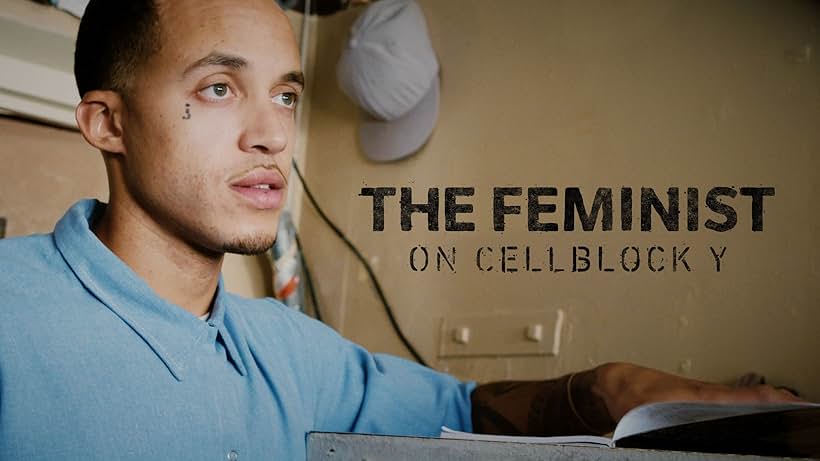
The Feminist on Cellblock Y, a 2018 award-winning CNN documentary, follows a group of men at Soledad State Prison in California engaged in a program called Success Stories, where participants discuss toxic masculinity and feminist theory. Paper Chained editor Damien Linnane talks to Hugo Gonzales, a co-creator and former president of Success Stories, to learn more about the film and the program.
How would you describe Success Stories?
I would describe Success Stories as a program that has opened up the space for people to be their authentic selves, for people to talk about things that they’ve sometimes never, ever talked about. Where I grew up, I was taught that I needed to suppress my emotions because a man doesn’t cry, a man doesn’t express the need for help. You figure it out on your own.
So I went from living a life like that, to being in a community within prison walls where everybody believes in that, but no one was really open to express what their root causes were. When I speak of root causes, I’m talking about your ‘why’ — why you committed the acts that you committed, what gave you the right to harm other people and then turn around and use the reasoning that you’ve been harmed as a justification?
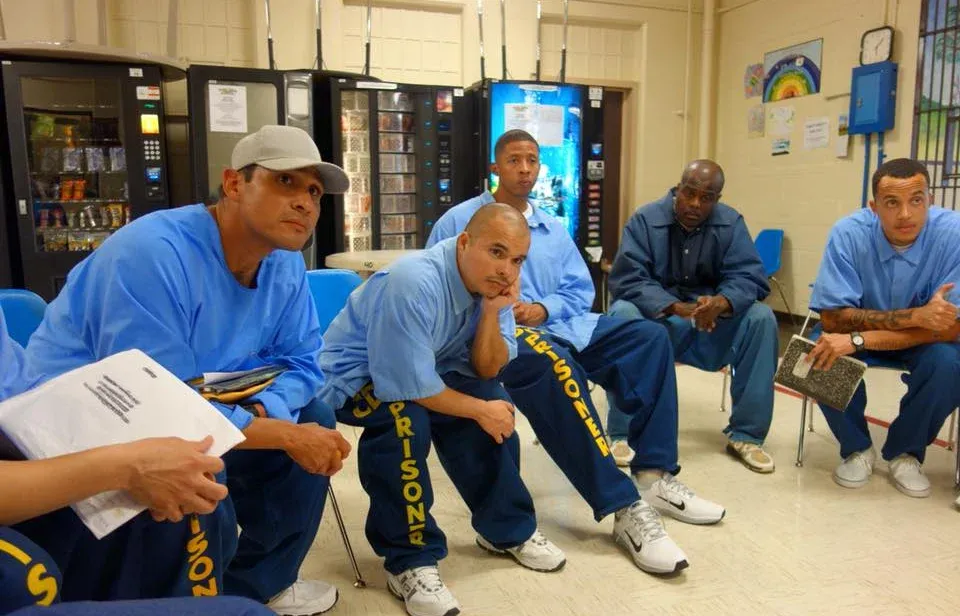
We learn the distortedness of how and ‘why’ when we were brought up, being taught that, the more violent I am, the more of a man I am. The more emotionless I am, the more of a man I am, the more money I have and the more women I’m with, the more of a man I am. These are the traits that I was strongly convinced made me a man, and that people gave me accolades for. I was held in high esteem when I was more violent, more emotionless, when I was that guy who just happened to be able to be daring enough to go ask a woman out. And these are also the things that led me into a life of feeling like I had no choice, like I had no option, that this is the route I had to take. And I never questioned it. I never asked why.
Mainly it was because I just wouldn’t be considered man enough if I do not do that. If I don’t fight, or if I choose to stand up for this or for that, I would be considered a whiner, a complainer, someone who can’t deal with the consequences versus actually standing up for my rights.
So in the program was there a lot of talk about growing up in a culture of toxic masculinity?
Yeah. And obviously, we’re talking about the distorted version of masculinity, because it becomes a debate of, “Oh, everyone all of a sudden wants to jump on this toxic masculine way of being, and completely want to get rid of masculinity.” No, there’s a healthy version of masculinity. What I’m talking about is the distorted, unhealthy version of it. The version that causes or convinces individuals that they do not have a choice when harming another human being. When they truly convince themselves, “Oh, you hurt my feelings? Now I have to physically hurt you.”
And Success Stories is about that understanding, and the understanding of equality, the understanding that we’re all human beings. That really led me into this work. That’s what actually helped us be very effective within prison walls, where violence was running the prison, whether it be through the guards or whether it be through individuals that are in prison serving time.
That’s what made our program effective. Because we weren’t coming out of these conversations where individuals say, “Oh, you’re one of them. Oh, you’re a new generation kind of guy.” It was more like, I want you to think of a time where you did something that you didn’t want to do, and you did anyway, and you did it because you didn’t want anybody to think less of you if you didn’t do it. And I want you to think of the consequence that you faced because of it.”
And nine out of ten individuals responded by talking about their case. They were talking about the charges that they had and why they committed the acts and whether it was a robbery, whether it was a murder, whether it was attempted murder, it revolved on not what they fully wanted to do, but what others expected them to do.
Whether it was to look good by having clean, brand new clothes, or whether it was to have money in your pockets, or you’re constantly just selling drugs because you’re convinced that as long as you make money, regardless of how you make that money, that equates to you being a man, that equates to me being independent, that equates to me having a say versus just being a person who’s dependent on others.
What else would you talk about in the program, and how would that work?
Obviously, it took a little introspection of ourselves, and it took a little more of ourselves to be vulnerable and to be the first one up to bat, to talk about the things that have hurt us the most. I talked about not knowing my father, never meeting him and wondering what about me was not worthy enough for this individual to want to be a part of my life? And then growing up in a society where you could feel the unfairness, the inequality, where you could think, “Why is it that I go to a school, and kids could have a laptop and nice things and clothes, and I’m wearing the same clothes damn near every other day?” It just didn’t make any sense. And it also felt like I had no space to talk about that. That I should just suck it up. Just suck it up, just work hard. Just work hard and you’ll somehow make it.
But then I’d look at the people that I’m looking up to that are working extremely hard, and they’re all working manual labour jobs. They’re all thanking God for overtime, and they’re rarely at home because they’re either working or they’re drinking their stress away on the weekend. There’s this cycle of so many parents not being at home because they’re either working and caught up in some type of addiction. There was no place to actually express the truth.
So when Success Stories was created, we were able to open up a space where individuals could be themselves. For many, this was the first chance they’d ever had to speak about neglect, about abuse, about child molestation, to speak about feeling alone, about just wanting to belong, about being willing to do whatever it takes for acceptance.
So while we’re being labelled animals for doing heinous crimes, no-one’s really actually asking the real questions, which is, “Why would you do that? Like, why are all of you in your community doing that? Why are you guys fighting for a place that you don’t even own? Because if they could have asked that question, then they would find out that I feel alone, and I found camaraderie in the group of people I was hanging around with. I find camaraderie in this community. And I feel like, in a place of having nothing, I feel like this is all I have. I knew I didn’t own these apartments, I don’t own these houses, I don’t own these streets. Very clearly I knew that. But at the same time, I felt the ownership of having to protect a place when there’s a lot of violence going around, and willing to do whatever it takes.
I’m talking about kids who are 13, maybe 16. These are kids that are underdeveloped, in terms of their way of thinking. The consequential thinking is not present — I was about to say it’s at the backseat of it, but it’s not even the back seat. It’s not even in the equation. It’s just gung-ho, let’s go. I have your back, you have mine. They harmed me. So what are we going to do? We’re going to double down.
And it’s crazy because in California they have these twelve jurors in a box. They decide. Jurors of your peers. But the majority of the people who are in these seats are not our peers. They don’t understand what it’s like to grow up in a society like that. In fact, they shrug their shoulders and nod their heads in disagreement, because they’re so disconnected to the ‘why’. They’re so disconnected to the ‘why’ that they really don’t even focus on the ‘why’. They just focus on the, ‘Are you guilty of what they just said?’ And now they’re gonna sentence you to multiple life sentences, run them consecutive, and not even worry about it.
Altogether, when being asked, what is Success Stories, what does Success Stories do, what are we about? Bro, we’re about opening up the space that many individuals feel that they were never allowed to have. We’re about allowing individuals to be their authentic selves, sometimes for the first time since they were kids. We allow individuals to open up in a way that they’re able to envision a future worth having. And I’m grateful and thankful to be able to say that we now have a big alumni of individuals who were once sentenced to never being free, and now they’re out here being extremely successful, owning companies and in logistics, tattoo artists, rappers, writers, individuals that are thriving as directors, as CEOs, as creators, as innovators, as pillars of their community, or, heaven forbid, just a law abiding citizen working a nine-to-five, and a good father, and able to actually enjoy the sun and the breeze, and feel a lot safer, versus feeling like you have to go do something negative.
I assume it was hard getting some people in prison to open up about their feelings.
Oh yeah! There are many individuals in prison who don’t open up. The last thing they want to do is talk about emotions. So we had to deliver that in such a way where we were opening up with storytelling. And this is where I came in.
I told my story of being an individual who was born with cerebral palsy, who felt completely abnormal throughout my whole life. In trying to reach a version of normal, I joined a gang, did extremely harmful things, attempted to take life. I was able to use these stories and then talk about how I have a son, and I never spent one full day with this son because I was fighting my case while my son was in his mom’s belly. Because I wasn’t there. I never knew my father, and now my son was facing the same fate, which is, ‘I also don’t have a father now’. And it’s stories like that which truly opened up the space.
And I was doing this because I really wanted to be a part of the solution versus the problem. I wanted to create a community that was safe and more importantly, that was empowered by choice, by being able to make the right choice, versus feeling like this is what I have to do. Because before that, I was in a mindset where if some man just stepped on my shoe, I got to show him I’m more of a man than he is, because otherwise he’ll think I’m a punk. He’ll feel I’m less than him. So instead of going through that filter, it’s just honestly going through the filters of “What’s most important to you?’ And what are you willing to do for what’s most important to you? And if you’re willing to suffer for the nonsense that has brought you into prison, what are you willing to do for the things that do make sense, that may lead you out of prison?”
I got involved in this program because I ran out of excuses, and I ran out of people to blame, and I really started asking myself, what is it about myself that gave myself the right to harm others? The writer bell hooks said it best. It’s this toxic, masculine way of believing that I had to be this way that led me into a frame of thought, that made me feel like I had no choice. And at times, I even used the version of being a victim versus actually being the victimiser.
What does being a feminist mean to you?
Being a feminist to me means being able to recognise that we’re all human beings, that gender doesn’t make us better than the next person, that the color of your skin doesn’t make us better – even though that’s not the way it feels in America.
It’s a reminder of my purpose to keep on moving forward and keep standing for equality, and to keep checking myself in moments where I am finding myself with that residue of assuming that women are here for me, versus that we’re here for each other, to help one another out and to make each other greater. For me, that’s what being a feminist is.
Were male prisoners skeptical towards a feminist program in prison?
We didn’t use the word ‘feminist’. We just modeled the program on feminism. We modeled the way we would treat women and then how we would feel if someone treated your sister, your mother, in that same way.
So, the word ‘feminist’ just happens to be a word that turns so many people down. So instead, what we would do is we deliver the same message through storytelling. We must have tact. We must have some type of way of delivering the message so that people don’t shut it down before the message is actually given. In fact, so that people are not only open, but it effectively changes individuals. Next thing you know, they’re openly saying, like, “Yes, I believe in equality.” And by saying that, they’re a feminist now too.
Did you think the film would become this popular?
No. You got to keep in mind, we were living in a prison, we didn’t think the film would go worldwide. We never thought that universities would be using the film as part of their curriculum. I’ve traveled all throughout the United States in panels speaking about this documentary. I didn’t think that it would be accepted the way it was, because I felt like my voice was muffled within the prisons walls. I didn’t think anyone would look at us as credible messengers.
You became the second president of the program. How long were you running it for?
I was president for about two years, until my release. I was sentenced to three multiple life sentence for attempted murder, for a crime that I committed when I was 16 years old but tried as an adult for. My sentence was commuted after 18-and-a-half years by Governor Jerry Brown. The commutation was mainly because of the documentary. To this day sometimes we get comments like, “Oh, they only did and said that to get out of prison.” But when I helped create the program in 2014, the laws that allowed me to get credit for working on the program didn’t exist yet. We were doing the work because it was the right thing to do, because we just didn’t want to live in a place that was saturated with violence in this hyper-toxic, masculine way of individuals solving issues through violence and through dominating others and through manipulating and through carrying this fake persona of ‘The more emotionless I am, the more of a man I am’, when in reality, it’s the more emotionless you are, the less human you’re acting. The less genuine you are about the truths of the emotions that are going on within yourself, whether it be depression, whether it be hurt, regardless of what it may be.
Is Success Stories still running at CTF?
Yes, and we’re now at seventeen other maximum security prisons in California. We’ve been in other states, like New York and Chicago. We’ve facilitated curriculum in other states, as well as in juvenile halls, in high schools, in middle schools. But the idea is to spread out any and everywhere. This conversation should be taking place in all correctional facilities, but also in all schools as well.
I still work on the program, but now it’s even better because I’m not in prison blues anymore. Now I go back in, in regular clothing, and I talk to them about all the things that we’ve been able to do. They used to laugh at us. With Success Stories, they’d say, “What kind of success story are you guys? You guys are all in prison!” It got to a point where I looked at Richie and I was like, “We should really change this title. It’s just evoking questioning. What success are we?” But the success, it’s internal. The success is knowing that it is internal. It comes from within, and then everything else follows. Everything else is a byproduct of it.
You’re now the Director of Public Outreach for Success Stories. What does that involve?
I travel around the California and the United States, and I educate people on what we do, why we do it, and how effective we are at doing it. The idea is to educate people and let them know that there is an alternative to incarceration. Many individuals are quick to assume, “‘Alternatives to incarceration’ – so you mean close all the prisons down?” And they equate that with throwing accountability out the window, whereas what we’re really saying is putting accountability at the forefront. Accountability cannot be forced. Accountability is a choice. And if an individual doesn’t know what they’re being accountable for, how can they even be accountable? If it’s a choice, how can they even willingly be accountable for something that they don’t even know that they should be accountable for?
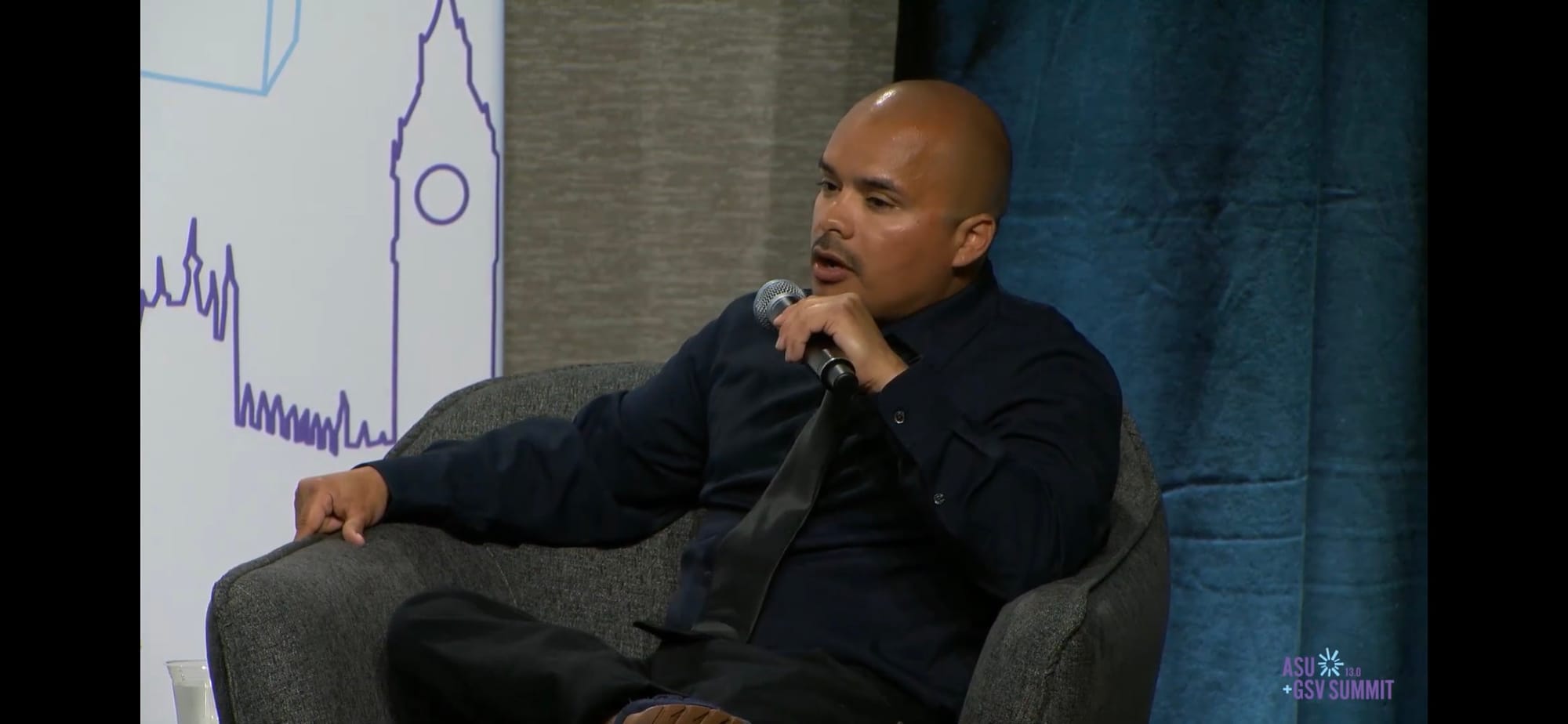
Many individuals stay stuck in the vibe of, like, “Let me out!” Why? “Because I should be out!” Versus “I now know what I did. I now know why I harm people. I know where it derived from. I know the root causes of it, and now I understand it so deeply that it hurts. And I never want to hurt anyone again like that, ever. In fact, I would like to do the opposite and help others and to really be able to see human beings as human beings, versus looking at them as just objects, as people just passing by that I do not know and don’t care about. I want the opportunity to get to know each other, versus to walk away from each other.” And when I say ‘walk away from each other’, I’m not just talking about physically walking away from each other. I’m talking about ignoring the issues, ignoring the injustice, ignoring the way we treat each other less than human beings and how at times, we’ll openly talk about how people deserve to be treated less than.
Watch The Feminist on Cellblock Y free on YouTube.