By Jennifer Myers. Published in Issue 13 of Paper Chained in March 2024.
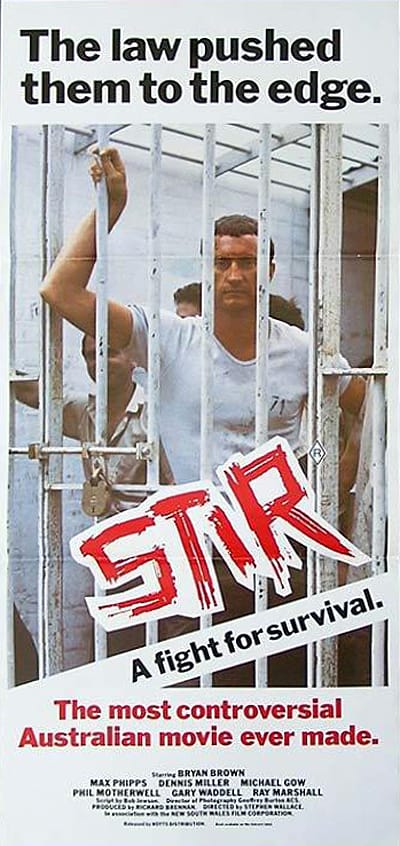
In 1980, Stir, which was based on the true story of the Bathurst prison riots in the 1970s, was billed as the most controversial Australian film ever made. Today it has largely been forgotten, just like the Royal Commission into New South Wales Prisons, created in the wake of the riot. In this issue of Paper Chained, Jennifer Myers, a criminology student, looks back on the film and the events upon which it was based.
Stir, directed by Steven Wallace in 1980 and starring Bryan Brown, was a film ahead of its time. The script was written by Bob Jewson, a prisoner at Bathurst during the 1974 riot, and is based on his experiences in NSW prisons during the 70s. The film also uses the findings from the subsequent Royal Commission into NSW Prisons to create a full and accurate depiction of these events.
These riots are a somewhat neglected part of NSW history, particularly considering the ‘true-crime’ genre’s choke-hold on pop culture today. I couldn’t even find a podcast episode on them! The irony of a lack of media discussion today is that the rioters, the Royal Commission, and the film itself were all trying to make the same point: ignoring a problem doesn’t make it go away, it only makes it worse.
The accuracy of this film is truly impressive. This film wasn’t just designed to entertain: it was a man jumping up and down, waving his arms, and yelling at the helicopter, “I’M OVER HERE!” It was made to say, “This is the problem, right here, clear as day. Now fix it.” And honestly, they didn’t need a whole lot of melodrama to make that point.
The film opens with violent screams and beating thuds in a cell block, while our protagonist, China Jackson, and his cellmate wait in terror. As the ominous sound draws closer, the anxiety in the cell grows. Finally, the cell door opens, and the two prisoners are subjected to what they knew was coming, a ruthless beating by the prison guards, primarily ‘Norton’, who takes the lead on beating Jackson. Throughout the scene, an overlaid icy blue filter emphasises the prisoners’ fear and the guards’ cold detachment. Jackson’s voice narrates the event, though as the scene cuts, we learn that this narration is actually a TV interview of Jackson recalling the beating, which is now being watched by Norton. The blue filter exaggerates the hollows of Norton’s face and his haunted eyes, setting the tone for the film, not only as the catalyst for the events that follow, but also for how the trauma of physical violence can infest a man.
This opening scene is inspired by the true events that took place on the 21st of October 1970. Four days earlier, the prisoners at Bathurst had participated in a peaceful ‘sit-in’ to protest the undeniably inhumane conditions of the prison. Over that weekend, it became apparent to prisoners that staff had no intention of keeping the promises they made about improving conditions. Fueled by the frustration of remaining unheard, and fearing riot guards, the prisoners barricaded themselves into a wing of the prison. After a stand-off lasting several hours, the prisoners agreed to go back to their cells after being promised there would be no reprisals. The following morning, this promise, much like the one to improve prison conditions, was broken. And so, our opening scene begins.
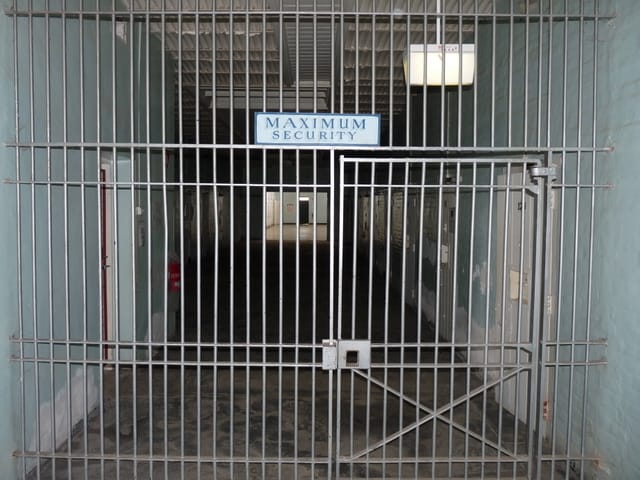
This scene plays out in a similar way to the actual events. If anything, the film softens these events, as it shows the prisoners being only subjected to a single beating. In reality, the reprisals went on for roughly two weeks before things began to simmer. These included the prisoners being locked in their cells for an entire week, specific prisoners being subjected to several beatings, personal belongings being destroyed, and prisoners being ‘Shanghaied’; gaol slang for sent to another prison, usually with a harsher reputation, and with no warning. I say simmer, because things had certainly not gone back to normal. The pot was very much still on the heat.
The focal point of this film is the dynamic between Jackson and Norton. From the opening to the closing scene, these men demonstrate the power of fear and the influence it can have on a community. During the lead-up to the riot, Norton spends time seeking Jackson’s forgiveness. This pursuit leads Norton to alienate himself from his peers and the corrupt system itself. However, these attempts are met with little success, as Jackson does not believe any meaningful change can be made within the prison walls. We understand this resignation when Jackson says, “Any idiot that thinks he can tell the trouble what the trouble is, is right off the fucking planet,” while talking with other prisoners who are trying to find a peaceful solution to the tension rising in the gaol. The futility of Norton’s gestures becomes evident as they ultimately fail to prevent a catastrophic prison riot, underscoring the deeply rooted issues within the prison system that no individual, no matter how well-intentioned, can resolve on their own.
Does a building stop burning if you look the other way? Do the flames disappear if you just pretend they aren’t there? Of course not. The building will collapse, a tower of smoke will reach the sky, and the flames will tear a warpath, engulfing anything that dares to cross it. You know this. I know this. The prisoners at Bathurst knew this.
Once it became apparent that peaceful protests and reasonable discussion were not accomplishing anything, the prisoners found that their only option left was to destroy the place. This sentiment is established in the film when Jackson says, “Burn the fucking joint to the ground,” when talking with his cellmate about what options were left to save the gaol.
The scene of the inevitable riot is one of carnage. The prisoners destroy the gaol and infamously burn it down. The simmering pot had finally boiled over. This analogy of a burning building encapsulates the point that both the riots and the film set out to make: Ignorance is dangerous. After the riots, authorities were forced to confront the issues they’d long neglected. As it turns out, burning buildings don’t consult the media with much discretion.
With no way to disguise the severity of this event, the subsequent Royal Commission became a reality two years later. The 1976 Royal Commission into New South Wales Prisons was a pivotal moment in the history of the Australian penal system, investigating the conditions, treatment, and practices within the NSW prison system. Unsurprisingly, the Commission’s findings were damning and led to a demand for reform. As a result of the Commission’s recommendations, several significant changes and reforms were implemented.
These included:
- Better living conditions for prisoners
- Greater access to education programs
- Increased measures to monitor staff behaviour
- A shift to a rehabilitative approach—aiming to better prepare prisoners for life after release
- A decrease in unprovoked beatings towards prisoners
Now, while I have spoiled most of the film, I’ve left you the ending. If you ever decide to watch this film, provided you have a high tolerance for violence, I’m sure you’ll have the same response to the ending as I did: it’s horrific, but perfect.
The accuracy and integrity of this film is truly remarkable. It serves as an Ode to the prisoners’ experiences while highlighting the Royal Commission’s significance. It is a fascinating watch that reveals what man is capable of when motivated by fear and desperation.