Published in Issue 18 of Paper Chained in June 2025.
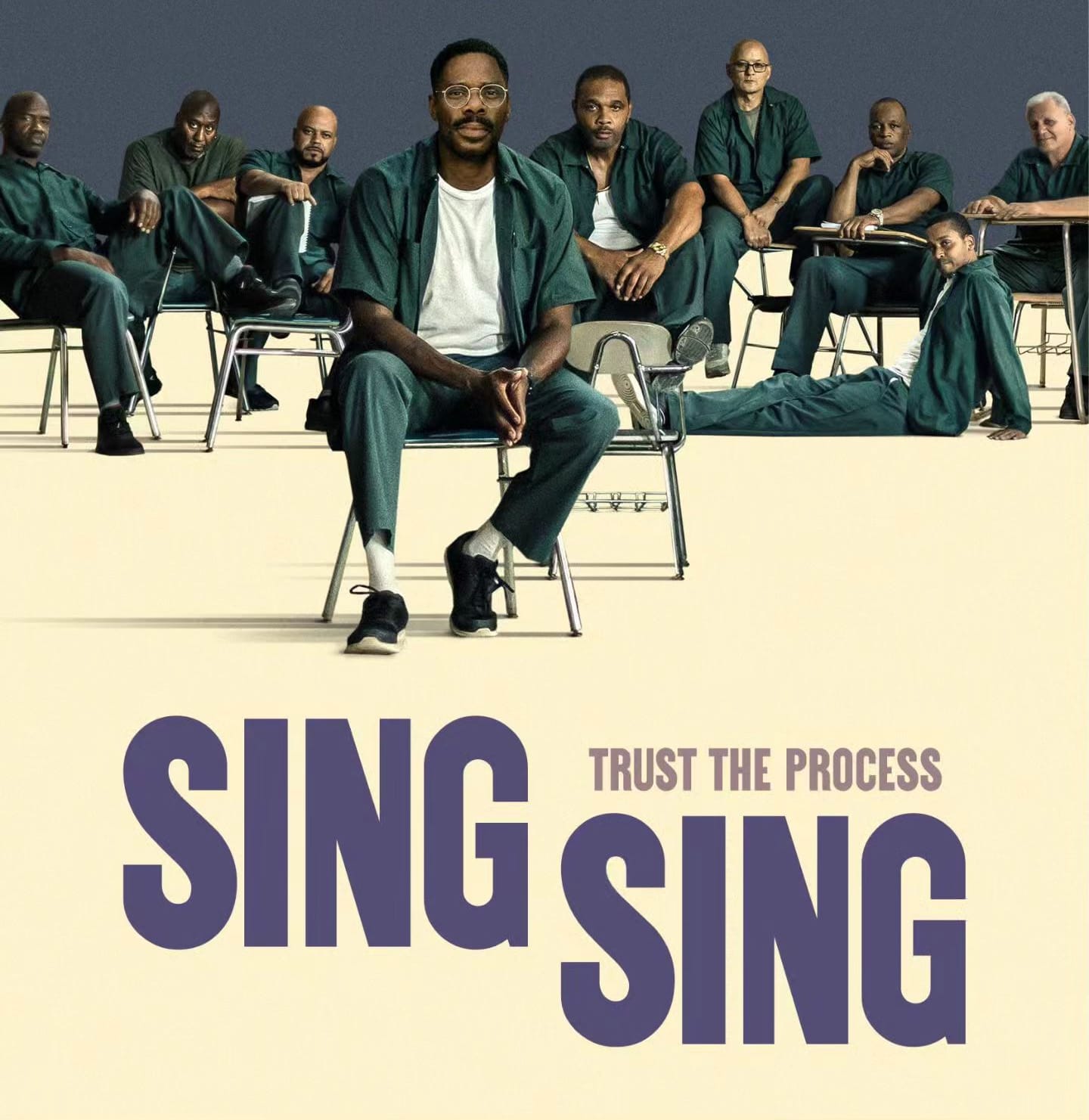
The small budget 2023 film Sing Sing, which tells the true story of a theatre program at New York’s notorious Sing Sing prison, has taken the world by storm, winning many awards and being nominated for Best Actor (Colman Domingo), Best Adapted Screenplay and Best Original Song at the 2025 Academy Awards. To learn more about the film and the story behind it, Paper Chained Editor Damien Linnane talks to Brent Buell, a former theatre director with the Rehabilitation Through the Arts program, which operates programs in prisons all over New York.
When did you start working in prisons?
In 2001. My journey has been interesting. I grew up in Southern California in a right-wing home. And because of the Vietnam War, I was a conscientious objector. That was my first taste of how tough the government can be on people they don’t like. I was always interested in theatre, but I got pretty disillusioned with commercial theatre. I was producing and directing shows in New York in the 1990s, and I just felt something was missing. I started working with the Reverend Al Sharpton, and the civil rights organisation the National Action Network. And boy, that was an incredible education for me. It opened my eyes to things. Even though I was a progressive politically, I had no idea about how people were being oppressed. But Sharpton always said to me, don’t just follow me. Do what you think you’re called to do. And then I got invited to come and teach at Sing Sing. And I’m telling you, it was like the gates of heaven opened.
Was that with Rehab Through the Arts?
Yes, they started in 1996. I first came on board as an acting coach. Another person was directing, and I think that was the first sort of big show that they had done. It was an adaptation of Richard Stratton’s Slam, about the young rapper who gets put in prison and ends up stopping a gang war just through his poetry.
Did you ever act in theatre or were you just directing?
I acted for many years in theatre productions in the community, but inside prison I was directing. I think there were a couple of times that I did walk-ons. But most of the time I just directed and it was the best experience of my life because it wasn’t commercial theatre. It wasn’t all about making money. It was about making art. And then the incredible men that I met there. I didn’t expect that. I went in expecting that we’d work together and do shows. But I didn’t know that there could be that level of empathy and care between a group of men. I’d never seen it, even on the outside. It was like the most remarkable thing that developed and the trust that came to be between them and me, I’m very grateful because they welcomed me into that circle, and to watch people just do so much to elevate one another. And the movie is right about that.
I suppose when you’re having a theatre group in prison, that’s the main thing the men have. Whereas on the outside, it might be just a side-hustle.
Exactly. I’ve never had better students. They really were wanting it to give them a key to life and theatre. I can say a lot about why, but the dedication that was there and the desire to really do the theatre right, was big.
How did the idea for the film first start?
As is shown in the movie, in 2005, we had just done some big drama plays and they said, “We don’t want to do another drama. We’ve got enough drama in here. We want to do a comedy.” So I went out and tried to find a comedy that had roles for 25 men and maybe two women. We did have female actresses that would come join the plays in limited numbers. But I couldn’t find anything.
I came back in and told the guys I couldn’t find anything. And I saw the look on their faces. It was heartbreak. I couldn’t stand it, so I said, “I’ll write one for you”. And then I freaked out because I’d never done anything like that, never promised them anything that I wouldn’t come through with. I just was sweating. I went home and started to write. It was terrible. That was a Wednesday night. All day Thursday, I just wrote shit. I couldn’t get it going.
Then on Friday, at 3 a.m., I remembered the guys had said things when they were making suggestions. They said, “We want to do something like Blazing Saddles, with cowboys”. Someone else said “No, I want to do something about gladiators”. “No, I want to do something about Freddy Krueger.” “No, we should do something like Robin Hood, steal from the rich and give to the poor”. They’d given all these ideas, and I thought, let’s put them all together. And in the next three days, I wrote this 140-page play called Breakin’ the Mummy’s Code. Esquire magazine did a beautiful piece on the play back in 2005.

From there, we move on to the next project. And 11 years later, at midnight, I got an email from the filmmakers Greg Kwedar and Clint Bentley saying, “We’re interested in talking to you about your work, particularly Breakin’ the Mummy’s Code”. I thought they were probably two graduate students at New York University or something. I’d never heard of them. Turns our they’re very up and coming directors in Hollywood. They flew out to New York. The first thing I told them was I didn’t want anybody to cheapen and mess up the story because it’s a beautiful story and it had to be told truthfully. No prison tropes, none of the stereotypes of prison. And the second thing I said was, “This is not a ‘White Saviour’ story and I won’t let it be.” It never was. Those guys in prison saved me.
The directors were very interested. They said they’d even thought about casting men who were in the program.
So I said, “That means you’ve got to come to my house for breakfast because everybody comes over and we get together.” So they came and they met all these guys. And essentially that is where the casting began. We worked for six-and-a-half-years on the script.
We’d had so many false starts and bad starts on a script, but that story of the friendship between the two main characters, Clarence and Divine G, was the thing that really that coalesced. They ended up helping tailor the script, as did Colman Domingo, who plays Divine G in film.
So then we had the script, but Colman only had 18 days between filming The Colour Purple and doing some re-shots on the film Rustin. He said, “I’ve only got 18 days.” And Greg Kwedar said, “We’ll take them”. We shot the film in 18 days, between Colman’s two other commitments, much to his credit. Colman is just wonderful.
So the main character, Divine G, is a real person?
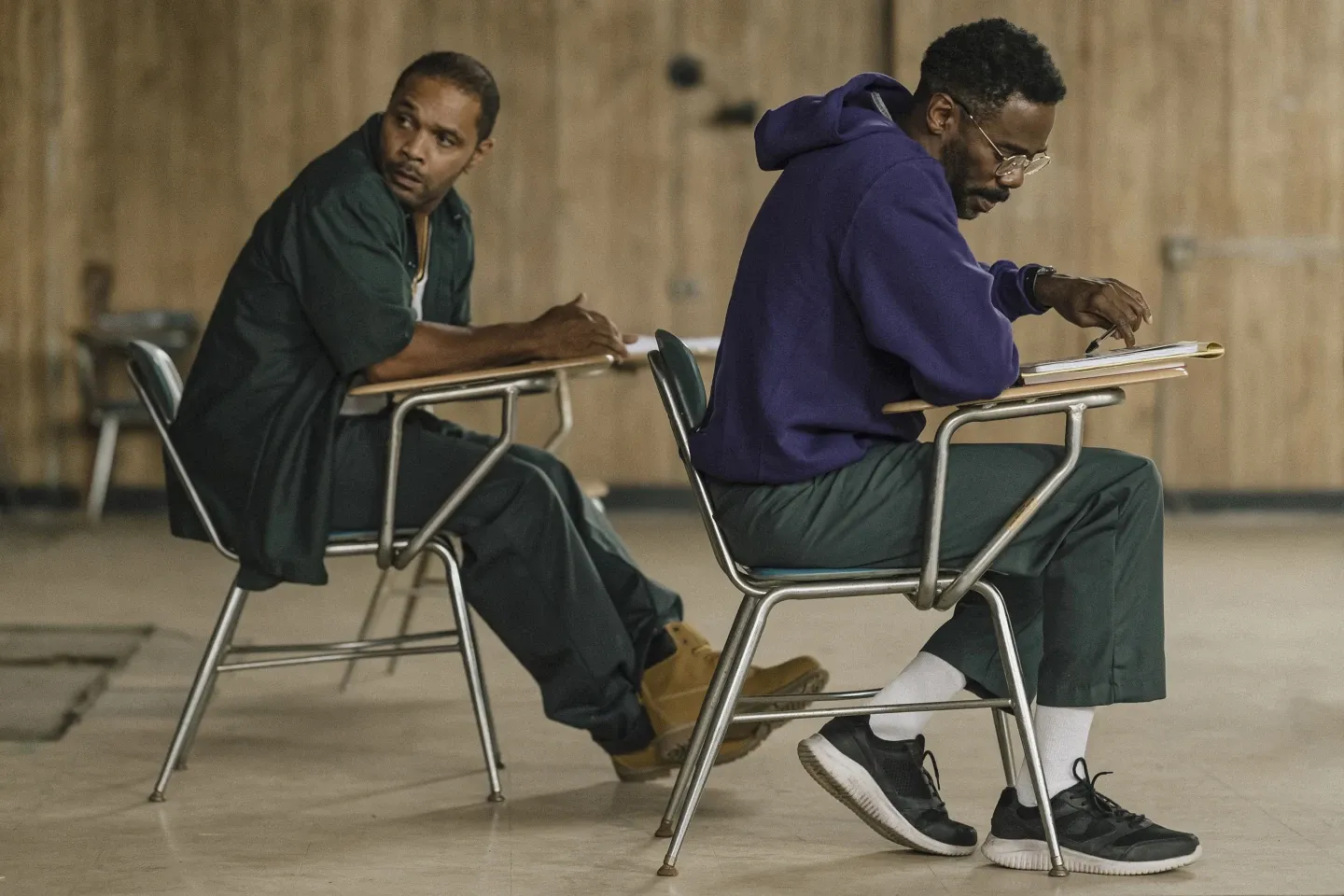
Yes, his name is John Whitfield. He was falsely accused of a murder and did 25 years. They finally released him, but he’s still got “Murderer” on his record. So we’re working very hard to get him exonerated. The police had a confession from another person. They all knew he wasn’t guilty. But you know, they never will back down and say they were wrong.
So what’s portrayed in the film about his case is true?
Yes, and the scene in his parole hearing is actually a verbatim transcript of his parole hearing, where one of the parole officers asked him “Are you acting now?” because he was an actor in prison.
I’d love to know if that parole officer knows the conversation was turned into a scene in the film.
I hope so, and I hope they have a weak heart. [Laughs]
Why didn’t John ‘Divine G’ Whitfield play himself?
He had just gotten a job as a New York City subway operator, which had been a struggle to get. He could not get time off. There was just no way he could do the schedule. Also, Colman was available to play the role. Star power is a big thing, so he passed on it and let Colman take the role, and the rest is history.
Why didn’t you play yourself?
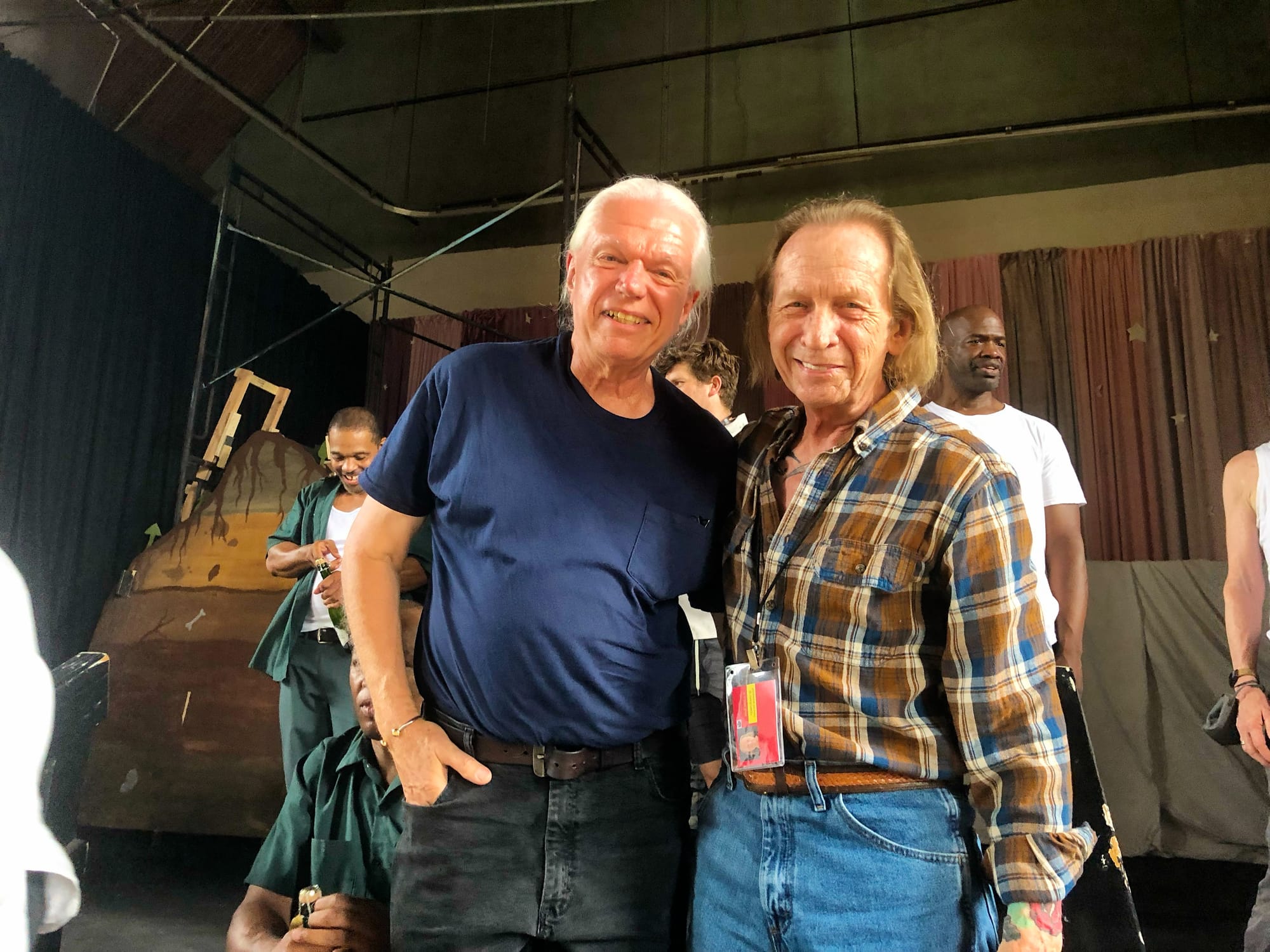
I would have been willing to. Up until about three weeks before we filmed, we still didn’t know if I’d be playing myself. But at the last-minute, Paul Raci became available. I absolutely love his work, and it’s a huge asset to the film to feature an Academy Award-nominated actor. I couldn’t have asked for anything more authentic than his performance. We became close friends, we’d have breakfast in the morning and talk about the day’s shoot. He’d ask so many good questions: “How did I react? Where did I get mad? Did you laugh it off?” It was great.
Were you involved with filming?
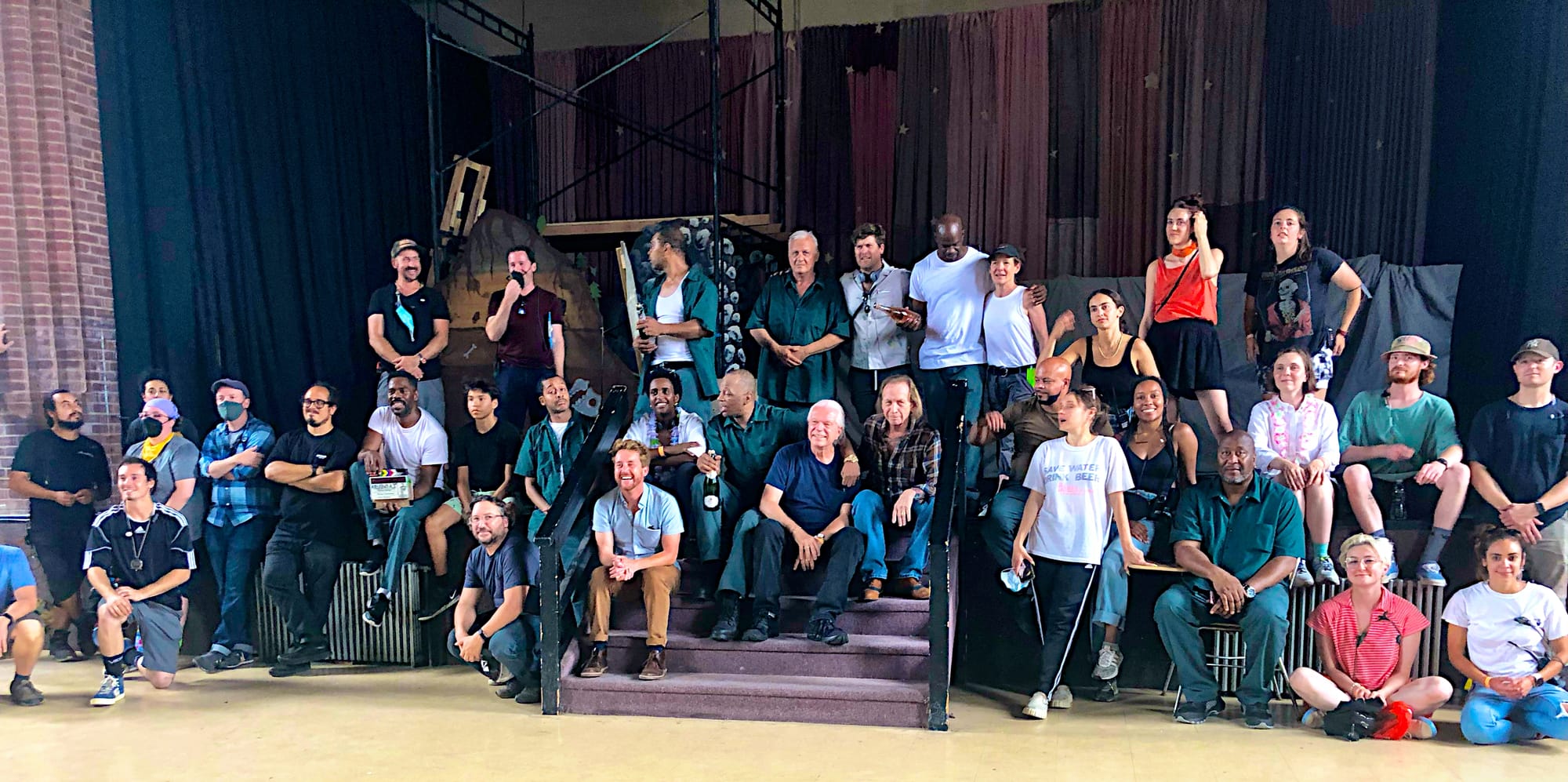
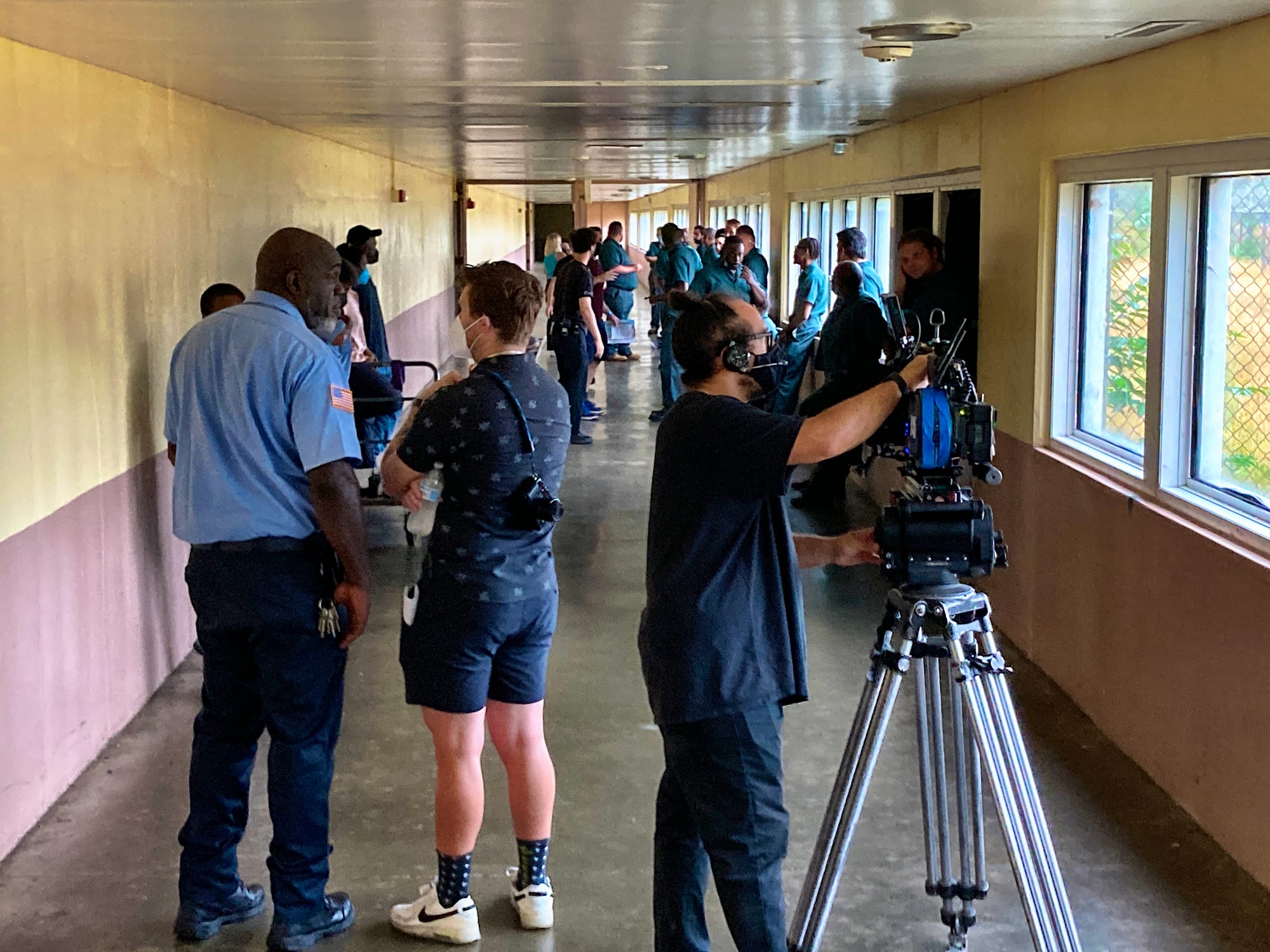
The entire time. Greg, the director, said he wanted me on set at all times, and if there was anything that I saw that didn’t seem authentic or that seemed off, to bring it up so they could re-shoot. That was kind of my role, as well as just being there, because the men and I are so close that it gave them reassurance that I was there and giving them feedback. It was wonderful to be together again.
The movie was filmed in a prison that was actually only decommissioned two weeks before we got in there. They were still carrying stuff out the front door when we arrived. We had a psychologist on set in case anyone had problems, because a lot of the guys were tense being back in a prison. When it was time to leave one day, one of the men was supposed to ride with another one home. They got separated, and he got lost in this labyrinthine prison. He said he had just a moment of panic when he realised he was lost in prison. And then he stopped and he went, “Wait, I’m a free man, and I can go anywhere I want in this fucking prison, and I can go explore it. Or if I can find the front door, I can leave it.” And he said it was like the most liberating moment that he’d had. From then on, he was just completely cool with being in there. In one way or another, that happened to a lot of the guys. And we didn’t have anybody who went through painful trauma during filming because their purpose was so clear about making a movie that they didn’t really have time to focus on anything else. They were just beautiful.
Did you ever have to tell them the filming wasn’t authentic?
Yeah. It wasn’t much, but there were there were a couple of times where something would get said, and I just didn’t think it sounded like the way people talked. But there was nothing horrendous.
Is the conflict between the two Divines in the film real?
Yeah, it’s a combination of what really happened and then some dramatic license. I was there when Clarence Maclin came into the program. I was directing that show, so I was his first acting teacher, his first director, and he was just the way you saw him in the movie. That is very authentic to who he was and to his credit as an actor, that he was able to go back and portray a version of himself that he has long since left. That’s tough acting. I found out later that he actually was always carrying a shank the whole time we were doing the plays in prison, as was depicted in the film. At the time I had no idea.
But he loved acting from the first time he walked on that stage. He wasn’t actually cast in the play originally. One of our guys got blocked and so we needed a replacement.
He came in and it was an Elizabethan comedy. He had to wear this very not-Clarence Maclin outfit. It was kind of a tunic with these flaring things that hung down, and he walked on stage and he said, “Here I am.” And he spun around in the whole outfit, and it flew out. I though, “This guy belongs on stage. He’s going to make it!” And I just came to love him like a brother. He’s a tremendous person.
Obviously when you’re condensing a long period of time into a film that is less than two hours, there has to be some dramatic license. You said the cast was actually 25 people in Breakin’ the Mummy’s Code. I’m guessing the reason there’s only about half that many actors in the film is just because it’s hard to flesh out 25 characters?
Right. Budgetarily we couldn’t do it. In the program, there were times that we had 60 people involved, so it became really big. We had various classes going on, acting classes, improv classes, script writing classes. And around the last year that I was there, we were even running Acting 101 classes. We had like 100 people on the waiting list and these new guys would take that class first before they participated in an actual production.
The recidivism rate for people who participated in our program was 3%, when the national average is 60%. When our detractors hear that, they would say “Oh, you probably just picked the goody-two-shoes guys. The guys who were Mr. Obedient.” That was the farthest thing from the truth. The men who got in the program were selected by our steering committee, which was five men on the inside. They picked not on the basis of who was going to be the best actor. They picked the guys who needed it the most.
I remember leaving one day and being told I had a call from the superintendent. I picked it up and he said, “Brent, I hope to God you know what you’re doing. You just let the most dangerous man in Sing Sing into your program. Don’t turn your back. He’ll stab you for a cigarette. I’m not kidding you.” I said, “He’ll be fine.” And you know, the people would be challenging. It wouldn’t be easy at the beginning. But in a period of six months, I’d watch a person’s life turn around and they’d open up. That particular guy is now teaching at a university, 1,000% away from the man he was.
And I’m such a convinced believer in the power of just doing theatre being able to change people. And I’ll tell you why. If you’re doing things that hurt other people, your level of empathy has been damaged. You’re not seeing other people as real. When you’re an actor, you have to see the character you’re playing as real. You have to step inside his skin. You have to see through his eyes. And that would be a very challenging thing for men. When they began, I’d say, “Well, what do you think your character is feeling right now?” They’d say “How the fuck should I know?” And I go, “Well, try and think. If you were him, what would you be feeling right now? You want to act this character? This is the first step in doing it.”
And as they would begin to have that sense of becoming that person, and really giving thought to what they might think or feel, it was really a revelation to them. It was an opening up of that ability to think about the thoughts and feelings of another person and have them matter to you. And then that would translate to the whole group and that tremendous care that built between people, all because they were learning to act.
In prison, every order that you’re given is in some ways demeaning or lessening. Like, “Up against the wall.” “Shut the fuck up” So here I come as a director and I have to give orders to people. Like “So you’re going to move from that chair downstage left. And that’s where you’re going to give your speech.” At the beginning everyone was like, “Who are you to tell me what to do? I’ll do it my way.” But little by little, it dawned on them that there could actually be instructions given to you that were for the purpose of making you look better, not demeaning you, but making you look better and making you stronger and better at what you were doing. It was a huge revelation to the guys. So just step by step, all the things that happened. When the female actresses came in, the degree of respect that the men showed them would make them cry sometimes. They’d say, “Why can’t I meet a man outside that treats me with the kind of respect I’m getting in here.”
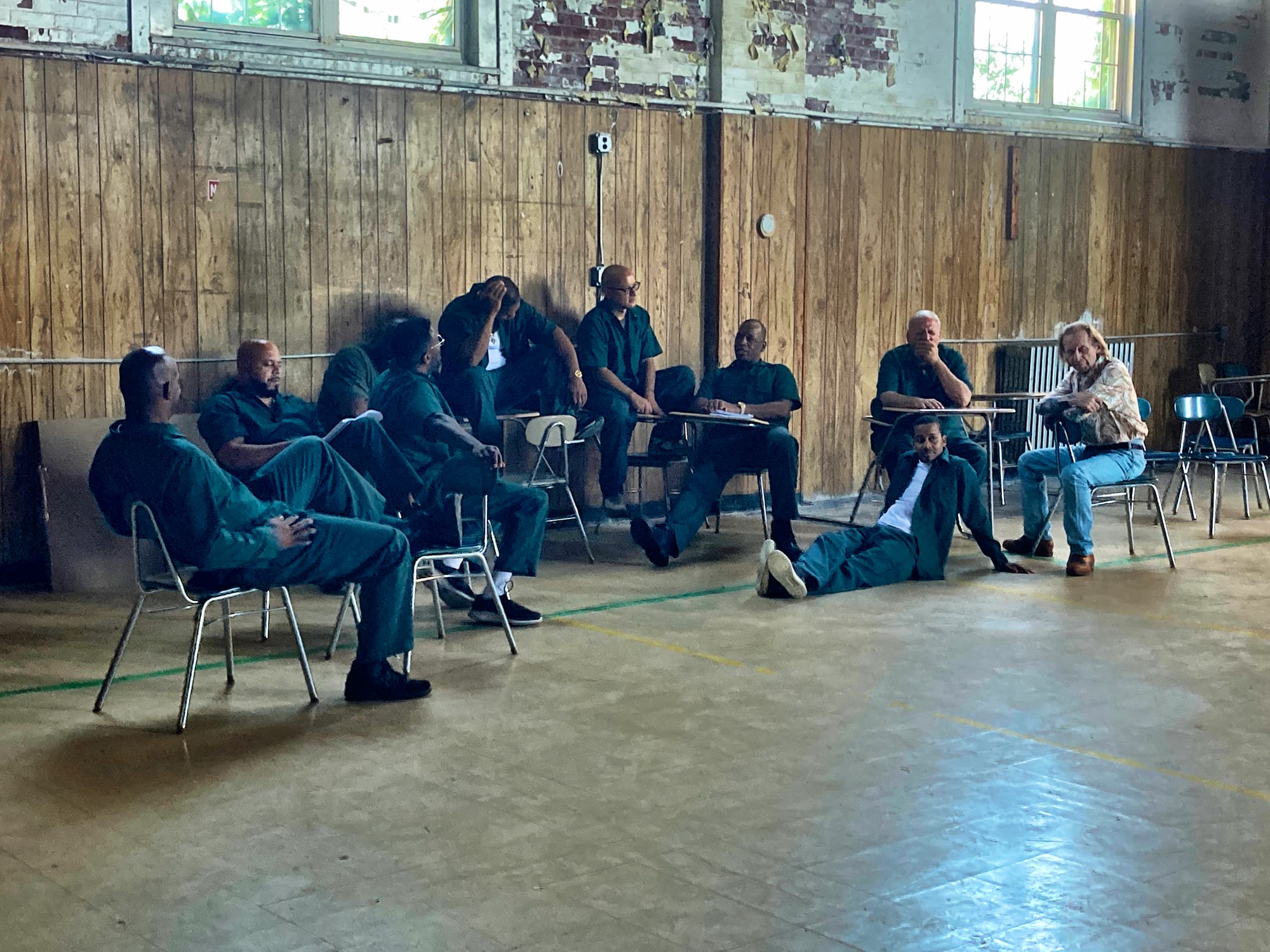
I noticed in the film that most of the people in the program were African American, but not all. There are a lot of politics regarding race in prisons in America. Did people work together really well in the program despite that?
American prisons are disproportionately Black and Hispanic. I’d been working with Al Sharpton for three years, when I started teaching in the prison. And I knew about the racial divide in America, and I knew of the unfairness of our punishment system. It’s not a justice system. It’s a punishment system. And yet, my first time in Sing Sing, walking down a corridor and having 200 men walk past me and not a single white face, I just broke down. I just started to sob because it’s so clear that the disparity that is here. But within the program, the men came to be like brothers.
There’s a lot of racial strife in the prison, and things are very divided in so many ways. But the men in the program led the way. And it spread.
I always wanted to sit out in the audience with population when our plays were done. The COs wanted me to sit with them, but I sat with the guys. Once I was sitting out there and our play had begun, and there was a group of guys over to my left that kept talking and just talking, and then they’d laugh and stuff, and I was getting pissed. And I’m like, giving him the screw eye, like shut the fuck up, you know? And I was really getting angry at them. And finally, I thought, I’m going to go over and tell them to be quiet. So, I started to stand up and I felt two arms on my shoulders push me back down in my seat. A guy behind me who I did not know leaned forward and said, “Have some respect”. And I went, “Those guys are driving me nuts”. And he goes, “Those are the Hispanic guys. They’re translating your show so the other guys can understand it.” And you know, for me it was just like such a beautiful criticism and such love shown to me. These guys were working together to have other people enjoy the show. The guys in our program became like stars in the prison. I mean, people would come up and want to have them say their line from the show, and they had a very big influence in terms of being useful to people and helping them to correct their lives, and not just people in the program.
Are you still doing plays in prison?
I’m not working inside prisons now. Most of the guys that I worked with are now home. I’ve been doing a whole lot of work with transition. Just last year one of the men came home and lived with me wife and I for five months. It is very important to for us to understand the challenges that face people as they come home. As much as I knew from other people’s experience, it was eye-opening to have someone under our roof who was going through what he was put through, and seeing the roadblocks that were put in his way. For example, somebody at the place where you get your driver’s license from knew that he was coming home from prison, so they thought it would be fun to give him a hard time. It took him five months to get his state ID just because someone was messing with him. We found out after five months that he had all the necessary papers the first day. But they made him keep coming back. Those are the kind of things I’m working on now. Also the film been a massive undertaking.
Are you employed to help with transitional services?
No, it’s all volunteer. I never was paid for the theatre shows either. Not even transportation money to get to the prison. It’s a passion for me. I continued to do commercial theatre on the outside to make money. But all the work in prison was voluntary, and it’s entirely voluntary now because I love these guys. This is a chosen family, which is such a wonderful thing to have. We get together when we can. Everybody comes over and has breakfast and hangs out.
The reception of the film has been phenomenal. Have you been surprised at how well it has been received?
We are all astonished. We knew that we had made a good film and we were proud of the fact that it told the truth and didn’t have all the junk that prison movies usually have. But we had been turned down for a couple of film festivals before we were accepted for our premiere at the Toronto International Film Festival. That was in the Royal Alexandra Theatre, which seats about 1200 people. The night before we went to see the film American Fiction. At the end, the audience stood up and applauded, and I turned to my wife and I said, “If we could get a response like that it would be incredible.” So, the next night we went to see Sing Sing. Every seat sold in the entire place, and we could hear people laughing and crying and things all the way through. When we got to the end just before all the credits roll, and the words Sing Sing appeared on the screen, the whole audience leapt to its feet and just started to scream. I could cry saying this. And then when they saw in the credits that the men played themselves, it just continued. People were just screaming and applauding while they’re standing. And then they called all of us up on stage. Canada would only let five of our men in. They have this very awful policy that no one with a felony record can get into Canada. Except maybe Donald Trump.
Anyway, they got us up on stage, and there was a four-minute standing ovation. They just didn’t stop. And we were all standing there with tears in our eyes. And finally, Coleman stepped forward and sort of said, “Thank you so much, you know, but sit down. We have things we’d like to say.” I’ve never seen anything like it. And that reception has continued. It’s happening at the award shows too.
It has been hard getting people in to see the movie. But once people see it, they’re so sold on it that they come back again and again. They bring people with them. And now all the people voting for all these awards are just passionate about this movie. And to us it’s not the awards, it’s being able to have a vehicle to get our message out. I know you share that with your magazine. Being able to have people see that there are real human beings incarcerated, that these are not people different to you and me. They are real human beings with all this potential that just need a chance to unlock it and rebuild what has been broken. That’s our reward. That and knowing that this is beginning conversations all over the country.